Si Hongyun, Shen Lin, Liu Wenchao, Wu Guangdong
School of Public Administration and Policy, Shandong University of Finance and Economics, Jinan, China.
Humanities and Management School, Hebei Agricultural University, Cangzhou, China.
Sustain Cities Soc. 2021 Feb;65:102626. doi: 10.1016/j.scs.2020.102626. Epub 2020 Dec 1.
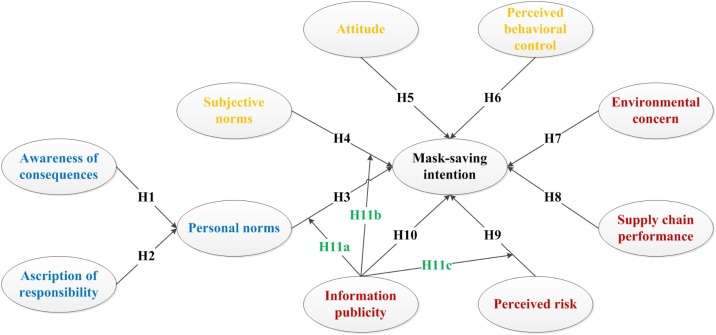
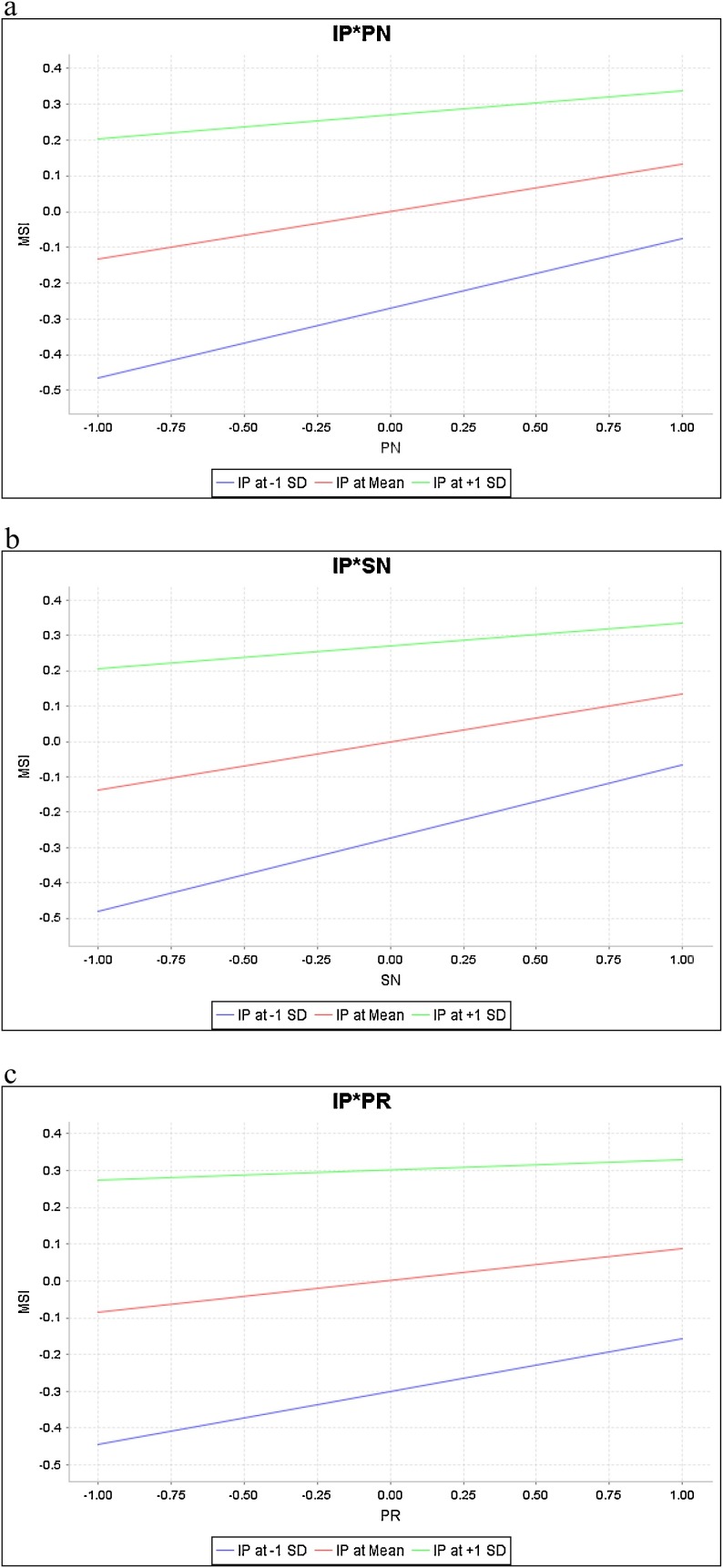
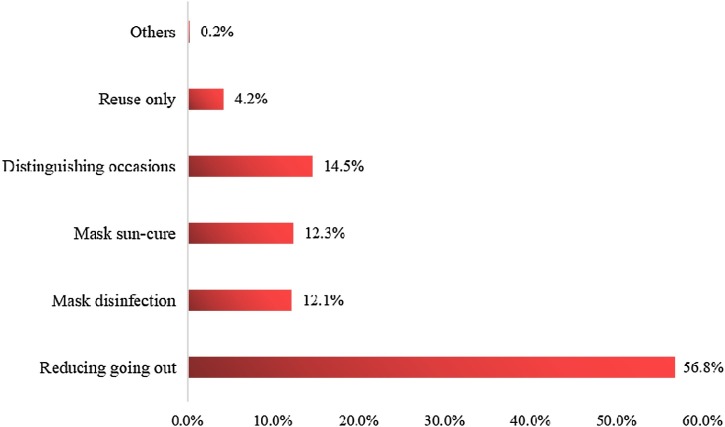
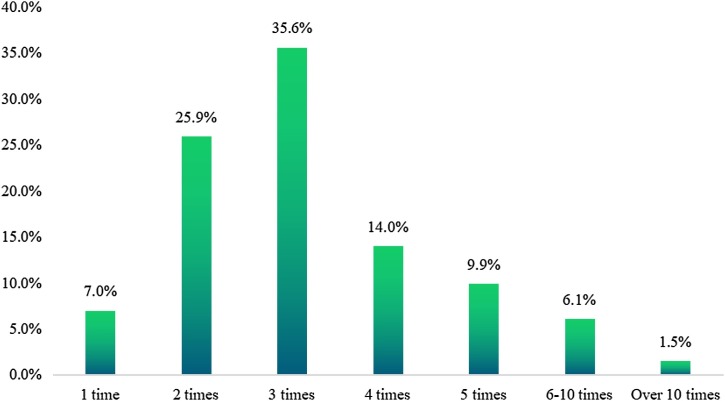
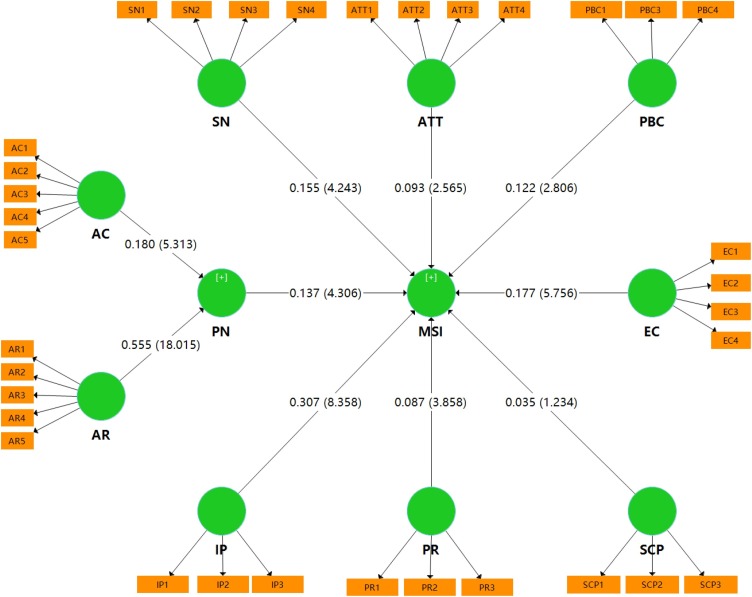
The COVID-19 pandemic has caused a surge in the demand for medical masks over the past few months. Many countries and regions have experienced a shortage of masks and raw materials, as well as soaring prices. Understanding mask-saving behavior is an important way to help improve medical resource sustainability and respond to the outbreak. This study integrates the theory of planned behavior and normative activation to propose a new comprehensive theoretical framework, which aims to reveal people's mask-saving intentions (MSI) and behaviors in the post-pandemic period. Using the partial least squares structural equation modeling method, a total of 1057 questionnaires randomly collected from China were measured and empirically analyzed. Results indicate the following: (i) Reducing the frequency of going-out is the main approach to saving masks in China, and the majority of people reuse a mask from two to five times. (ii) Personal norms, subjective norms, attitudes and perceived behavioral control all have significant positive effects on MSI; awareness of consequences and ascription of responsibility also indirectly affect MSI through personal norms. (iii) As for extended factors, environmental concerns, perceived risk and information publicity positively affect MSI, but supply chain performance does not have a significant role. (iv) Excessive information publicity may weaken the impact of personal norms, subjective norms and perceived risk on MSI. Given the above findings, some insightful management implications are proposed.
在过去几个月里,新冠疫情导致医用口罩需求激增。许多国家和地区都经历了口罩及原材料短缺以及价格飞涨的情况。了解节约口罩行为是帮助提高医疗资源可持续性以及应对疫情爆发的重要途径。本研究整合计划行为理论和规范激活理论,提出了一个新的综合理论框架,旨在揭示疫情后人们的节约口罩意愿(MSI)和行为。采用偏最小二乘结构方程建模方法,对随机从中国收集的1057份问卷进行了测量和实证分析。结果表明:(i)减少外出频率是中国节约口罩的主要方式,大多数人将口罩重复使用两到五次。(ii)个人规范、主观规范、态度和感知行为控制对MSI均有显著的正向影响;后果意识和责任归因也通过个人规范间接影响MSI。(iii)至于扩展因素,环境关注、感知风险和信息宣传对MSI有正向影响,但供应链绩效没有显著作用。(iv)过度的信息宣传可能会削弱个人规范、主观规范和感知风险对MSI的影响。基于上述发现,提出了一些有见地的管理启示。