Infection Biology, Department of Life Sciences, Central University of Tamil Nadu, Neelakudi, Thiruvarur 610005, India.
Unit for Lung and Airway Research, Institute of Environmental Medicine, Karolinska Institutet, Stockholm, Sweden.
Pathog Dis. 2021 Jan 9;79(1). doi: 10.1093/femspd/ftaa076.
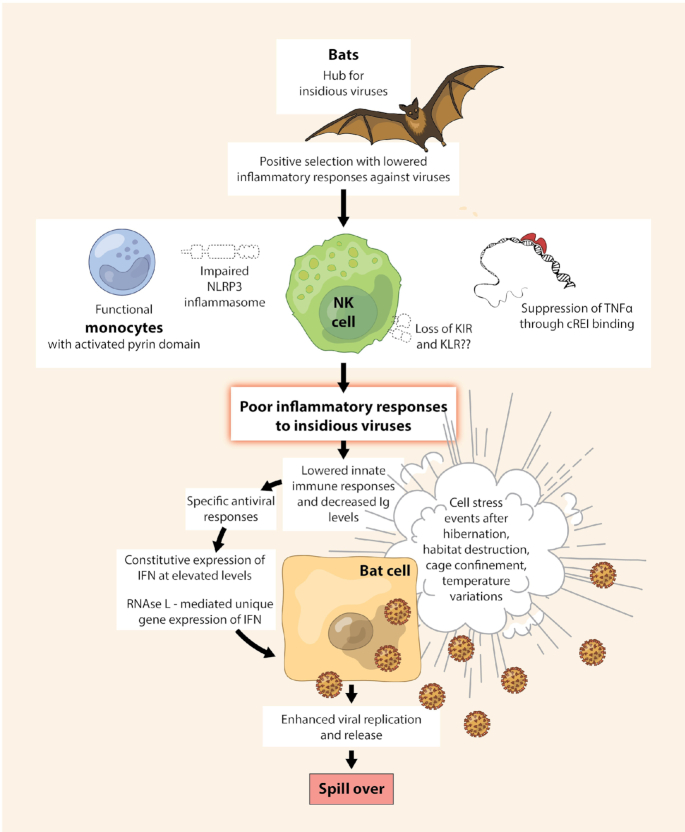
A vast proportion of coronavirus disease 2019 (COVID-19) individuals remain asymptomatic and can shed severe acute respiratory syndrome (SARS-CoV) type 2 virus to transmit the infection, which also explains the exponential increase in the number of COVID-19 cases globally. Furthermore, the rate of recovery from clinical COVID-19 in certain pockets of the globe is surprisingly high. Based on published reports and available literature, here, we speculated a few immunovirological mechanisms as to why a vast majority of individuals remain asymptomatic similar to exotic animal (bats and pangolins) reservoirs that remain refractile to disease development despite carrying a huge load of diverse insidious viral species, and whether such evolutionary advantage would unveil therapeutic strategies against COVID-19 infection in humans. Understanding the unique mechanisms that exotic animal species employ to achieve viral control, as well as inflammatory regulation, appears to hold key clues to the development of therapeutic versatility against COVID-19.
大量的 2019 冠状病毒病(COVID-19)患者无症状,并且可以排出严重急性呼吸综合征(SARS-CoV)2 病毒,从而传播感染,这也解释了 COVID-19 病例在全球范围内呈指数级增长的原因。此外,在全球某些地区,从临床 COVID-19 中康复的比例高得惊人。基于已发表的报告和现有文献,我们推测了一些免疫病毒学机制,即为什么大多数人仍然无症状,类似于外来动物(蝙蝠和穿山甲),尽管携带大量各种隐匿的病毒物种,但仍对疾病的发展有抵抗力,以及这种进化优势是否会揭示针对 COVID-19 感染的治疗策略。了解外来动物物种用来实现病毒控制以及炎症调节的独特机制,似乎为开发针对 COVID-19 的治疗多样性提供了关键线索。