Institute of Biomedical and Clinical Sciences, University of Exeter Medical School, University of Exeter, Exeter, Devon, UK.
Curr Diab Rep. 2020 Dec 8;20(12):82. doi: 10.1007/s11892-020-01352-6.
Obesity is closely linked with the pathogenesis of type 2 diabetes (T2DM) and cardiovascular disease (CVD), and whilst smoking cessation is associated with weight gain, there are concerns that this weight gain may offset the benefit of CVD risk reduction especially in those with considerable post-cessation weight gain. The aim of this narrative review is to evaluate recent evidence on smoking cessation and cardiometabolic outcomes and discuss limitations of current knowledge and studies.
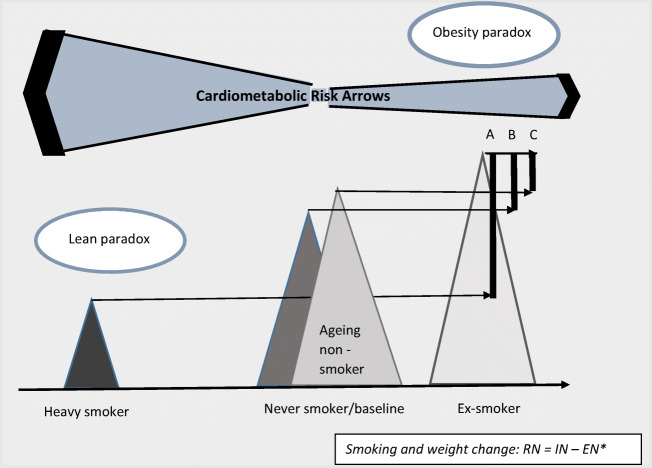
Nicotine is a key player in modulating energy balance by influencing lipid storage in adipose tissue by affecting lipolysis, energy input by modulating appetite and energy output by increasing sympathetic drive and thermogenesis. It also increases insulin resistance and promotes abdominal obesity. The CVD risk and mortality associated with cigarette smoking potentiate the CVD risks in patients with diabetes. Evidence supports the benefit of quitting cigarette smoking regardless of any subsequent weight gain. Data suggests that the cardiometabolic risk is limited to the first few years and that cardiovascular health and mortality benefit of smoking cessation outweighs the harm related to weight gain. This weight gain can be limited by nicotine replacement of which e-cigarettes (vaping) are increasingly popular if it is not an alternative to cigarette smoking. However, long-term health data on e-cigarettes is needed prior to formal recommendation for its use in smoking cessation. The recommendation for cessation of cigarette smoking is justified for those at high risk of weight gain and diabetes. However, for most benefit, consideration should be given for personalized weight management to limit weight gain. Awareness of a 'lean paradox' by which lower weight is associated with increased CVD risk may help to improve motivation and insight into the bias of smoking, health and body composition otherwise known to epidemiologists as the 'obesity paradox'.
肥胖与 2 型糖尿病(T2DM)和心血管疾病(CVD)的发病机制密切相关,虽然戒烟与体重增加有关,但人们担心这种体重增加可能会抵消 CVD 风险降低的益处,尤其是在那些有大量戒烟后体重增加的人群中。本综述的目的是评估最近关于戒烟和心脏代谢结果的证据,并讨论当前知识和研究的局限性。
尼古丁是通过影响脂肪组织中脂质储存来调节能量平衡的关键因素,其通过影响脂肪分解、通过调节食欲影响能量摄入、通过增加交感神经驱动和产热增加能量输出来影响能量平衡。它还会增加胰岛素抵抗并促进腹部肥胖。吸烟引起的 CVD 风险和死亡率会增加糖尿病患者的 CVD 风险。有证据支持无论随后是否体重增加,都应戒烟。数据表明,心脏代谢风险仅限于最初的几年,并且戒烟带来的心血管健康和死亡率获益超过与体重增加相关的危害。如果电子烟(蒸气)不是吸烟的替代品,那么可以通过尼古丁替代来限制这种体重增加。但是,在正式推荐使用电子烟戒烟之前,需要长期的电子烟健康数据。对于那些有体重增加和糖尿病高风险的人,建议戒烟。但是,为了获得最大的益处,应考虑进行个性化的体重管理,以限制体重增加。认识到“瘦悖论”,即较低的体重与增加的 CVD 风险相关,这可能有助于提高戒烟的动机和洞察力,以及流行病学学家所熟知的“肥胖悖论”,即健康和身体成分的偏见。