Department of Computer Engineering, Chosun University, Gwangju, South Korea.
Gwangju Alzheimer's disease and Related Dementias Cohort Research Center, Chosun University, Gwangju, Korea.
PLoS One. 2020 Dec 8;15(12):e0242712. doi: 10.1371/journal.pone.0242712. eCollection 2020.
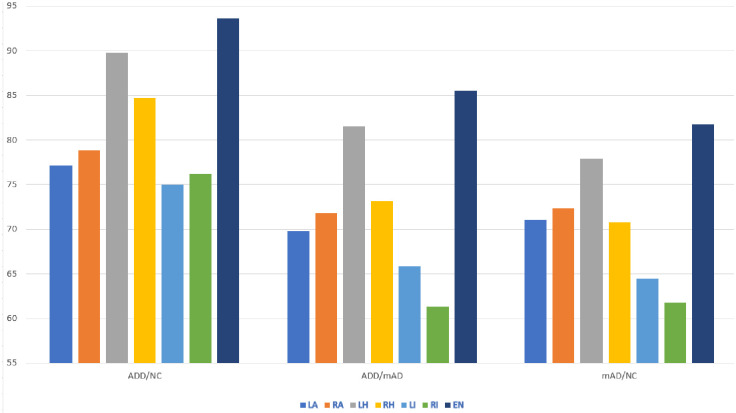
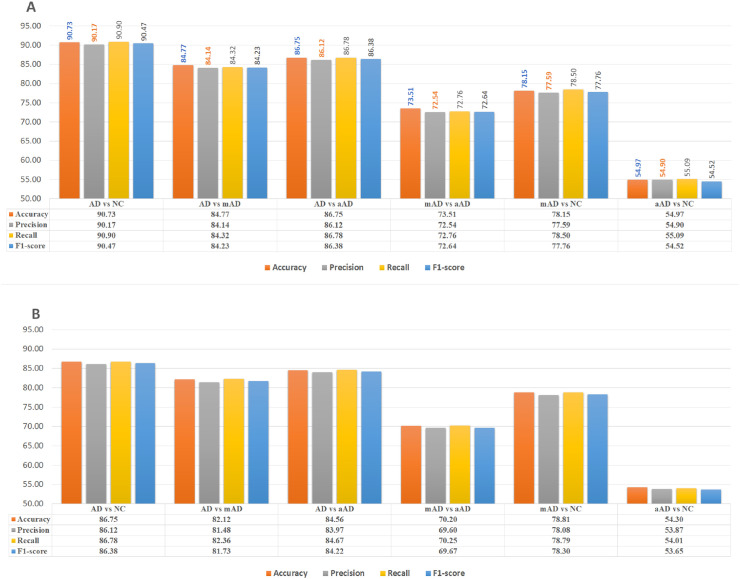
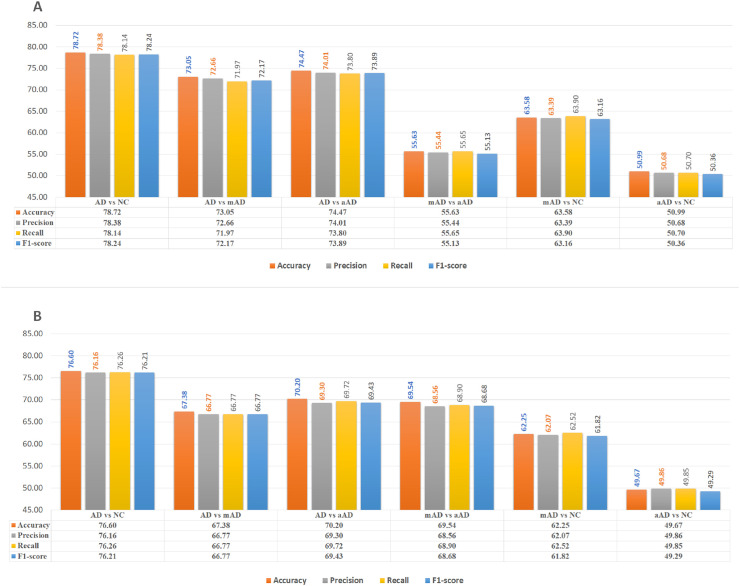
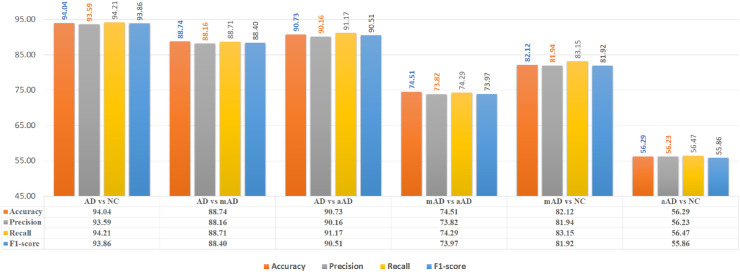
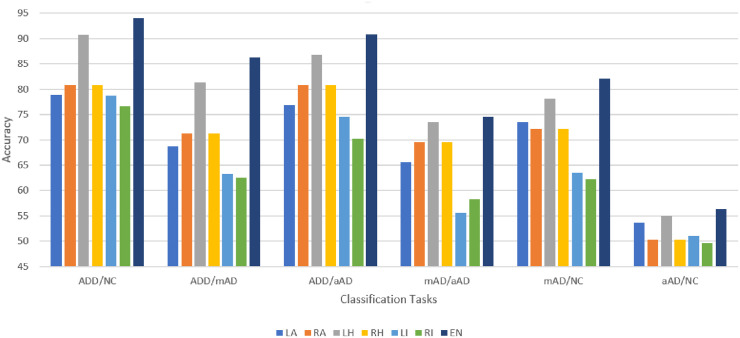
Patches from three orthogonal views of selected cerebral regions can be utilized to learn convolutional neural network (CNN) models for staging the Alzheimer disease (AD) spectrum including preclinical AD, mild cognitive impairment due to AD, and dementia due to AD and normal controls. Hippocampi, amygdalae and insulae were selected from the volumetric analysis of structured magnetic resonance images (MRIs). Three-view patches (TVPs) from these regions were fed to the CNN for training. MRIs were classified with the SoftMax-normalized scores of individual model predictions on TVPs. The significance of each region of interest (ROI) for staging the AD spectrum was evaluated and reported. The results of the ensemble classifier are compared with state-of-the-art methods using the same evaluation metrics. Patch-based ROI ensembles provide comparable diagnostic performance for AD staging. In this work, TVP-based ROI analysis using a CNN provides informative landmarks in cerebral MRIs and may have significance in clinical studies and computer-aided diagnosis system design.
从选定的大脑区域的三个正交视图中提取的补丁可以用于学习卷积神经网络 (CNN) 模型,以对阿尔茨海默病 (AD) 谱进行分期,包括临床前 AD、AD 引起的轻度认知障碍和 AD 引起的痴呆症以及正常对照。从结构磁共振成像 (MRI) 的体积分析中选择了海马体、杏仁核和脑岛。将这些区域的三视图补丁 (TVP) 输入到 CNN 中进行训练。通过对 TVP 上各个模型预测的 SoftMax 归一化分数对 MRI 进行分类。评估并报告了每个感兴趣区域 (ROI) 对 AD 分期的重要性。使用相同的评估指标,将基于集合分类器的结果与最先进的方法进行了比较。基于补丁的 ROI 集合为 AD 分期提供了可比的诊断性能。在这项工作中,使用 CNN 对基于 TVP 的 ROI 分析提供了大脑 MRI 中的信息性地标,可能在临床研究和计算机辅助诊断系统设计中具有意义。