Department of Pharmacology, Toxicology and Therapeutics, University of Kansas Medical Center, Kansas City, KS, 66160, USA.
Department of Pharmacology, Toxicology and Therapeutics, University of Kansas Medical Center, Kansas City, KS, 66160, USA.
Toxicol Lett. 2021 Mar 1;338:21-31. doi: 10.1016/j.toxlet.2020.12.005. Epub 2020 Dec 5.
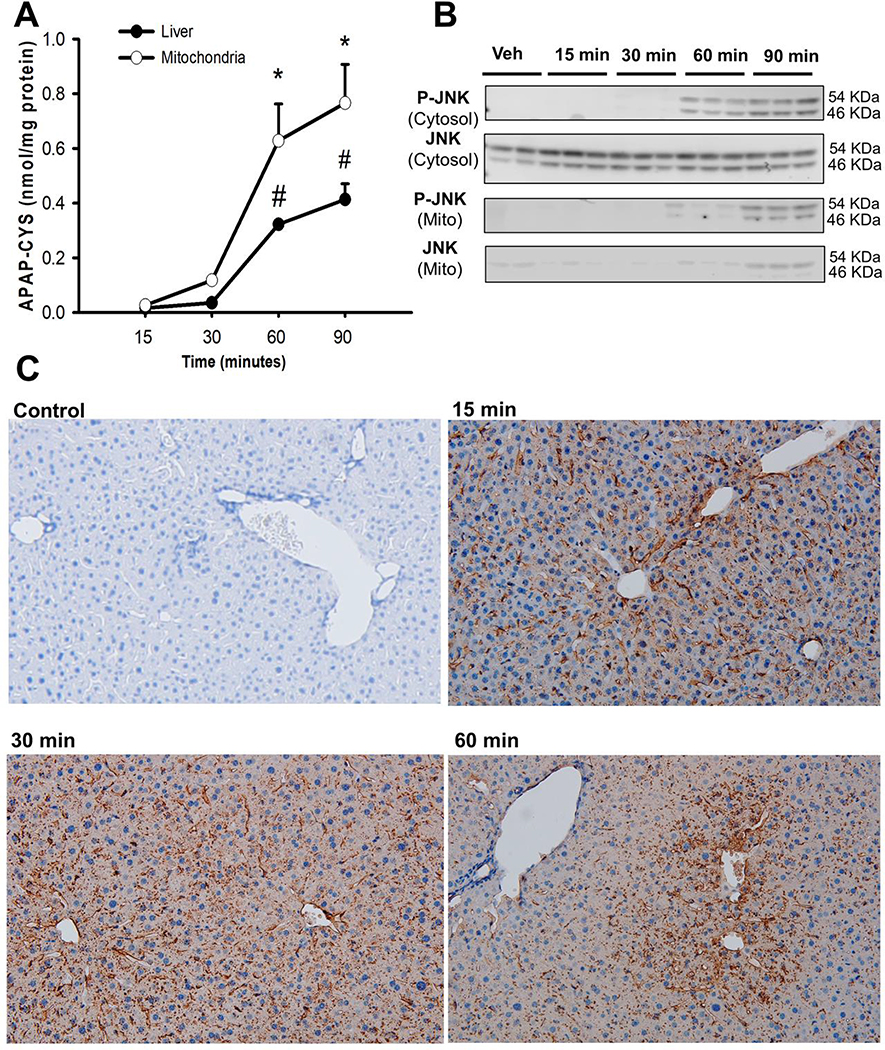
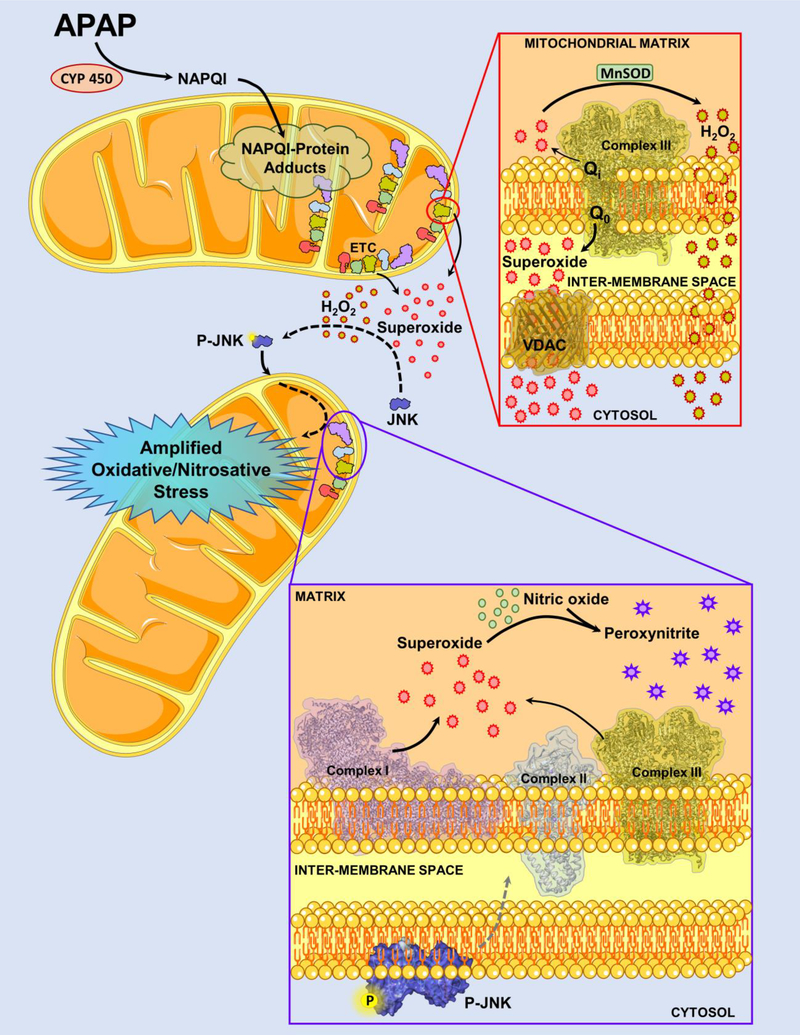
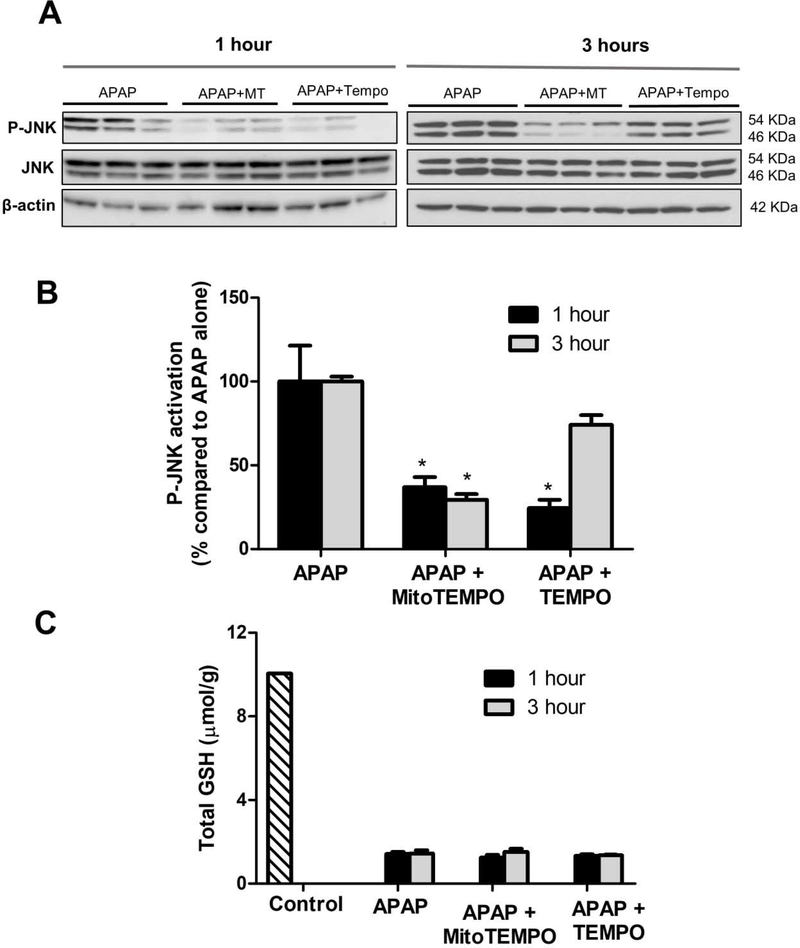
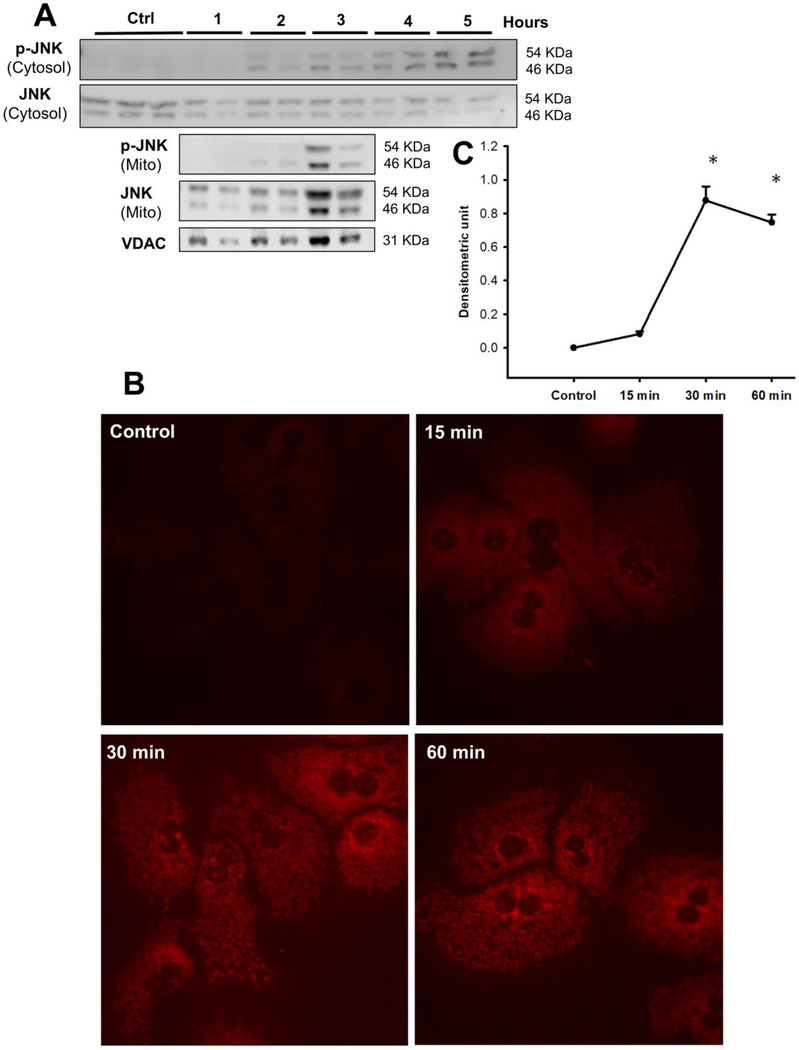
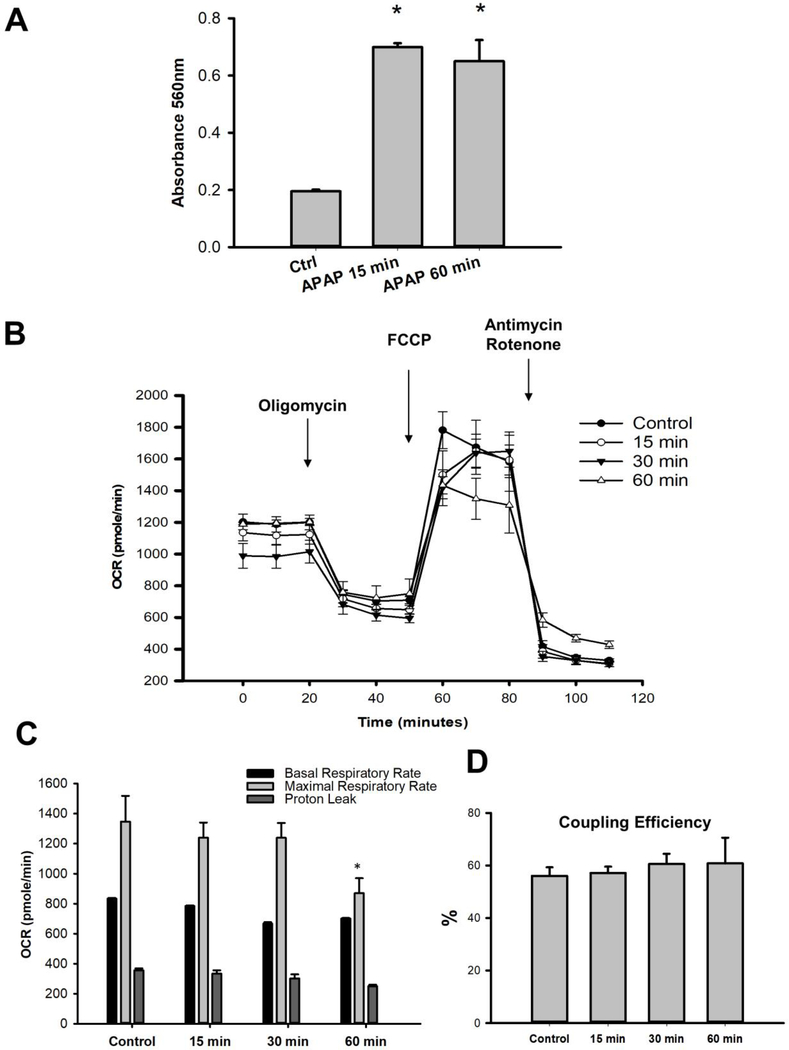
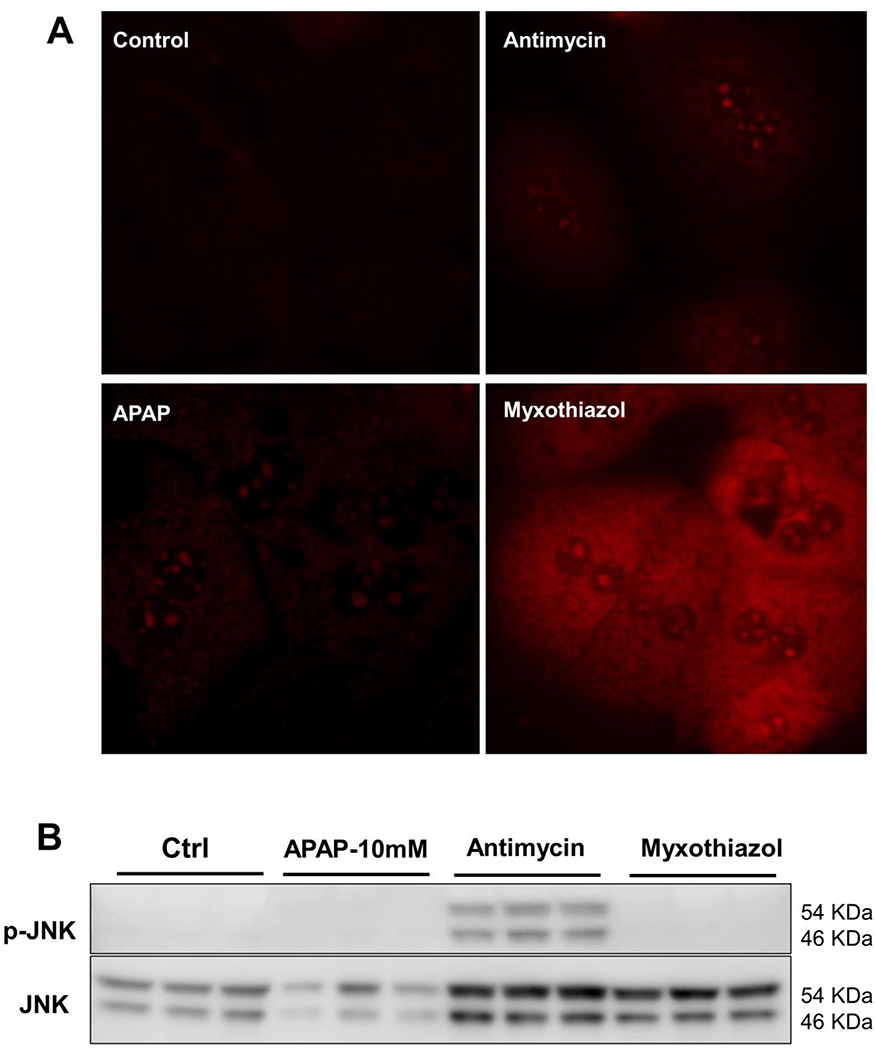
Acetaminophen (APAP) overdose is the most common cause of acute liver failure in the United States and formation of APAP-protein adducts, mitochondrial oxidant stress and activation of the mitogen activated protein (MAP) kinase c-jun N-terminal kinase (JNK) are critical for APAP-induced cell death. However, direct evidence linking these mechanistic features are lacking and were investigated by examining the early temporal course of these changes in mice after 300 mg/kg APAP. Protein adducts were detectable in the liver (0.05-0.1 nmol/mg protein) by 15 and 30 min after APAP, which increased (>500 %) selectively in mitochondria by 60 min. Cytosolic JNK activation was only evident at 60 min, and was significantly attenuated by scavenging superoxide specifically in the cytosol by TEMPO treatment. Treatment of mouse hepatocytes with APAP revealed mitochondrial superoxide generation within 15 min, accompanied by hydrogen peroxide production without change in mitochondrial respiratory function. The oxidant stress preceded JNK activation and its mitochondrial translocation. Inhibitor studies identified the putative source of mitochondrial superoxide as complex III, which released superoxide towards the intermembrane space after APAP resulting in activation of JNK in the cytosol. Our studies provide direct evidence of mechanisms involved in mitochondrial superoxide generation after NAPQI-adduct formation and its activation of the MAP kinase cascade in the cytosol, which are critical features of APAP hepatotoxicity.
对乙酰氨基酚(APAP)过量是美国急性肝衰竭的最常见原因,形成 APAP-蛋白加合物、线粒体氧化剂应激和丝裂原激活蛋白(MAP)激酶 c-jun N-末端激酶(JNK)的激活对于 APAP 诱导的细胞死亡至关重要。然而,缺乏将这些机制特征联系起来的直接证据,并通过检查 APAP 后 300mg/kg 的小鼠中这些变化的早期时间过程来研究这些证据。在 APAP 后 15 和 30 分钟,肝中可检测到蛋白加合物(0.05-0.1nmol/mg 蛋白),并在 60 分钟时选择性增加(>500%),仅在 60 分钟时可见细胞质 JNK 激活,并且通过 TEMPO 处理特异性清除细胞质中超氧阴离子显著减弱。用 APAP 处理小鼠肝细胞可在 15 分钟内产生线粒体超氧阴离子,同时伴有过氧化氢产生,而线粒体呼吸功能没有改变。氧化应激发生在 JNK 激活及其线粒体易位之前。抑制剂研究确定了线粒体超氧阴离子的潜在来源是复合物 III,APAP 后复合物 III 向膜间空间释放超氧阴离子,导致细胞质中 JNK 的激活。我们的研究提供了直接证据,证明了 NAPQI 加合物形成后线粒体超氧阴离子生成及其在细胞质中 MAP 激酶级联的激活的机制,这是 APAP 肝毒性的关键特征。