Livoti Lucia A, Sison-Young Rowena, Reddyhoff Dennis, Fisher Ciarán P, Gardner Iain, Diaz-Nieto Rafael, Goldring Christopher E, Copple Ian M
Department of Pharmacology & Therapeutics, Institute of Systems, Molecular & Integrative Biology, University of Liverpool, Liverpool, L69 3GE, United Kingdom.
Certara Predictive Technologies, Sheffield, S1 2BJ, United Kingdom.
Toxicol Sci. 2025 Jan 1;203(1):35-40. doi: 10.1093/toxsci/kfae133.
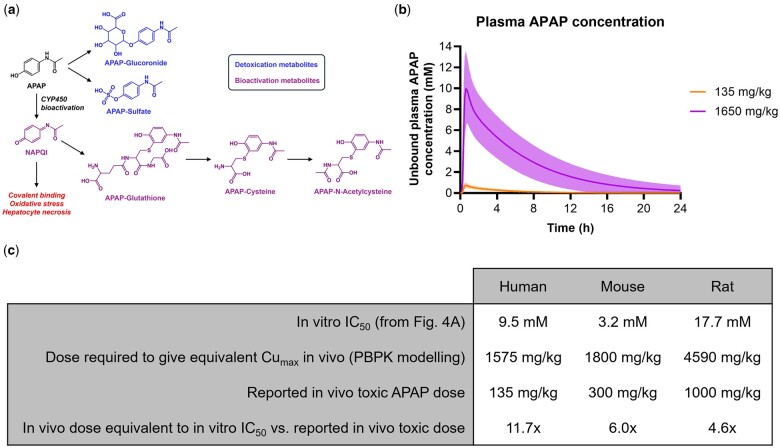
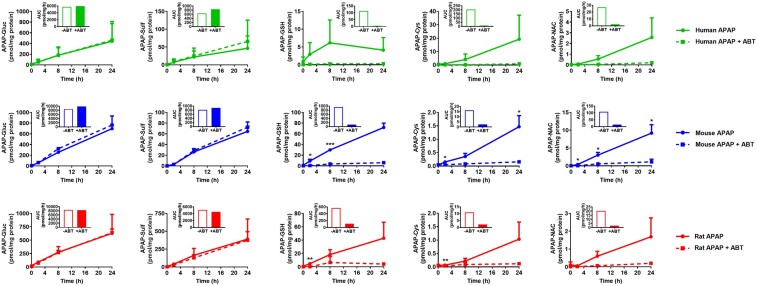
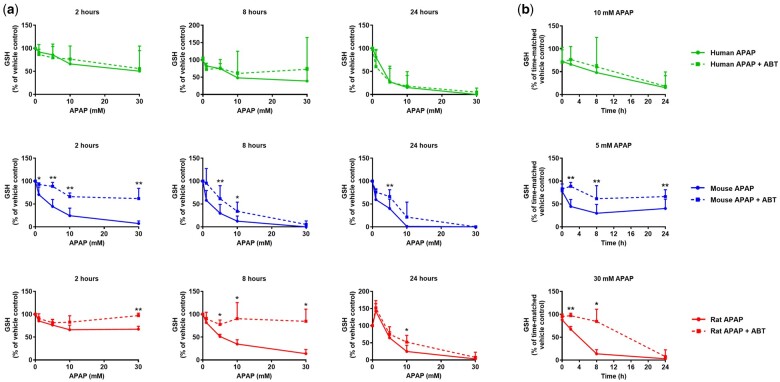
Acetaminophen is commonly used as a reference hepatotoxin to demonstrate that in vitro human liver platforms can emulate features of clinical drug-induced liver injury. However, the induction of substantial cell death in these models typically requires acetaminophen concentrations (∼10 mM) far higher than blood concentrations of the drug associated with clinical hepatotoxicity (∼1 mM). Using the cytochrome P450 inhibitor 1-aminobenzotriazole, we show that acetaminophen toxicity in cultured human, mouse, and rat hepatocytes is not dependent on N-acetyl-p-benzoquinonimine formation, unlike the in vivo setting. This finding highlights the limitation of using acetaminophen as a reference hepatotoxin for the evaluation of in vitro liver models. Hence, we make recommendations on the selection of reference hepatotoxins for this purpose.
对乙酰氨基酚通常被用作参考肝毒素,以证明体外人肝平台能够模拟临床药物性肝损伤的特征。然而,在这些模型中诱导大量细胞死亡通常需要对乙酰氨基酚浓度(约10 mM),这远高于与临床肝毒性相关的药物血药浓度(约1 mM)。使用细胞色素P450抑制剂1-氨基苯并三唑,我们发现,与体内情况不同,对乙酰氨基酚在培养的人、小鼠和大鼠肝细胞中的毒性并不依赖于N-乙酰对苯醌亚胺的形成。这一发现凸显了使用对乙酰氨基酚作为参考肝毒素来评估体外肝模型的局限性。因此,我们针对为此目的选择参考肝毒素提出了建议。