School of Economics and Management, Northwest A&F University, No. 3 Taicheng Road, Yangling, Xianyang 712100, China.
School of Economics and Management, Xi'an Shiyou University, No. 18 Dianzi Road, Xi'an 710065, China.
Int J Environ Res Public Health. 2020 Dec 6;17(23):9110. doi: 10.3390/ijerph17239110.
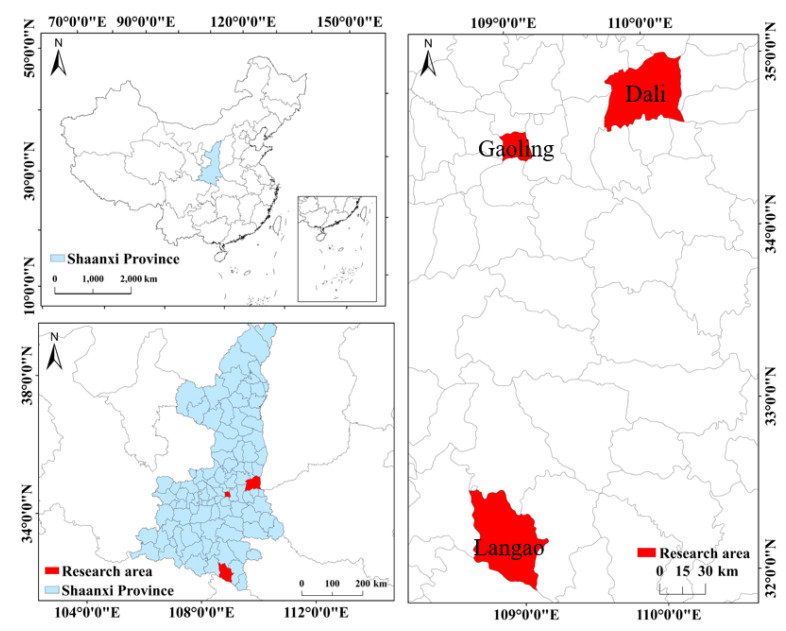
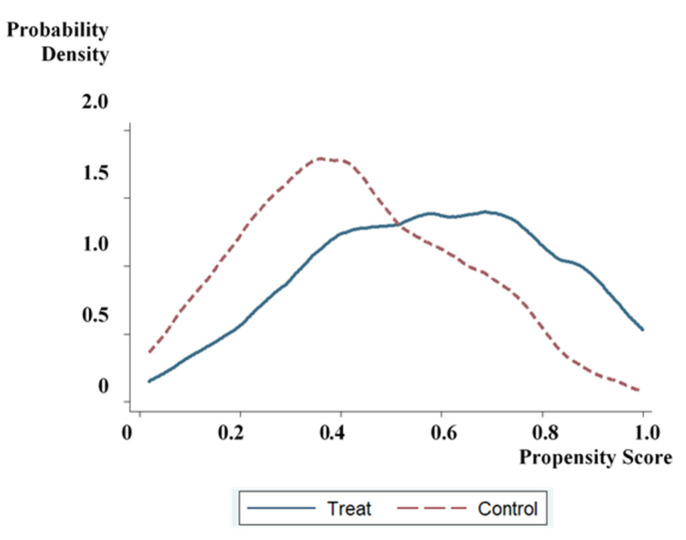
The spillover effect of environmental behavior has been of wide concern in recent years. The purpose of this paper is to explore the influence of household waste sorting on green consumption (behavioral spillover) and the possible psychological mechanisms involved in such spillover of environmental concern. Though it is important, insufficient attention has been paid to exploring the relationship, and the process of its formation, between waste sorting and green consumption. To narrow this gap, survey data collected in 2018 from 688 rural households from Shaanxi Province in western China were used. The propensity score matching method was employed to measure the effect of waste sorting on rural households' green consumption. The mediating model was employed to investigate the path of influence in the relationship between waste sorting and green consumption. The results showed that waste sorting behavior positively spilled over into green consumption, with a net effect of 0.205. Environmental concern has a mediating effect on the relationship between waste sorting and green consumption behavior, with a mediating effect of 0.3177. In summary, household waste sorting behavior has a spillover effect on green consumption behavior as a result of the mediation effect of environmental concern. The results of this article fill in our knowledge on the spillover effects of waste sorting behavior in developing countries. Policy makers and regulators should vigorously advocate and implement waste sorting behavior, increase farmers' concern for the environment, and promote their participation in green consumption behavior, so as to maximize the spillover effect.
近年来,环境行为的溢出效应受到了广泛关注。本文旨在探讨家庭垃圾分类对绿色消费(行为溢出)的影响,以及这种环境关注溢出所涉及的可能心理机制。虽然这很重要,但对于探索垃圾分类与绿色消费之间的关系及其形成过程,关注还不够。为了缩小这一差距,本文使用了 2018 年从中国西部陕西省采集的 688 户农村家庭的调查数据。采用倾向得分匹配法来衡量垃圾分类对农村家庭绿色消费的影响。采用中介模型来探讨垃圾分类与绿色消费之间关系的影响路径。结果表明,垃圾分类行为对绿色消费具有积极的溢出效应,净效应为 0.205。环境关注在垃圾分类与绿色消费行为之间的关系中具有中介效应,中介效应为 0.3177。总之,由于环境关注的中介效应,家庭垃圾分类行为对绿色消费行为具有溢出效应。本文的研究结果填补了我们对发展中国家垃圾分类行为溢出效应的认识空白。政策制定者和监管者应大力倡导和实施垃圾分类行为,增加农民对环境的关注,并促进他们参与绿色消费行为,以最大化溢出效应。