Zeb Alam, Rana Isra, Choi Ho-Ik, Lee Cheol-Ho, Baek Seong-Woong, Lim Chang-Wan, Khan Namrah, Arif Sadia Tabassam, Sahar Najam Us, Alvi Arooj Mohsin, Shah Fawad Ali, Din Fakhar Ud, Bae Ok-Nam, Park Jeong-Sook, Kim Jin-Ki
Institute of Pharmaceutical Science and Technology, College of Pharmacy, Hanyang University, 55 Hanyangdaehak-ro, Sangnok-gu, Ansan, Gyeonggi-do 15588, Korea.
Riphah Institute of Pharmaceutical Science, Riphah International University, Islamabad 44000, Pakistan.
Pharmaceutics. 2020 Dec 6;12(12):1184. doi: 10.3390/pharmaceutics12121184.
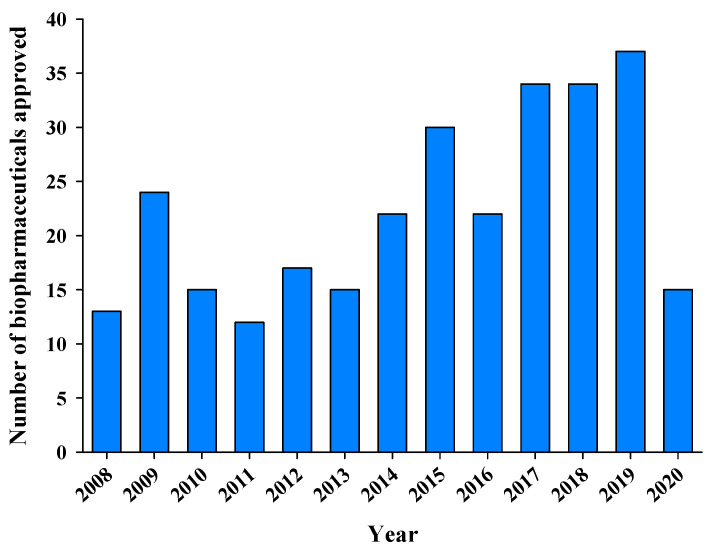
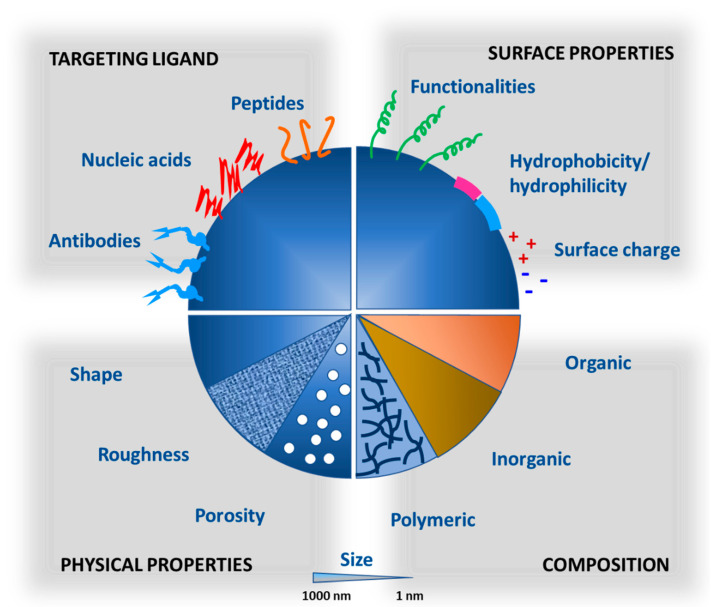
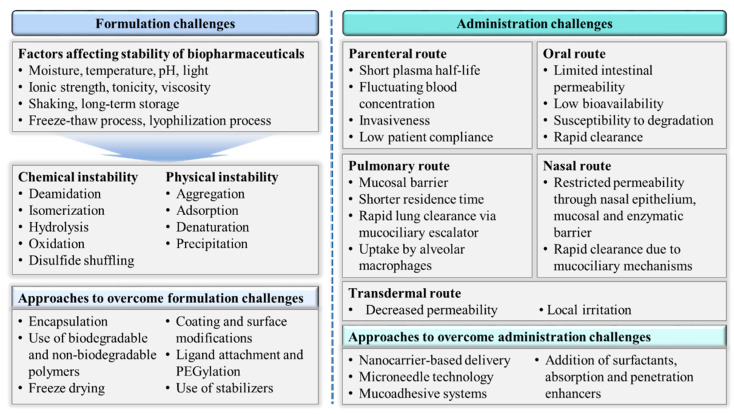
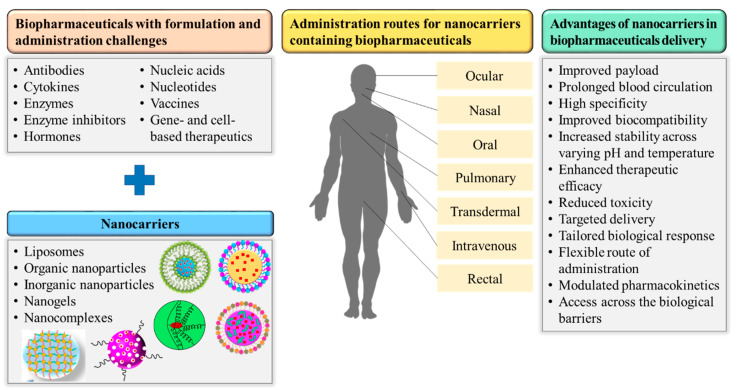
During the past two decades, the clinical use of biopharmaceutical products has markedly increased because of their obvious advantages over conventional small-molecule drug products. These advantages include better specificity, potency, targeting abilities, and reduced side effects. Despite the substantial clinical and commercial success, the macromolecular structure and intrinsic instability of biopharmaceuticals make their formulation and administration challenging and render parenteral delivery as the only viable option in most cases. The use of nanocarriers for efficient delivery of biopharmaceuticals is essential due to their practical benefits such as protecting from degradation in a hostile physiological environment, enhancing plasma half-life and retention time, facilitating absorption through the epithelium, providing site-specific delivery, and improving access to intracellular targets. In the current review, we highlight the clinical and commercial success of biopharmaceuticals and the overall applications and potential of nanocarriers in biopharmaceuticals delivery. Effective applications of nanocarriers for biopharmaceuticals delivery via invasive and noninvasive routes (oral, pulmonary, nasal, and skin) are presented here. The presented data undoubtedly demonstrate the great potential of combining nanocarriers with biopharmaceuticals to improve healthcare products in the future clinical landscape. In conclusion, nanocarriers are promising delivery tool for the hormones, cytokines, nucleic acids, vaccines, antibodies, enzymes, and gene- and cell-based therapeutics for the treatment of multiple pathological conditions.
在过去二十年中,生物制药产品的临床应用显著增加,因为它们相对于传统小分子药物产品具有明显优势。这些优势包括更好的特异性、效力、靶向能力以及减少的副作用。尽管在临床和商业上取得了巨大成功,但生物制药的大分子结构和内在不稳定性使其制剂和给药具有挑战性,并且在大多数情况下使肠胃外给药成为唯一可行的选择。由于纳米载体具有实际益处,如在恶劣的生理环境中保护生物制药免受降解、延长血浆半衰期和保留时间、促进通过上皮的吸收、提供位点特异性递送以及改善对细胞内靶点的可达性,因此使用纳米载体高效递送生物制药至关重要。在当前综述中,我们强调了生物制药的临床和商业成功以及纳米载体在生物制药递送中的整体应用和潜力。本文介绍了纳米载体通过侵入性和非侵入性途径(口服、肺部、鼻腔和皮肤)有效递送生物制药的情况。所呈现的数据无疑证明了在未来临床环境中将纳米载体与生物制药相结合以改善医疗产品的巨大潜力。总之,纳米载体是用于激素、细胞因子、核酸、疫苗、抗体、酶以及基于基因和细胞的治疗剂的有前景的递送工具,可用于治疗多种病理状况。