Wang Wei, Wang Xinjie, Rajaei Mehrdad, Youn Ji Youn, Zafar Atif, Deokar Hemantkumar, Buolamwini John K, Yang Jianhua, Foster Jennifer H, Zhou Jia, Zhang Ruiwen
Department of Pharmacological and Pharmaceutical Sciences, College of Pharmacy, University of Houston, Houston, TX 77204, USA.
Drug Discovery Institute, University of Houston, Houston, TX 77204, USA.
Cancers (Basel). 2020 Dec 5;12(12):3651. doi: 10.3390/cancers12123651.
Neuroblastoma is an aggressive pediatric solid tumor with an overall survival rate of <50% for patients with high-risk disease. The majority (>98%) of pathologically-diagnosed neuroblastomas have wild-type p53 with intact functional activity. However, the mouse double minute 2 (MDM2) homolog, an E3 ubiquitin ligase, is overexpressed in neuroblastoma and leads to inhibition of p53. MDM2 also exerts p53-independent oncogenic functions. Thus, MDM2 seems to be an attractive target for the reactivation of p53 and attenuation of oncogenic activity in neuroblastoma.
In this study, we evaluated the anticancer activities and underlying mechanisms of action of SP141, a first-in-class MDM2 inhibitor, in neuroblastoma cell lines with different p53 backgrounds. The findings were confirmed in mouse xenograft models of neuroblastoma.
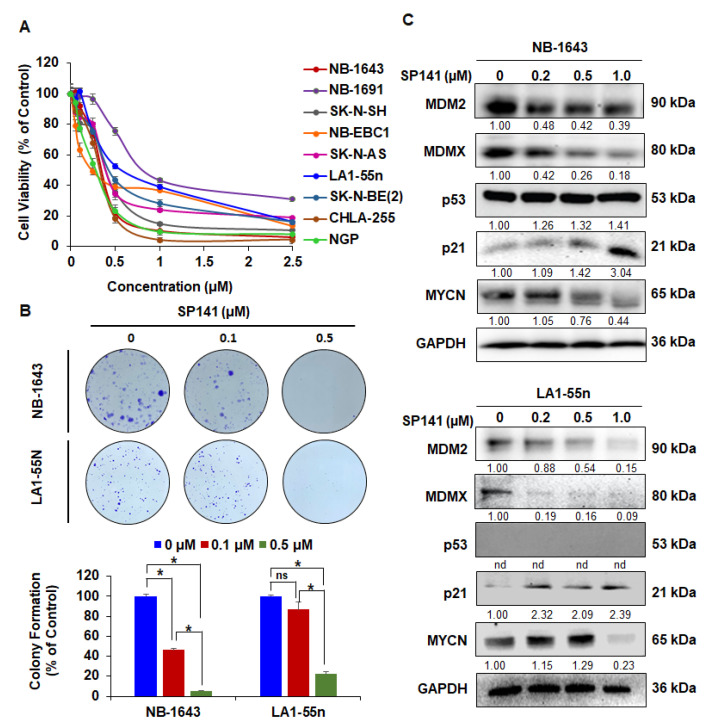
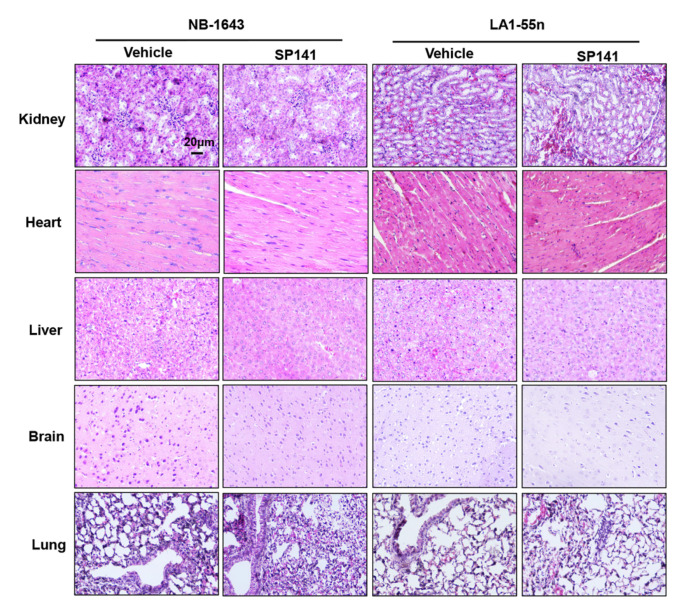
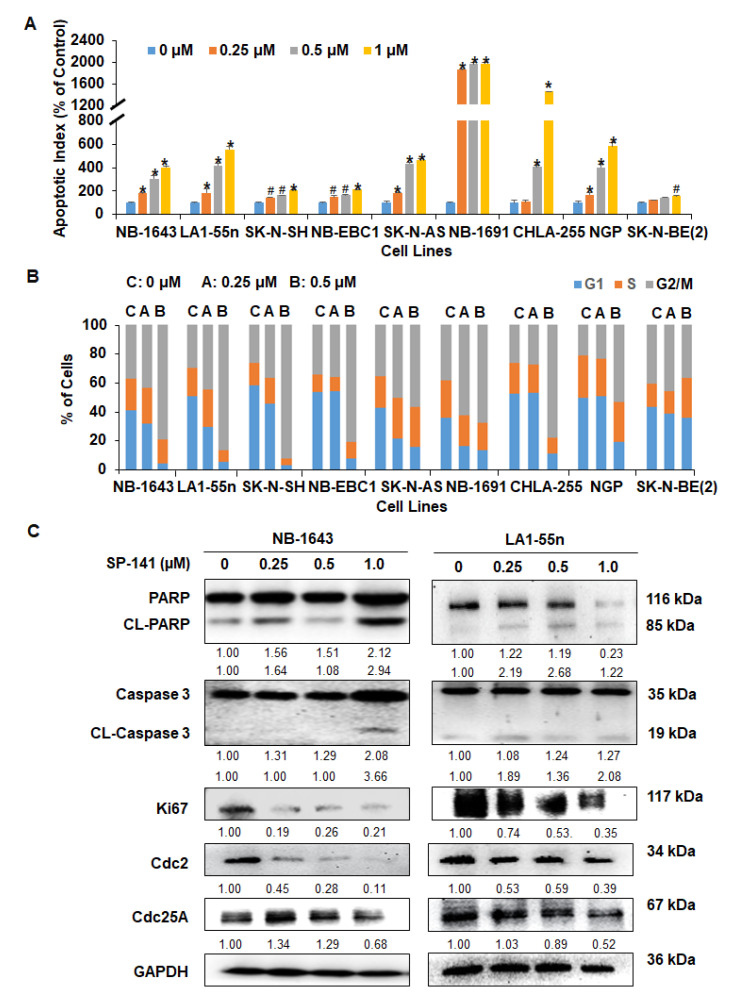
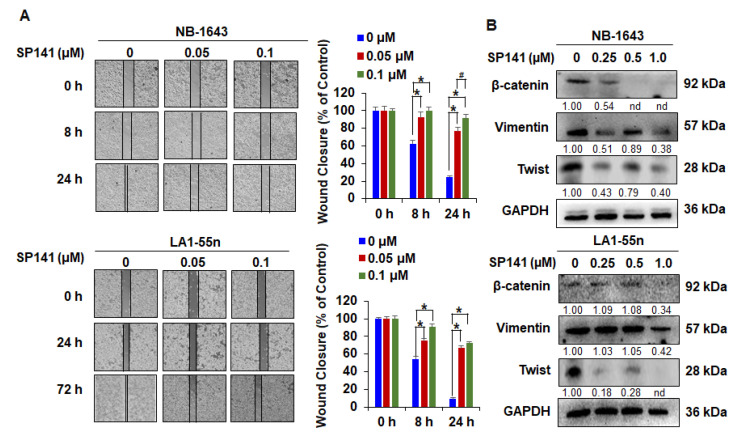
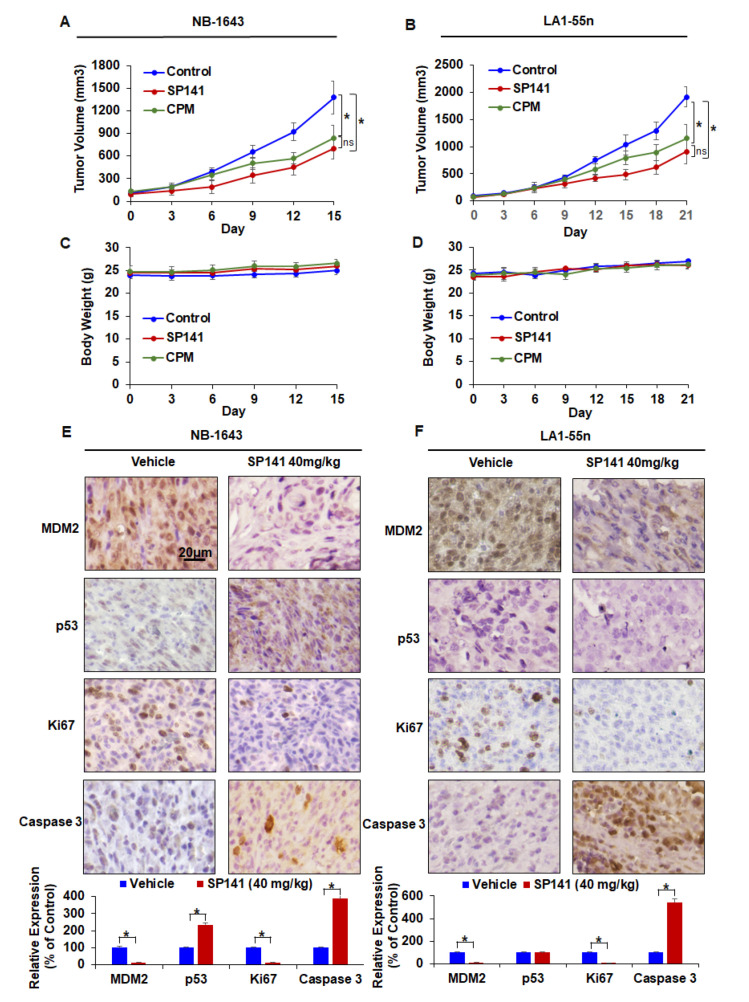
We demonstrate that SP141 reduces neuroblastoma cell viability, induces apoptosis, arrests cells at the G2/M phase, and prevents cell migration, independent of p53. In addition, in neuroblastoma xenograft models, SP141 inhibited MDM2 expression and suppressed tumor growth without any host toxicity at the effective dose.
MDM2 inhibition by SP141 results in the inhibition of neuroblastoma growth and metastasis, regardless of the p53 status of the cells and tumors. These findings provide proof-of-concept that SP141 represents a novel treatment option for both p53 wild-type and p53 null neuroblastoma.
神经母细胞瘤是一种侵袭性儿科实体瘤,高危疾病患者的总生存率<50%。在病理诊断的神经母细胞瘤中,大多数(>98%)具有野生型p53且功能活性完整。然而,小鼠双微体2(MDM2)同源物,一种E3泛素连接酶,在神经母细胞瘤中过度表达并导致p53受到抑制。MDM2还发挥不依赖p53的致癌功能。因此,MDM2似乎是重新激活p53和减弱神经母细胞瘤致癌活性的一个有吸引力的靶点。
在本研究中,我们评估了一流的MDM2抑制剂SP141在具有不同p53背景的神经母细胞瘤细胞系中的抗癌活性及潜在作用机制。这些发现已在神经母细胞瘤的小鼠异种移植模型中得到证实。
我们证明SP141可降低神经母细胞瘤细胞活力,诱导细胞凋亡,使细胞停滞于G2/M期,并阻止细胞迁移,且不依赖p53。此外,在神经母细胞瘤异种移植模型中,SP141在有效剂量下可抑制MDM2表达并抑制肿瘤生长,且无任何宿主毒性。
SP141抑制MDM2可导致神经母细胞瘤生长和转移受到抑制,无论细胞和肿瘤的p53状态如何。这些发现提供了概念验证,即SP141是p53野生型和p53缺失型神经母细胞瘤的一种新型治疗选择。