Qin Jiang-Jiang, Wang Wei, Li Xin, Deokar Hemantkumar, Buolamwini John K, Zhang Ruiwen
Department of Pharmacological and Pharmaceutical Sciences, College of Pharmacy, University of Houston, Houston, TX, United States.
Center for Drug Discovery, University of Houston, Houston, TX, United States.
Front Pharmacol. 2018 Jan 17;9:5. doi: 10.3389/fphar.2018.00005. eCollection 2018.
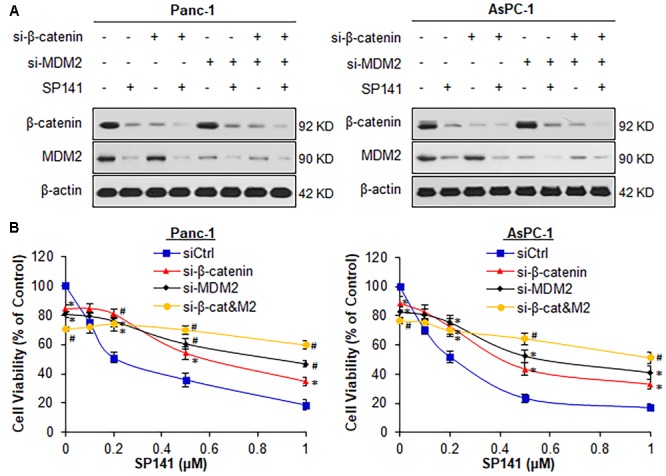
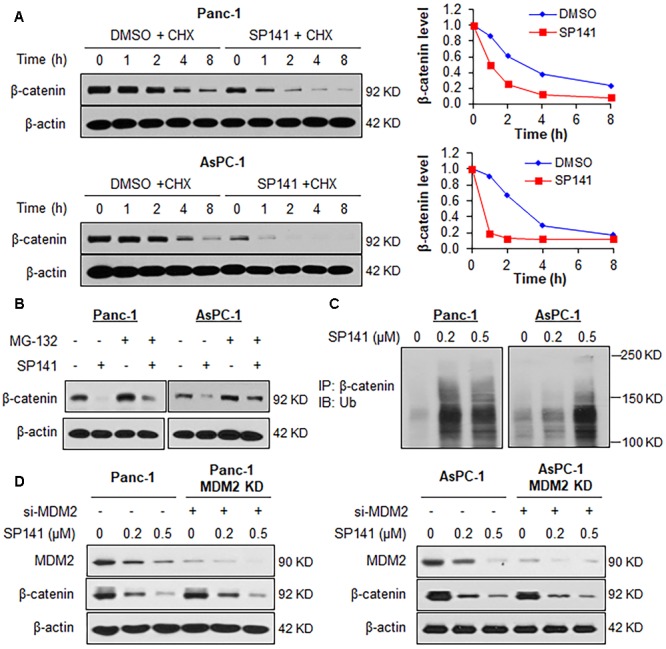
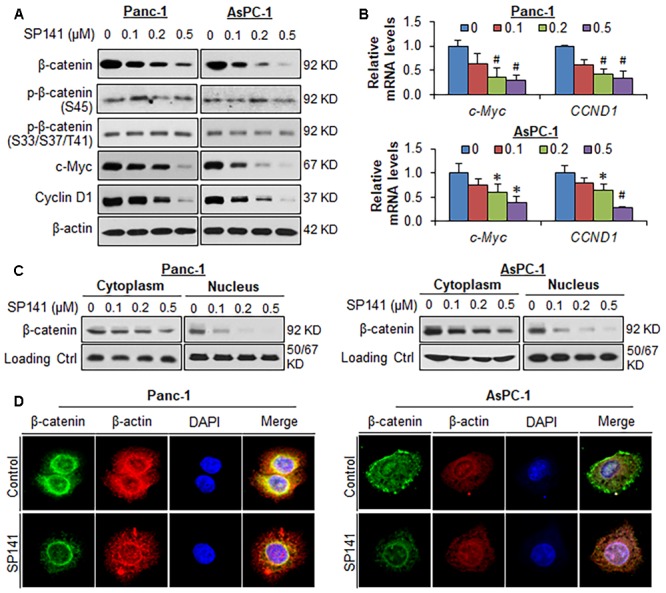
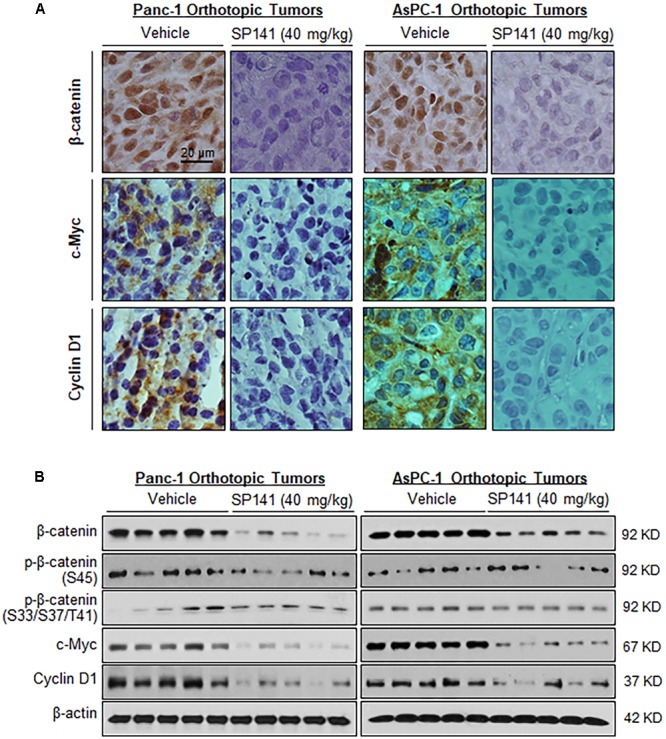
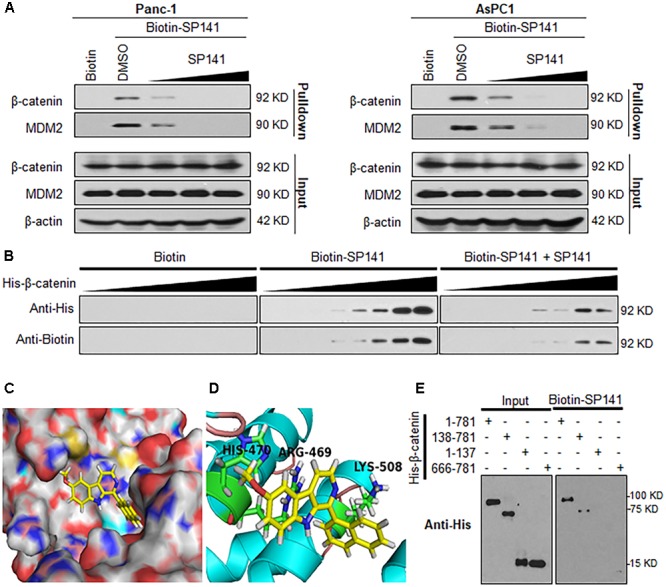
The β-catenin and MDM2 oncoproteins are overexpressed and constitutively activated in human pancreatic cancer and contribute to its initiation, progression, and metastasis. The Wnt/β-catenin signaling pathway strongly interacts with the MDM2-p53 signaling pathway, accelerating the tumorigenesis and its development. Therefore, therapies inhibiting both β-catenin and MDM2 are suggested to be ideal treatments for patients with advanced pancreatic cancer. We have recently identified a novel class of β-carboline compounds as the specific and potent MDM2 inhibitors, including a lead compound SP141. In the present study, we utilized SP141 as an exemplary β-carboline compound to characterize β-catenin as a molecular target of the β-carboline compounds and to demonstrate an important role of β-catenin in the anticancer activity of β-carboline. We found that the silencing of either β-catenin or MDM2 largely reduced the anticancer activity of SP141 while the double silencing of both genes almost completely blocked SP141's activity. SP141 directly bound to β-catenin and inhibited its expression and activity in pancreatic cancer cells and . The inhibitory effects of SP141 on β-catenin were mediated by the ubiquitin-proteasome system in an MDM2-independent manner. In conclusion, these results suggest that SP141 exerts its anticancer activity by dually inhibiting β-catenin and MDM2. We envision that β-carboline derivatives can be developed as promising dual inhibitors of β-catenin and MDM2 for the treatment of advanced pancreatic cancer.
β-连环蛋白和MDM2癌蛋白在人类胰腺癌中过表达并持续激活,促进胰腺癌的起始、进展和转移。Wnt/β-连环蛋白信号通路与MDM2-p53信号通路强烈相互作用,加速肿瘤发生及其发展。因此,抑制β-连环蛋白和MDM2的疗法被认为是晚期胰腺癌患者的理想治疗方法。我们最近鉴定出一类新型的β-咔啉化合物作为特异性且强效的MDM2抑制剂,包括先导化合物SP141。在本研究中,我们利用SP141作为示例性β-咔啉化合物来将β-连环蛋白表征为β-咔啉化合物的分子靶点,并证明β-连环蛋白在β-咔啉抗癌活性中的重要作用。我们发现,沉默β-连环蛋白或MDM2均可大幅降低SP141的抗癌活性,而同时沉默这两个基因几乎完全阻断了SP141的活性。SP141直接与β-连环蛋白结合,并抑制其在胰腺癌细胞中的表达和活性。SP141对β-连环蛋白的抑制作用由泛素-蛋白酶体系统以不依赖MDM2的方式介导。总之,这些结果表明SP141通过双重抑制β-连环蛋白和MDM2发挥其抗癌活性。我们设想β-咔啉衍生物可被开发为有前景的β-连环蛋白和MDM2双重抑制剂,用于治疗晚期胰腺癌。