Department of Psychology, University of Marburg, 35032 Marburg, Germany.
Department of Psychology, University of Giessen, 35394 Giessen, Germany.
Int J Environ Res Public Health. 2020 Dec 5;17(23):9083. doi: 10.3390/ijerph17239083.
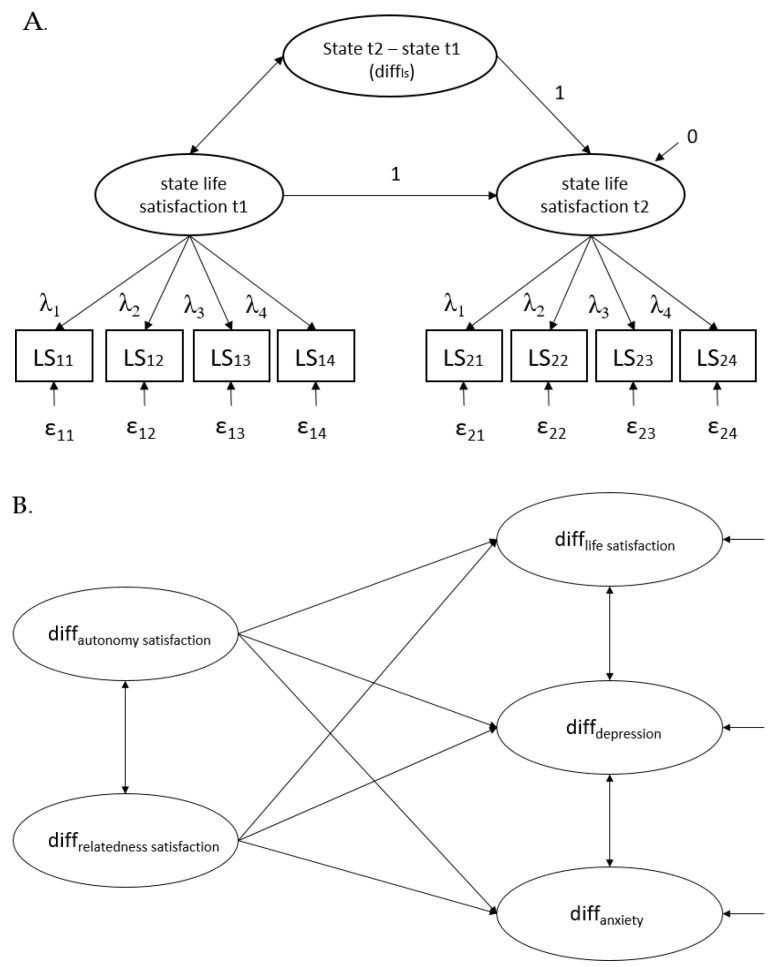
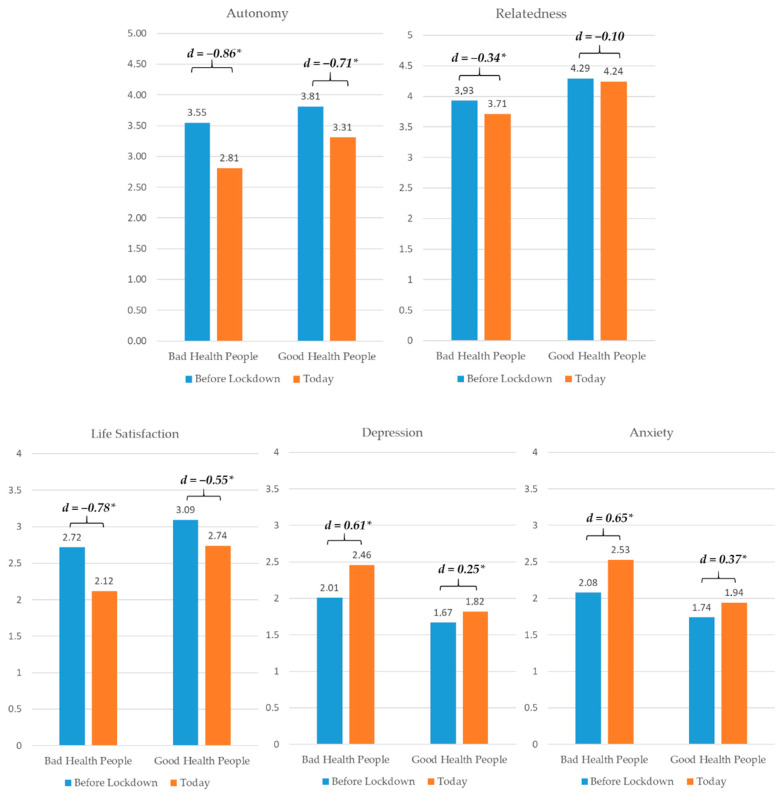
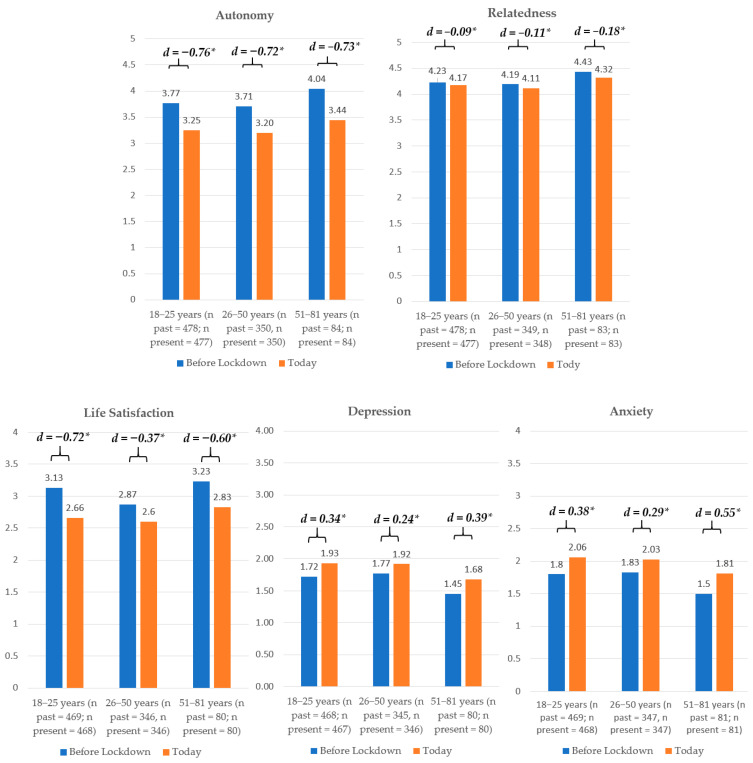
All over the world; measures have been implemented to contain the novel Sars-CoV-2 virus since its outbreak in the beginning of 2020. These measures-among which social distancing and contact restrictions were most prominent-may have an overall effect on people's psychological well-being. The present study seeks to examine whether lockdown measures affected people's well-being; anxiety; depressive symptoms during the lockdown and whether these effects could be explained by reduced satisfaction of the basic psychological needs of autonomy and relatedness. = 1086 participants of different ages and educational levels from all over Germany reported strong declines in autonomy and well-being; small declines in relatedness satisfaction; moderate increases in anxiety and depressive symptoms. These effects were stronger for people with moderate to bad subjective overall health. Latent change modeling revealed that, especially, decreases in autonomy satisfaction led to stronger decreases in well-being as well as stronger increases in anxiety and depressive symptoms; whereas decreases in relatedness had much weaker effects. Our results imply differential effects depending on individual preconditions; but also more generally that peoples' need for autonomy was most strongly affected by the lockdown measures, which should be considered as important information in planning future lockdowns.
自 2020 年初新型 SARS-CoV-2 病毒爆发以来,全球各国都已实施措施加以控制。这些措施——其中最突出的是社交距离和接触限制——可能会对人们的心理健康产生整体影响。本研究旨在探讨封锁措施是否会影响人们在封锁期间的幸福感、焦虑和抑郁症状,以及这些影响是否可以通过降低自主和相关的基本心理需求的满意度来解释。来自德国各地的不同年龄和教育程度的 1086 名参与者报告说,自主性和幸福感明显下降,相关性满意度略有下降,焦虑和抑郁症状中度增加。对于主观整体健康状况中等或较差的人来说,这些影响更为强烈。潜在变化模型显示,自主性满意度的下降尤其会导致幸福感的下降以及焦虑和抑郁症状的增强,而相关性的下降则影响较小。我们的研究结果表明,个体的先决条件会产生不同的影响,但更普遍的是,人们的自主需求受到封锁措施的强烈影响,这应作为未来封锁计划的重要信息加以考虑。