• 文献检索
  • 文档翻译
  • 深度研究
  • 学术资讯
  • Suppr Zotero 插件Zotero 插件
  • 邀请有礼
  • 套餐&价格
  • 历史记录
应用&插件
Suppr Zotero 插件Zotero 插件浏览器插件Mac 客户端Windows 客户端微信小程序
定价
高级版会员购买积分包购买API积分包
服务
文献检索文档翻译深度研究API 文档MCP 服务
关于我们
关于 Suppr公司介绍联系我们用户协议隐私条款
关注我们

Suppr 超能文献

核心技术专利:CN118964589B侵权必究
粤ICP备2023148730 号-1Suppr @ 2026

文献检索

告别复杂PubMed语法,用中文像聊天一样搜索,搜遍4000万医学文献。AI智能推荐,让科研检索更轻松。

立即免费搜索

文件翻译

保留排版,准确专业,支持PDF/Word/PPT等文件格式,支持 12+语言互译。

免费翻译文档

深度研究

AI帮你快速写综述,25分钟生成高质量综述,智能提取关键信息,辅助科研写作。

立即免费体验

疾病大流行和新出现的土著病毒与引入的作物之间的主要传染病。

Disease Pandemics and Major Epidemics Arising from New Encounters between Indigenous Viruses and Introduced Crops.

机构信息

Institute of Agriculture, University of Western Australia, 35 Stirling Highway, Crawley, WA 6009, Australia.

出版信息

Viruses. 2020 Dec 4;12(12):1388. doi: 10.3390/v12121388.

DOI:10.3390/v12121388
PMID:33291635
原文链接:https://pmc.ncbi.nlm.nih.gov/articles/PMC7761969/
Abstract

Virus disease pandemics and epidemics that occur in the world's staple food crops pose a major threat to global food security, especially in developing countries with tropical or subtropical climates. Moreover, this threat is escalating rapidly due to increasing difficulties in controlling virus diseases as climate change accelerates and the need to feed the burgeoning global population escalates. One of the main causes of these pandemics and epidemics is the introduction to a new continent of food crops domesticated elsewhere, and their subsequent invasion by damaging virus diseases they never encountered before. This review focusses on providing historical and up-to-date information about pandemics and major epidemics initiated by spillover of indigenous viruses from infected alternative hosts into introduced crops. This spillover requires new encounters at the managed and natural vegetation interface. The principal virus disease pandemic examples described are two (cassava mosaic, cassava brown streak) that threaten food security in sub-Saharan Africa (SSA), and one (tomato yellow leaf curl) doing so globally. A further example describes a virus disease pandemic threatening a major plantation crop producing a vital food export for West Africa (cacao swollen shoot). Also described are two examples of major virus disease epidemics that threaten SSA's food security (rice yellow mottle, groundnut rosette). In addition, brief accounts are provided of two major maize virus disease epidemics (maize streak in SSA, maize rough dwarf in Mediterranean and Middle Eastern regions), a major rice disease epidemic (rice hoja blanca in the Americas), and damaging tomato tospovirus and begomovirus disease epidemics of tomato that impair food security in different world regions. For each pandemic or major epidemic, the factors involved in driving its initial emergence, and its subsequent increase in importance and geographical distribution, are explained. Finally, clarification is provided over what needs to be done globally to achieve effective management of severe virus disease pandemics and epidemics initiated by spillover events.

摘要

病毒病大流行和疫情在世界主要粮食作物中发生,对全球粮食安全构成重大威胁,特别是在气候为热带或亚热带的发展中国家。此外,由于气候变化加速,控制病毒病的难度越来越大,以及需要养活不断增长的全球人口,这种威胁正在迅速加剧。这些大流行和疫情的主要原因之一是将在其他地方驯化的粮食作物引入一个新的大陆,然后它们被以前从未遇到过的破坏性病毒病所侵袭。这篇综述重点介绍了由感染的替代宿主中的土著病毒溢出到引入的作物中引发的大流行和主要疫情的历史和最新信息。这种溢出需要在管理和自然植被界面上进行新的接触。描述的主要病毒病大流行示例有两个(木薯花叶病、木薯褐条病),它们威胁着撒哈拉以南非洲(SSA)的粮食安全,另一个(番茄黄卷叶病)则在全球范围内造成威胁。还有一个例子描述了一种病毒病大流行,它威胁着西非的一个主要种植园作物(可可肿胀茎),这种作物是一种重要的粮食出口。此外,还描述了两个威胁 SSA 粮食安全的主要病毒病疫情(水稻黄斑病、花生卷叶病)。此外,还简要介绍了两个主要的玉米病毒病疫情(SSA 的玉米条纹病、地中海和中东地区的玉米粗矮病)、一个主要的水稻病害疫情(美洲的水稻黄叶白叶病),以及破坏番茄的 Tospovirus 和 Begomovirus 病害疫情番茄,这些疫情在不同的世界地区损害了粮食安全。对于每一次大流行或主要疫情,都解释了驱动其最初出现的因素,以及随后其重要性和地理分布的增加。最后,阐明了为实现有效管理由溢出事件引发的严重病毒病大流行和疫情,全球需要做些什么。
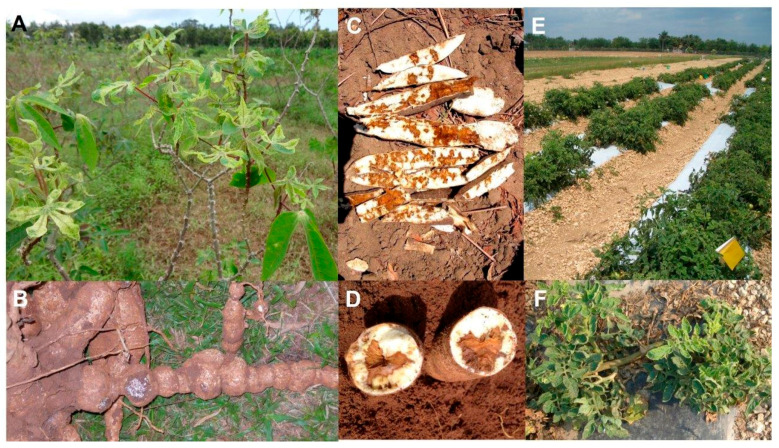
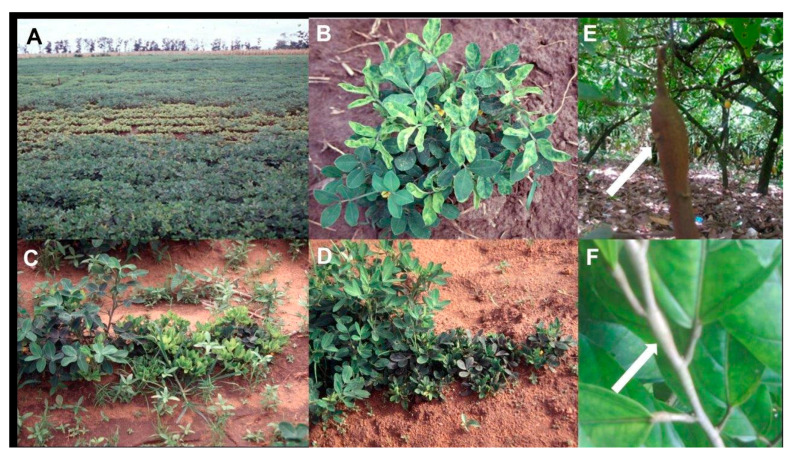
https://cdn.ncbi.nlm.nih.gov/pmc/blobs/5b5f/7761969/8b9e9c33890d/viruses-12-01388-g002.jpg
https://cdn.ncbi.nlm.nih.gov/pmc/blobs/5b5f/7761969/7c06cdc406df/viruses-12-01388-g001.jpg
https://cdn.ncbi.nlm.nih.gov/pmc/blobs/5b5f/7761969/8b9e9c33890d/viruses-12-01388-g002.jpg
https://cdn.ncbi.nlm.nih.gov/pmc/blobs/5b5f/7761969/7c06cdc406df/viruses-12-01388-g001.jpg
https://cdn.ncbi.nlm.nih.gov/pmc/blobs/5b5f/7761969/8b9e9c33890d/viruses-12-01388-g002.jpg

相似文献

1
Disease Pandemics and Major Epidemics Arising from New Encounters between Indigenous Viruses and Introduced Crops.疾病大流行和新出现的土著病毒与引入的作物之间的主要传染病。
Viruses. 2020 Dec 4;12(12):1388. doi: 10.3390/v12121388.
2
Global Plant Virus Disease Pandemics and Epidemics.全球植物病毒病害大流行与流行
Plants (Basel). 2021 Jan 25;10(2):233. doi: 10.3390/plants10020233.
3
Plant virus emergence and evolution: origins, new encounter scenarios, factors driving emergence, effects of changing world conditions, and prospects for control.植物病毒的出现与进化:起源、新的遭遇情形、驱动出现的因素、不断变化的世界条件的影响以及控制前景。
Virus Res. 2009 May;141(2):113-30. doi: 10.1016/j.virusres.2008.07.028. Epub 2009 Jan 19.
4
Tomato yellow leaf curl virus, an emerging virus complex causing epidemics worldwide.番茄黄化曲叶病毒,一种正在出现的病毒复合体,在全球引发疫情。
Virus Res. 2000 Nov;71(1-2):123-34. doi: 10.1016/s0168-1702(00)00193-3.
5
Comparing the regional epidemiology of the cassava mosaic and cassava brown streak virus pandemics in Africa.比较非洲木薯花叶和木薯褐色条斑病毒大流行的区域流行病学。
Virus Res. 2011 Aug;159(2):161-70. doi: 10.1016/j.virusres.2011.04.018. Epub 2011 Apr 28.
6
Emerging viral diseases of tomato crops.番茄作物新发病毒性疾病。
Mol Plant Microbe Interact. 2010 May;23(5):539-48. doi: 10.1094/MPMI-23-5-0539.
7
A century of plant virus management in the Salinas valley of California, 'East of Eden'.加利福尼亚州萨利纳斯山谷“伊甸之东”的百年植物病毒管理
Virus Res. 2000 Nov;71(1-2):161-9. doi: 10.1016/s0168-1702(00)00196-9.
8
Cassava virus diseases: biology, epidemiology, and management.木薯病毒病:生物学、流行病学和管理。
Adv Virus Res. 2015;91:85-142. doi: 10.1016/bs.aivir.2014.10.001. Epub 2014 Dec 10.
9
Virus Diseases of Cereal and Oilseed Crops in Australia: Current Position and Future Challenges.澳大利亚的谷类和油料作物病毒病:现状与未来挑战。
Viruses. 2021 Oct 12;13(10):2051. doi: 10.3390/v13102051.
10
Viruses of Economic Impact on Tomato Crops in Mexico: From Diagnosis to Management-A Review.墨西哥对番茄作物经济影响的病毒:从诊断到管理综述。
Viruses. 2022 Jun 9;14(6):1251. doi: 10.3390/v14061251.

引用本文的文献

1
A geminivirus attenuation vector for crop protection using episomal plant gene therapy.一种利用附加型植物基因疗法进行作物保护的双生病毒减毒载体。
Sci Rep. 2025 Jul 11;15(1):25085. doi: 10.1038/s41598-025-09038-3.
2
Enabling biocontained plant virus transmission studies through establishment of an axenic whitefly (Bemisia tabaci) colony on plant tissue culture.通过在植物组织培养上建立无菌粉虱(Bemisia tabaci)种群,实现对植物病毒的生物控制传播研究。
Sci Rep. 2024 Nov 15;14(1):28169. doi: 10.1038/s41598-024-73583-6.
3
Phylogeographic analysis of coat and replication-associated proteins.

本文引用的文献

1
Surveillance and diagnostics of the emergent Sri Lankan cassava mosaic virus (Fam. Geminiviridae) in Southeast Asia.监测和诊断东南亚地区新出现的斯里兰卡木薯嵌纹病毒(病毒科:双生病毒科)。
Virus Res. 2020 Aug;285:197959. doi: 10.1016/j.virusres.2020.197959. Epub 2020 May 11.
2
Tomato Yellow Leaf Curl Virus: Impact, Challenges, and Management.番茄黄曲叶病毒:影响、挑战与管理。
Trends Plant Sci. 2020 Sep;25(9):897-911. doi: 10.1016/j.tplants.2020.03.015. Epub 2020 May 1.
3
Comparing patterns and scales of plant virus phylogeography: in Madagascar and in continental Africa.
衣壳和复制相关蛋白的系统地理学分析。
J Gen Virol. 2024 Oct;105(10). doi: 10.1099/jgv.0.002037.
4
A Genetic Study of Spillovers in the Bean Common Mosaic Subgroup of Potyviruses.豆薯马铃薯 Y 病毒组中基因溢出的遗传研究。
Viruses. 2024 Aug 23;16(9):1351. doi: 10.3390/v16091351.
5
Australian Cool-Season Pulse Seed-Borne Virus Research: 1. Alfalfa and Cucumber Mosaic Viruses and Less Important Viruses.澳大利亚冷季豆科作物种传病毒研究:1. 紫花苜蓿和黄瓜花叶病毒及其他次要病毒。
Viruses. 2024 Jan 18;16(1):144. doi: 10.3390/v16010144.
6
The Oxford Nanopore MinION as a Versatile Technology for the Diagnosis and Characterization of Emerging Plant Viruses.牛津纳米孔 MinION 作为一种通用技术,可用于新兴植物病毒的诊断和特征分析。
Methods Mol Biol. 2024;2732:235-249. doi: 10.1007/978-1-0716-3515-5_16.
7
VAPEX: an interactive web server for the deep exploration of natural virus and phage genomes.VAPEX:一个用于深入探索天然病毒和噬菌体基因组的交互式网络服务器。
Bioinformatics. 2023 Aug 1;39(8). doi: 10.1093/bioinformatics/btad528.
8
Effect of sterilants and plant growth regulators in regenerating commonly used cassava cultivars at the Kenyan coast.消毒剂和植物生长调节剂对肯尼亚海岸常用木薯品种再生的影响。
Heliyon. 2023 Jun 14;9(6):e17263. doi: 10.1016/j.heliyon.2023.e17263. eCollection 2023 Jun.
9
Evolutionarily diverse origins of deformed wing viruses in western honey bees.变形翅膀病毒在西方蜜蜂中进化起源的多样性。
Proc Natl Acad Sci U S A. 2023 Jun 27;120(26):e2301258120. doi: 10.1073/pnas.2301258120. Epub 2023 Jun 20.
10
Discovery of aphid-transmitted Rice tiller inhibition virus from native plants through metagenomic sequencing.通过宏基因组测序从本地植物中发现蚜虫传播的水稻分蘖抑制病毒。
PLoS Pathog. 2023 Mar 24;19(3):e1011238. doi: 10.1371/journal.ppat.1011238. eCollection 2023 Mar.
比较马达加斯加和非洲大陆植物病毒系统地理学的模式与尺度
Virus Evol. 2019 Aug 1;5(2):vez023. doi: 10.1093/ve/vez023. eCollection 2019 Jul.
4
Assessing the Degeneration of Cassava Under High-Virus Inoculum Conditions in Coastal Tanzania.评估坦桑尼亚沿海高病毒接种条件下的木薯退化情况。
Plant Dis. 2019 Oct;103(10):2652-2664. doi: 10.1094/PDIS-05-18-0750-RE. Epub 2019 Jul 19.
5
Evolution and ecology of plant viruses.植物病毒的进化与生态学。
Nat Rev Microbiol. 2019 Oct;17(10):632-644. doi: 10.1038/s41579-019-0232-3. Epub 2019 Jul 16.
6
Global Dimensions of Plant Virus Diseases: Current Status and Future Perspectives.植物病毒病的全球维度:现状与未来展望。
Annu Rev Virol. 2019 Sep 29;6(1):387-409. doi: 10.1146/annurev-virology-092818-015606. Epub 2019 Jul 5.
7
Tomato chlorosis virus, an emergent plant virus still expanding its geographical and host ranges.番茄褪绿病毒,一种仍在扩大其地理分布范围和寄主范围的新出现的植物病毒。
Mol Plant Pathol. 2019 Sep;20(9):1307-1320. doi: 10.1111/mpp.12847. Epub 2019 Jul 2.
8
Life on the Edge: Geminiviruses at the Interface Between Crops and Wild Plant Hosts.边缘生活:双生病毒在作物和野生植物宿主之间的界面
Annu Rev Virol. 2019 Sep 29;6(1):411-433. doi: 10.1146/annurev-virology-092818-015536. Epub 2019 Jun 10.
9
The genome of cultivated peanut provides insight into legume karyotypes, polyploid evolution and crop domestication.栽培花生基因组为豆科基因组、多倍体进化和作物驯化提供了新见解。
Nat Genet. 2019 May;51(5):865-876. doi: 10.1038/s41588-019-0402-2. Epub 2019 May 1.
10
First report of Cassava brown streak viruses on wild plant species in Mozambique.莫桑比克野生植物物种上木薯褐色条纹病毒的首次报告。
Physiol Mol Plant Pathol. 2019 Jan;105:88-95. doi: 10.1016/j.pmpp.2018.10.005.