Tang Tao, Yang Ze-Yu, Wang Di, Yang Xian-Yan, Wang Jun, Li Lin, Wen Qian, Gao Lei, Bian Xiu-Wu, Yu Shi-Cang
Department of Stem Cell and Regenerative Medicine, Institute of Pathology and Southwest Cancer Center, Southwest Hospital, Third Military Medical University (Army Medical University), Chongqing, 400038, China.
Department of Hematology, Xinqiao Hospital, Third Military Medical University (Army Medical University), Chongqing, 400037, China.
Cell Biosci. 2020 Nov 18;10(1):131. doi: 10.1186/s13578-020-00489-x.
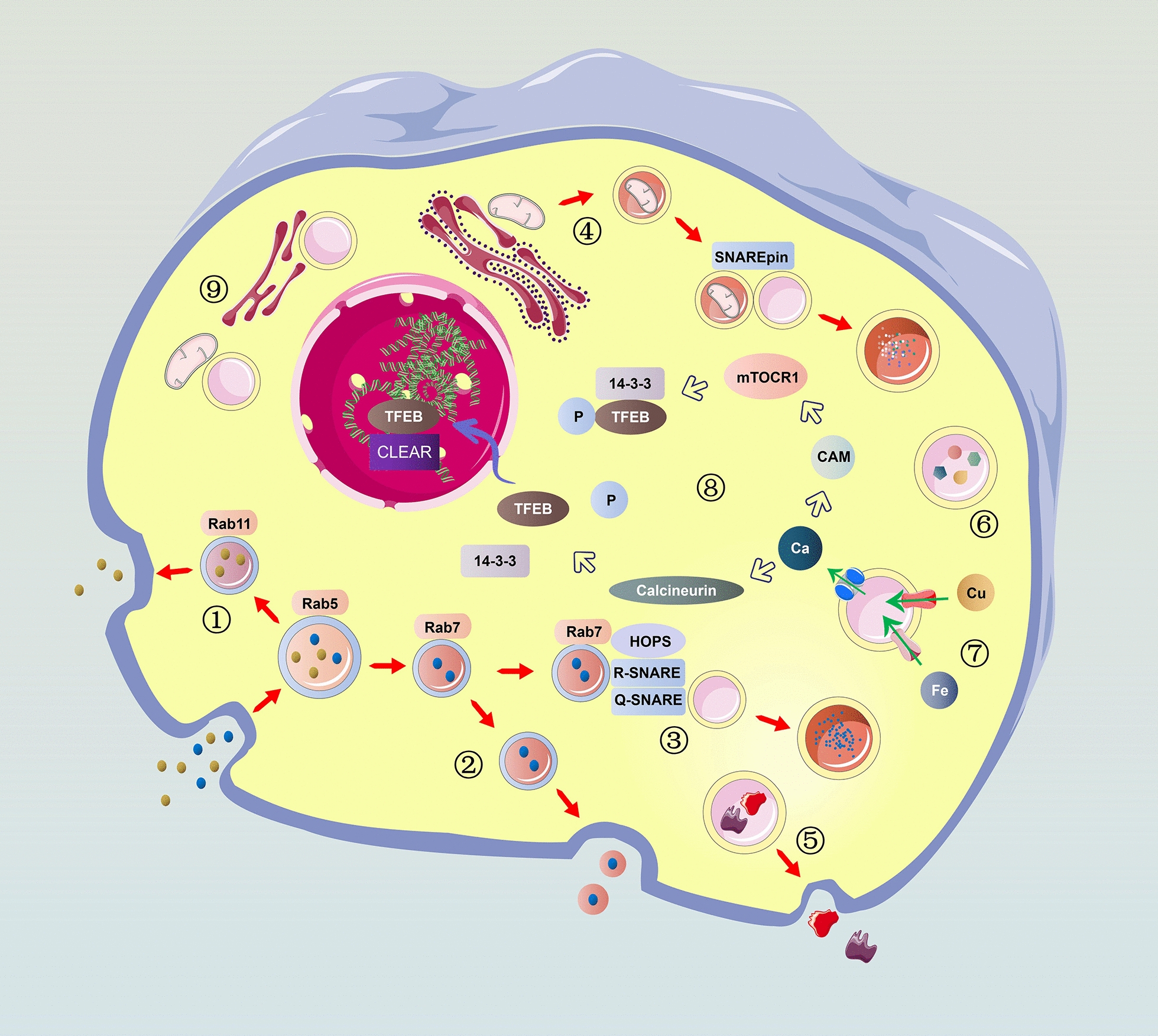
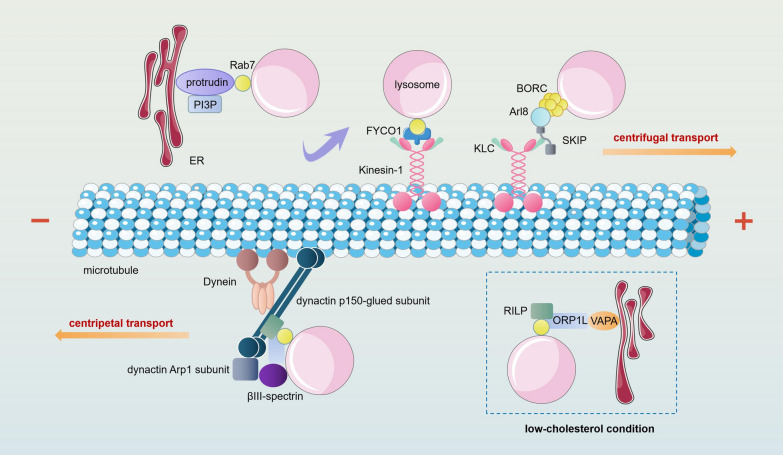
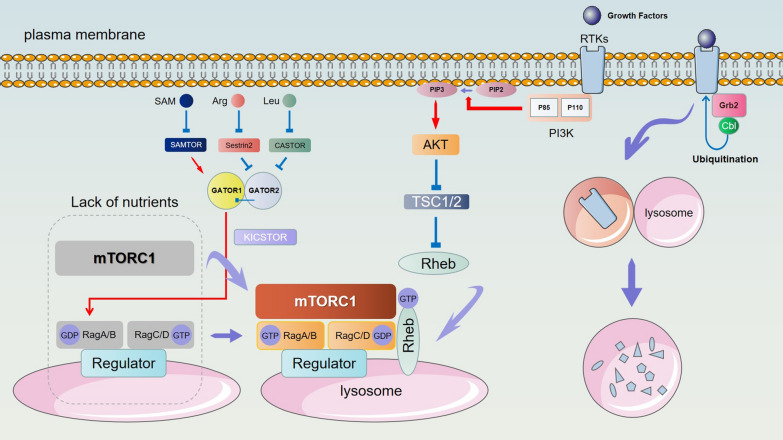
Lysosomes are an important component of the inner membrane system and participate in numerous cell biological processes, such as macromolecular degradation, antigen presentation, intracellular pathogen destruction, plasma membrane repair, exosome release, cell adhesion/migration and apoptosis. Thus, lysosomes play important roles in cellular activity. In addition, previous studies have shown that lysosomes may play important roles in cancer development and progression through the abovementioned biological processes and that the functional status and spatial distribution of lysosomes are closely related to cancer cell proliferation, energy metabolism, invasion and metastasis, immune escape and tumor-associated angiogenesis. Therefore, identifying the factors and mechanisms that regulate the functional status and spatial distribution of lysosomes and elucidating the relationship between lysosomes and the development and progression of cancer can provide important information for cancer diagnosis and prognosis prediction and may yield new therapeutic targets. This study briefly reviews the above information and explores the potential value of lysosomes in cancer therapy.
溶酶体是内膜系统的重要组成部分,参与众多细胞生物学过程,如大分子降解、抗原呈递、细胞内病原体破坏、质膜修复、外泌体释放、细胞黏附/迁移和凋亡。因此,溶酶体在细胞活动中发挥着重要作用。此外,先前的研究表明,溶酶体可能通过上述生物学过程在癌症发生和发展中发挥重要作用,并且溶酶体的功能状态和空间分布与癌细胞增殖、能量代谢、侵袭和转移、免疫逃逸以及肿瘤相关血管生成密切相关。因此,确定调节溶酶体功能状态和空间分布的因素和机制,并阐明溶酶体与癌症发生发展之间的关系,可为癌症诊断和预后预测提供重要信息,并可能产生新的治疗靶点。本研究简要综述上述信息,并探讨溶酶体在癌症治疗中的潜在价值。