Department of Neurology and Neurological Sciences, Stanford University, Stanford, CA, USA.
Wellcome - Medical Research Council Cambridge Stem Cell Institute & Department of Veterinary Medicine, University of Cambridge, Cambridge, UK; Department of Physiology, BioMedical Center, Faculty of Medicine, University of Iceland, Reykjavik, Iceland.
Semin Cell Dev Biol. 2021 Aug;116:10-15. doi: 10.1016/j.semcdb.2020.11.009. Epub 2020 Dec 5.
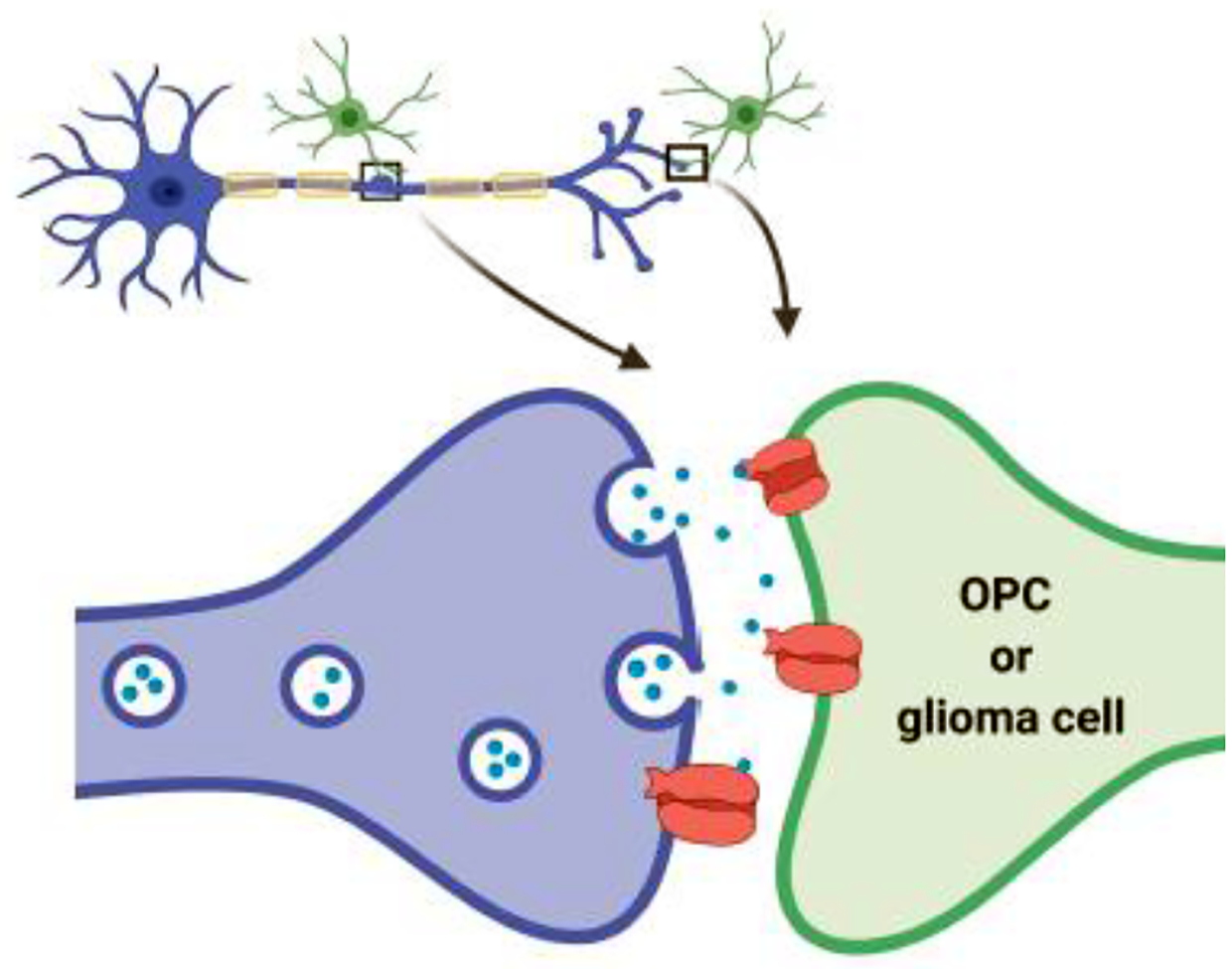
Neuron-glial interactions shape neural circuit establishment, refinement and function. One of the key neuron-glial interactions takes place between axons and oligodendroglial precursor cells. Interactions between neurons and oligodendrocyte precursor cells (OPCs) promote OPC proliferation, generation of new oligodendrocytes and myelination, shaping myelin development and ongoing adaptive myelin plasticity in the brain. Communication between neurons and OPCs can be broadly divided into paracrine and synaptic mechanisms. Following the Nobel mini-symposium "The Dark Side of the Brain" in late 2019 at the Karolinska Institutet, this mini-review will focus on the bright and dark sides of neuron-glial interactions and discuss paracrine and synaptic interactions between neurons and OPCs and their malignant counterparts.
神经元-神经胶质相互作用塑造了神经回路的建立、细化和功能。轴突和少突胶质前体细胞之间的一种关键神经元-神经胶质相互作用。神经元和少突胶质前体细胞(OPC)之间的相互作用促进了 OPC 的增殖、新的少突胶质细胞的产生和髓鞘形成,从而塑造了大脑中的髓鞘发育和持续的适应性髓鞘可塑性。神经元和 OPC 之间的通讯可以大致分为旁分泌和突触机制。继 2019 年末卡罗林斯卡学院举行的诺贝尔小型研讨会“大脑的阴暗面”之后,本篇小型综述将重点关注神经元-神经胶质相互作用的光明面和阴暗面,并讨论神经元和 OPC 之间的旁分泌和突触相互作用及其恶性对应物。