College of Animal Science, Jilin University, Changchun 130062, China.
Key Laboratory of Zoonosis Research, Ministry of Education, Jilin University, Changchun 130062, China.
Oxid Med Cell Longev. 2020 Nov 18;2020:3469840. doi: 10.1155/2020/3469840. eCollection 2020.
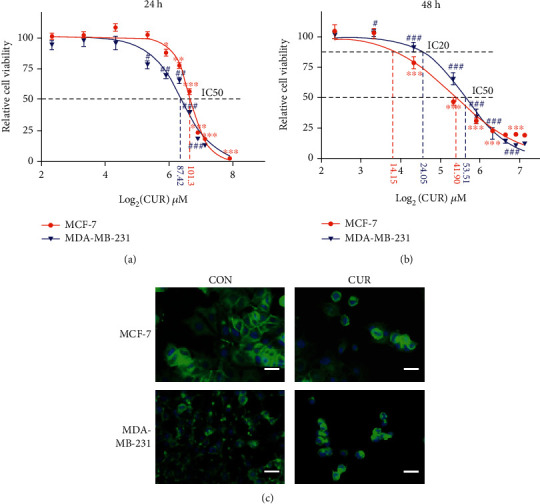
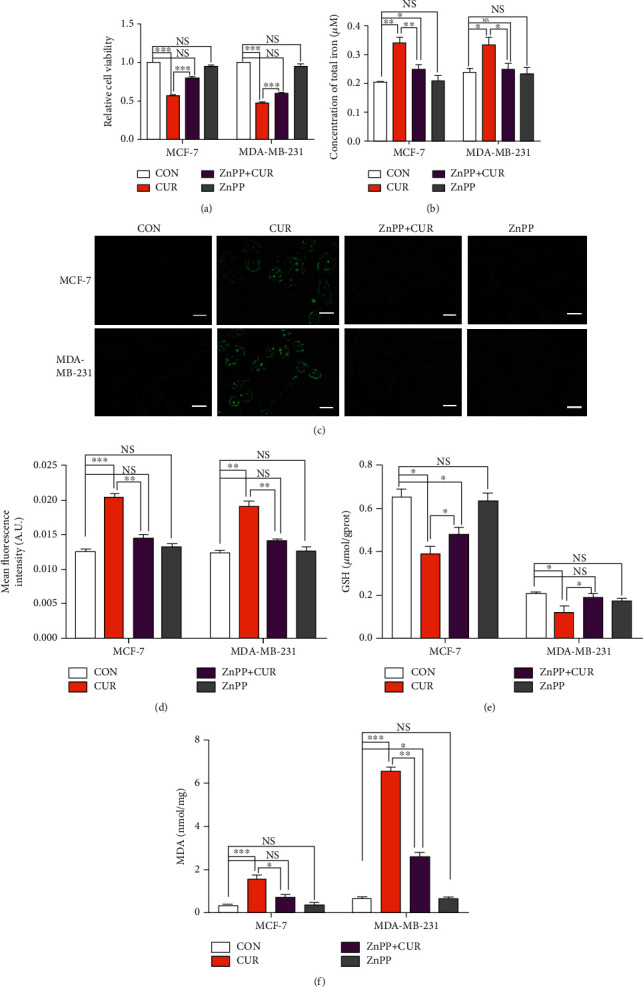
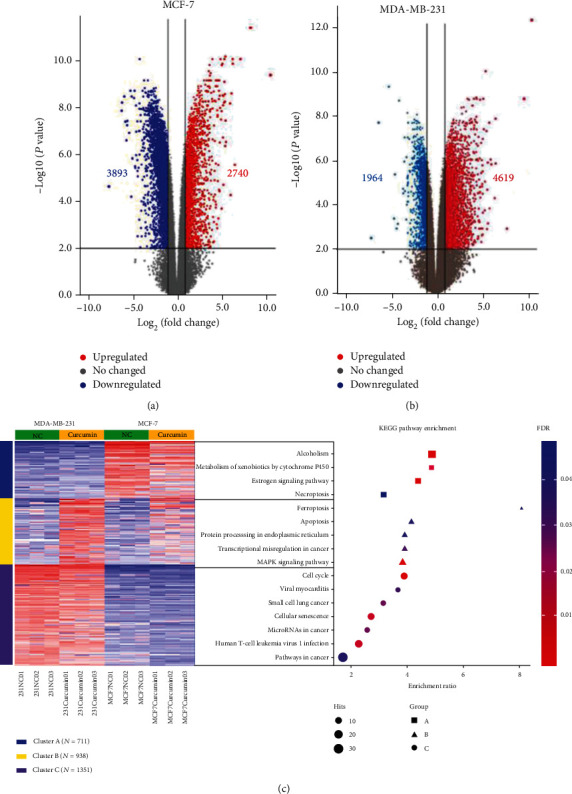
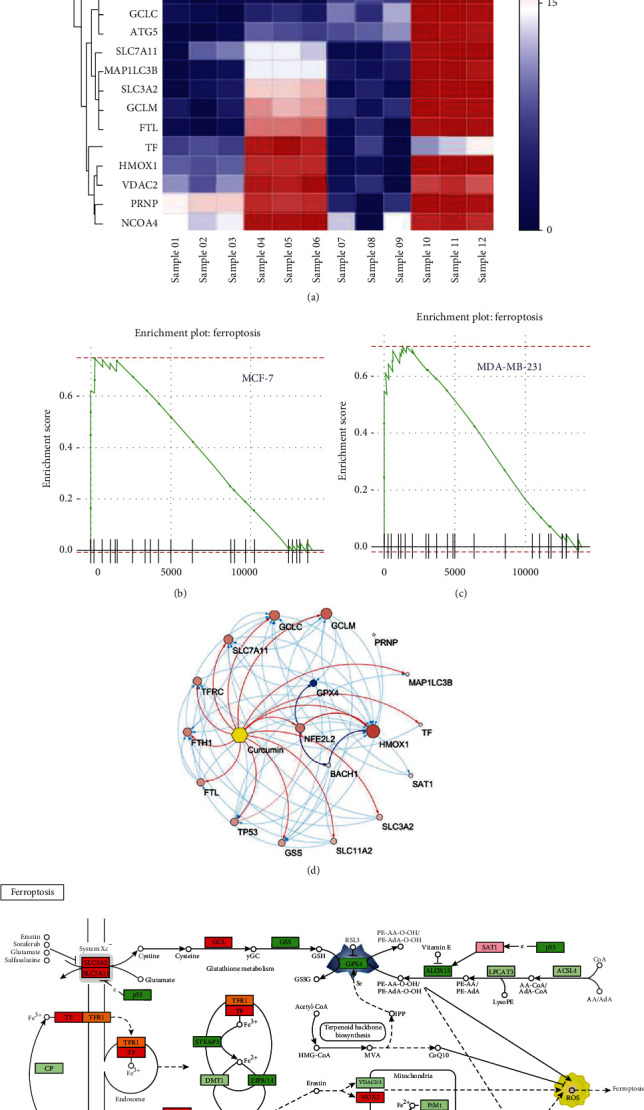
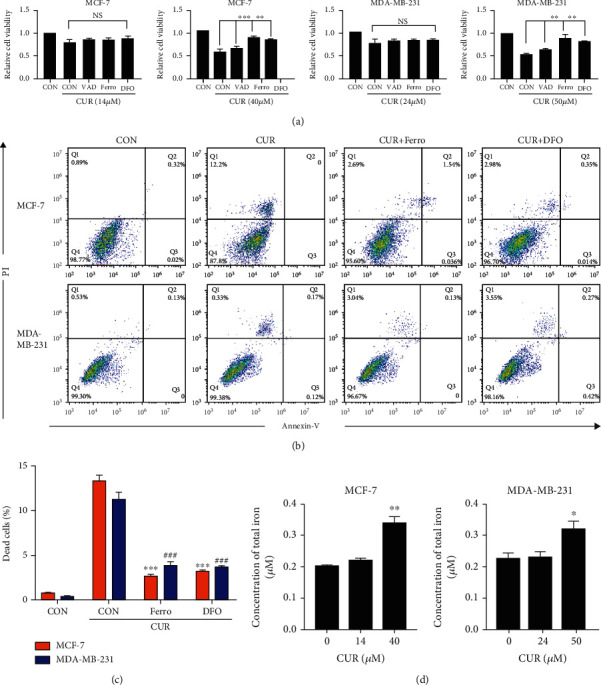
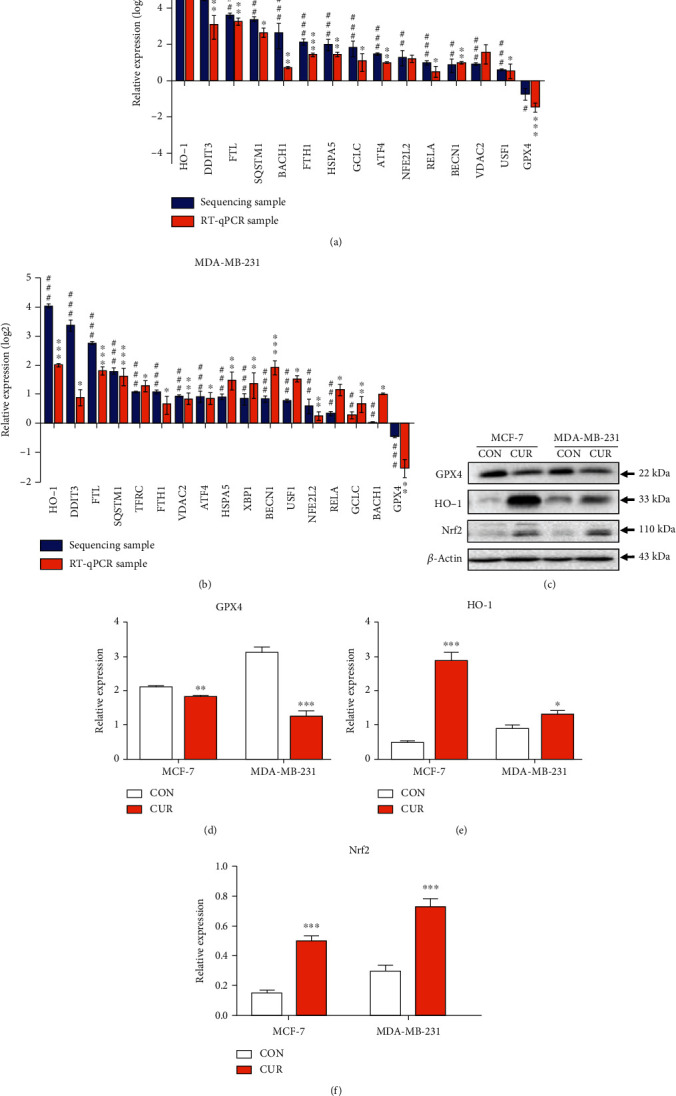
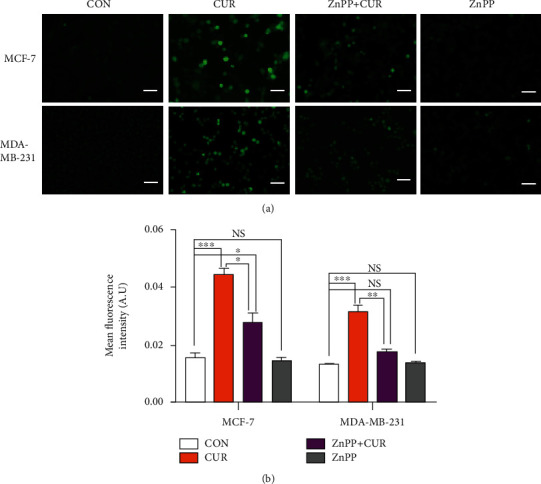
Ferroptosis is a form of oxidative cell death and has become a chemotherapeutic target for cancer treatment. Curcumin (CUR), a well-known cancer inhibitor, significantly inhibits the viability of breast cancer cells. Through transcriptomic analysis and flow cytometry experiments, it was found that after 48 hours of treatment of breast cancer cells at its half maximal inhibitory concentration (IC50), curcumin suppressed the viability of cancer cells via induction of ferroptotic death. Use of the ferroptosis inhibitor ferrostatin-1 and the iron chelator deferoxamine rescued cell death induced by curcumin. Furthermore, in subsequent cell validation experiments, the results showed that curcumin caused marked accumulation of intracellular iron, reactive oxygen species, lipid peroxides, and malondialdehyde, while glutathione levels were significantly downregulated. These changes are all manifestations of ferroptosis. Curcumin upregulates a variety of ferroptosis target genes related to redox regulation, especially heme oxygenase-1 (HO-1). Using the specific inhibitor zinc protoporphyrin 9 (ZnPP) to confirm the above experimental results showed that compared to the curcumin treatment group, treatment with ZnPP not only significantly improved cell viability but also reduced the accumulation of intracellular iron ions and other ferroptosis-related phenomena. Therefore, these data demonstrate that curcumin triggers the molecular and cytological characteristics of ferroptosis in breast cancer cells, and HO-1 promotes curcumin-induced ferroptosis.
铁死亡是一种氧化细胞死亡方式,已成为癌症治疗的化疗靶点。姜黄素(CUR)是一种众所周知的癌症抑制剂,可显著抑制乳腺癌细胞的活力。通过转录组分析和流式细胞术实验发现,在其半最大抑制浓度(IC50)下处理乳腺癌细胞 48 小时后,姜黄素通过诱导铁死亡来抑制癌细胞的活力。使用铁死亡抑制剂 ferrostatin-1 和铁螯合剂去铁胺可以挽救姜黄素诱导的细胞死亡。此外,在随后的细胞验证实验中,结果表明姜黄素导致细胞内铁、活性氧、脂质过氧化物和丙二醛的显著积累,而谷胱甘肽水平显著下调。这些变化都是铁死亡的表现。姜黄素上调了与氧化还原调节相关的多种铁死亡靶基因,特别是血红素加氧酶-1(HO-1)。使用特异性抑制剂锌原卟啉 9(ZnPP)来验证上述实验结果表明,与姜黄素处理组相比,用 ZnPP 处理不仅显著提高了细胞活力,还减少了细胞内铁离子等铁死亡相关现象的积累。因此,这些数据表明姜黄素在乳腺癌细胞中引发了铁死亡的分子和细胞特征,而 HO-1 促进了姜黄素诱导的铁死亡。