Shibata Takehiko, Iwasaki Wakana, Hirota Kouji
Department of Chemistry, Graduate School of Science, Tokyo Metropolitan University, Hachioji, Tokyo, Japan.
Laboratory for Translation Structural Biology, RIKEN Center for Biosystems Dynamics Research, Tsurumi, Yokohama, Japan.
Comput Struct Biotechnol J. 2020 Nov 4;18:3350-3360. doi: 10.1016/j.csbj.2020.10.025. eCollection 2020.
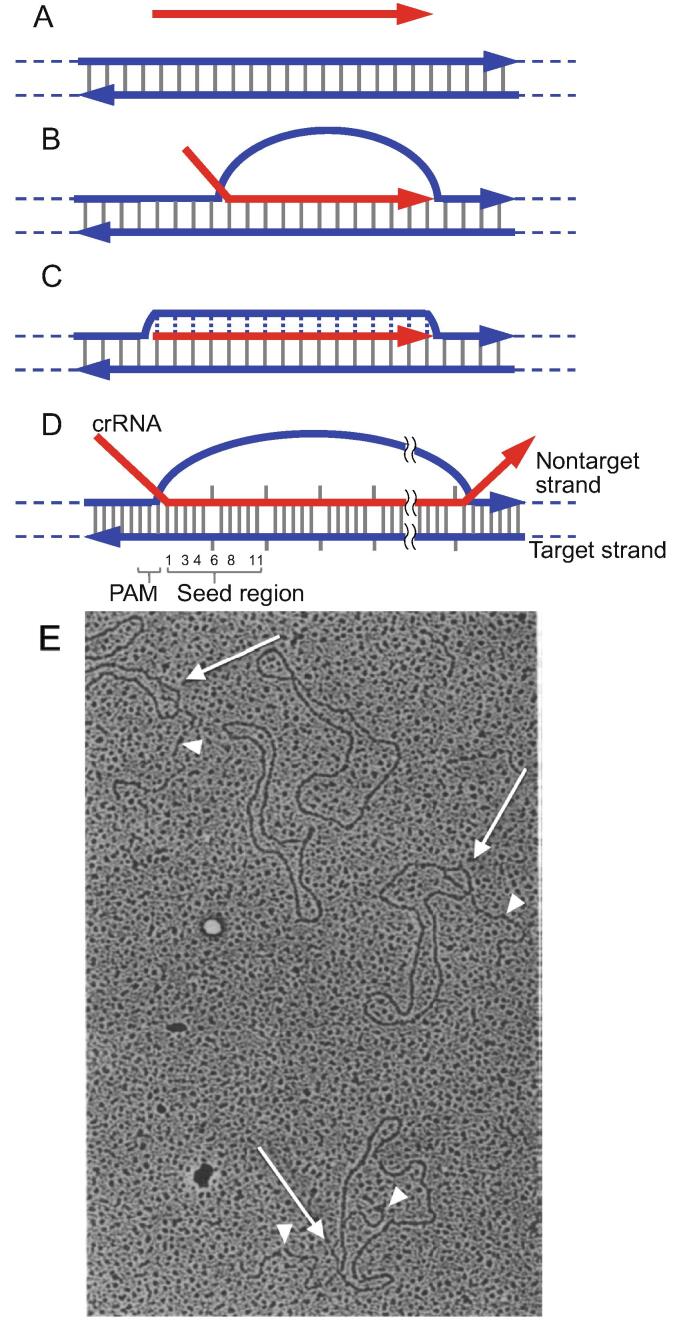
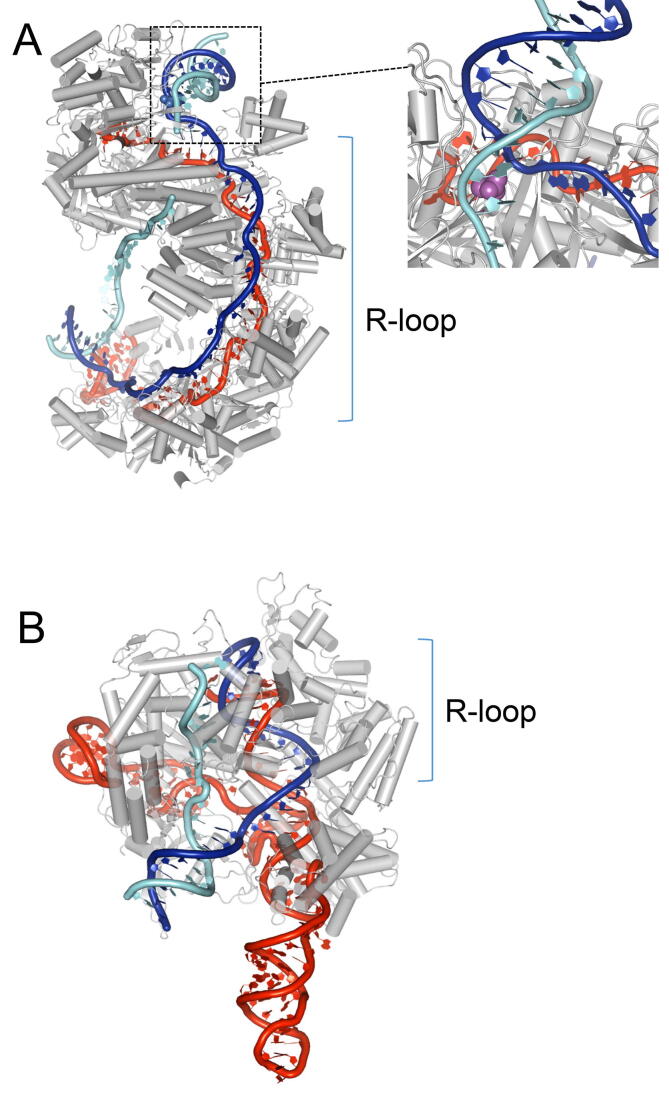
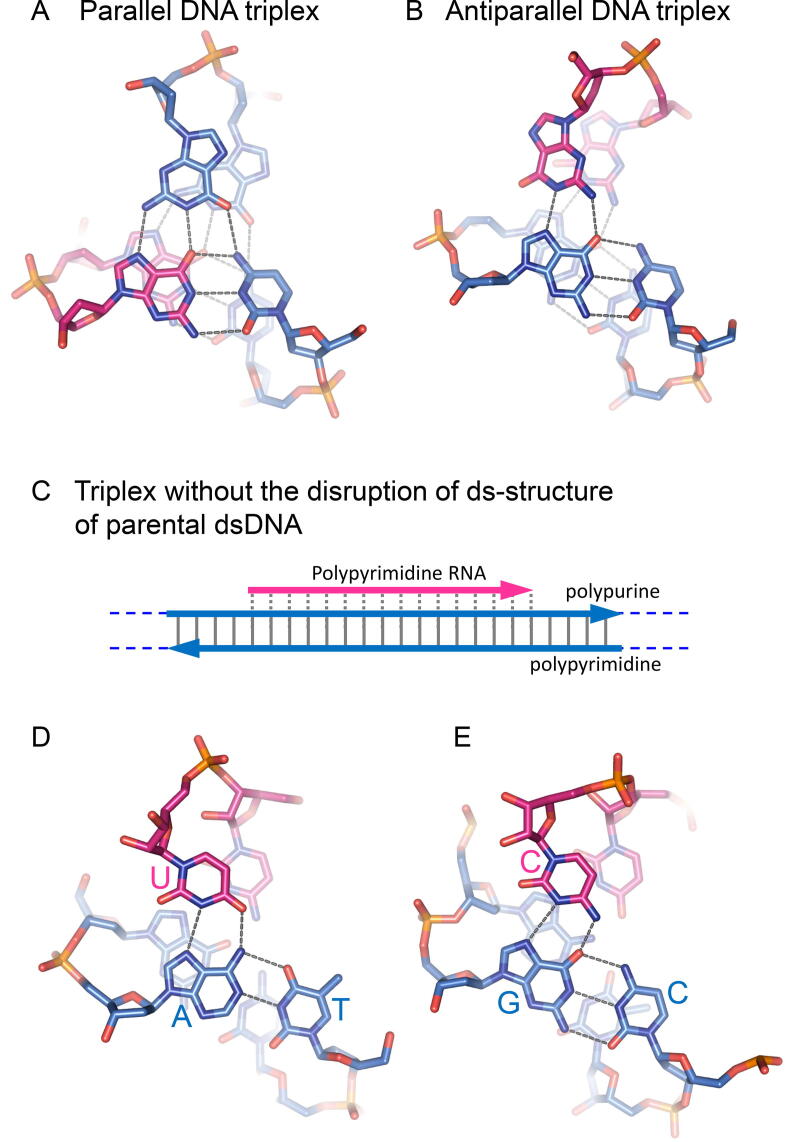
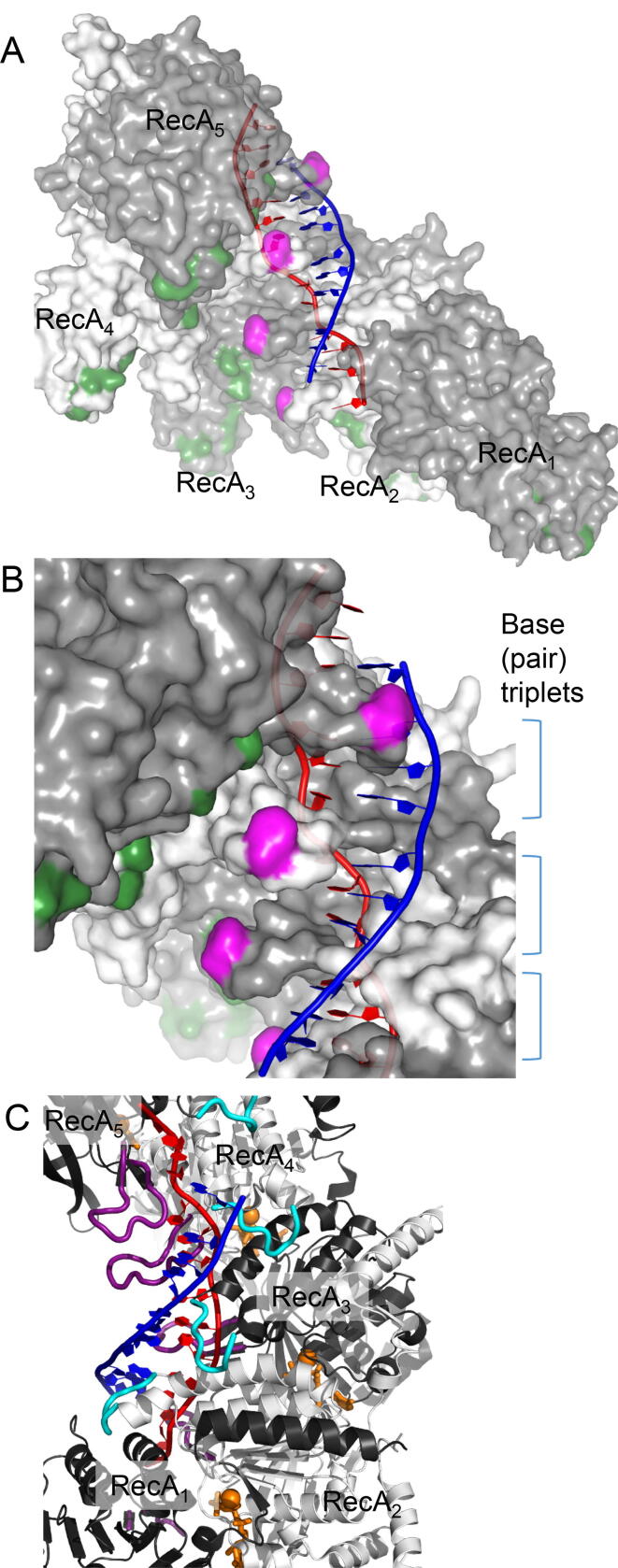
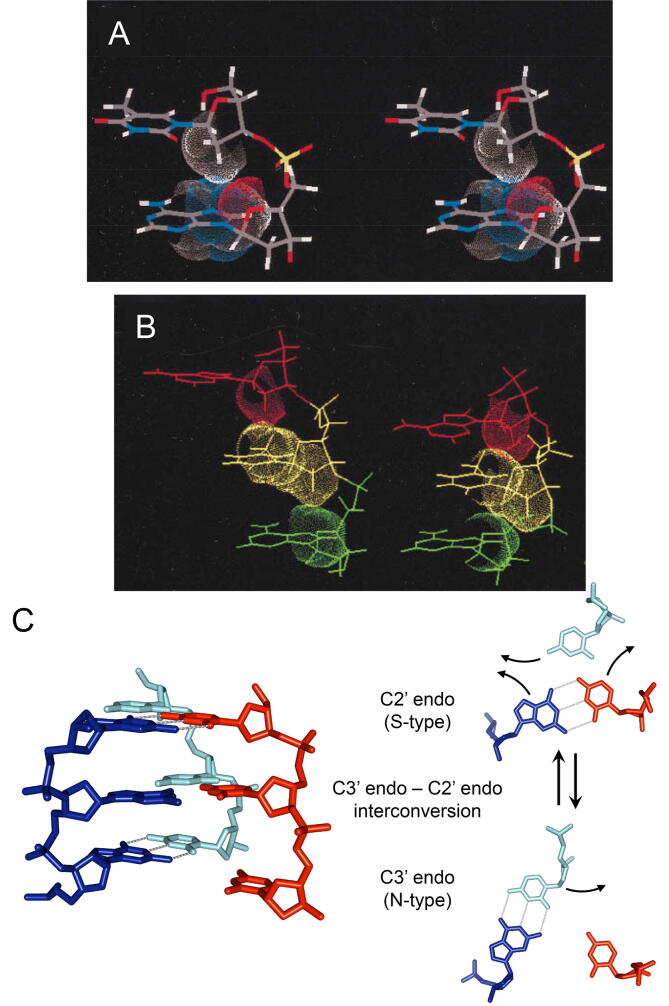
Double-stranded (ds)DNA, not dsRNA, has an ability to form a homologous complex with single-stranded (ss)DNA or ssRNA of homologous sequence. D-loops and homologous triplexes are homologous complexes formed with ssDNA by RecA/Rad51-family homologous-pairing proteins, and are a key intermediate of homologous (genetic/DNA) recombination. R-loop formation independent of transcription (R-loop formation in ) was recently found to play roles in gene regulation and development of mammals and plants. In addition, the crRNA-Cas effector complex in CRISPR-Cas systems also relies on R-loop formation to recognize specific target. In homologous complex formation, ssDNA/ssRNA finds a homologous sequence in dsDNA by Watson-Crick base-pairing. crRNA-Cas effector complexes appear to actively melt dsDNA to make its bases available for annealing to crRNA. On the other hand, in D-loop formation and homologous-triplex formation, it is likely that dsDNA recognizes the homologous sequence before the melting of its double helix by using its intrinsic molecular function depending on CH at the 2'-position of the deoxyribose, and that the major role of RecA is the extension of ssDNA and the holding dsDNA at a position suitable for homology search. This intrinsic dsDNA function would also play a role in R-loop formation. The dependency of homologous-complex formation on 2'-CH of the deoxyribose would explain the absence of homologous complex formation by dsRNA, and dsDNA as sole genome molecule in all cellular organisms.
双链(ds)DNA而非双链RNA具有与同源序列的单链(ss)DNA或单链RNA形成同源复合物的能力。D环和同源三链体是由RecA/Rad51家族同源配对蛋白与单链DNA形成的同源复合物,是同源(遗传/DNA)重组的关键中间体。最近发现,不依赖转录的R环形成(中的R环形成)在哺乳动物和植物的基因调控和发育中发挥作用。此外,CRISPR-Cas系统中的crRNA-Cas效应复合物也依赖R环形成来识别特定靶点。在同源复合物形成过程中,单链DNA/单链RNA通过沃森-克里克碱基配对在双链DNA中找到同源序列。crRNA-Cas效应复合物似乎会主动解开双链DNA,使其碱基可用于与crRNA退火。另一方面,在D环形成和同源三链体形成过程中,双链DNA很可能在其双螺旋解开之前,通过利用其依赖脱氧核糖2'-位上的CH的内在分子功能识别同源序列,并且RecA的主要作用是单链DNA的延伸以及将双链DNA保持在适合同源性搜索的位置。这种双链DNA的内在功能也会在R环形成中发挥作用。同源复合物形成对脱氧核糖2'-CH的依赖性可以解释双链RNA以及双链DNA作为所有细胞生物中唯一的基因组分子不存在同源复合物形成的现象。