Liang Shuai, Wang Qing, Qi Xuesen, Liu Yudi, Li Guozhen, Lu Shaoyong, Mou Linkai, Chen Xiangyu
Department of Urology, Affiliated Hospital of Weifang Medical University, Weifang Medical University, Weifang, China.
Oncology Department, Xinhua Hospital Affiliated to Shanghai Jiao Tong University, School of Medicine, Shanghai, China.
Front Cell Dev Biol. 2021 Dec 23;9:808864. doi: 10.3389/fcell.2021.808864. eCollection 2021.
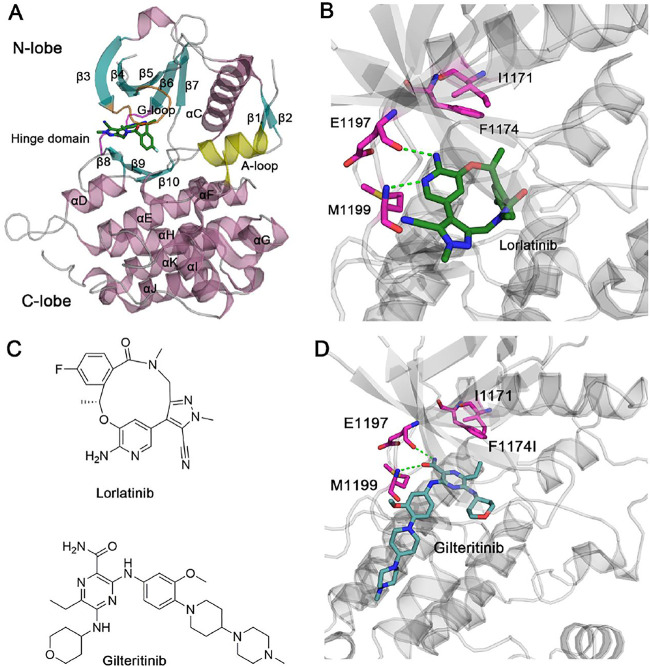
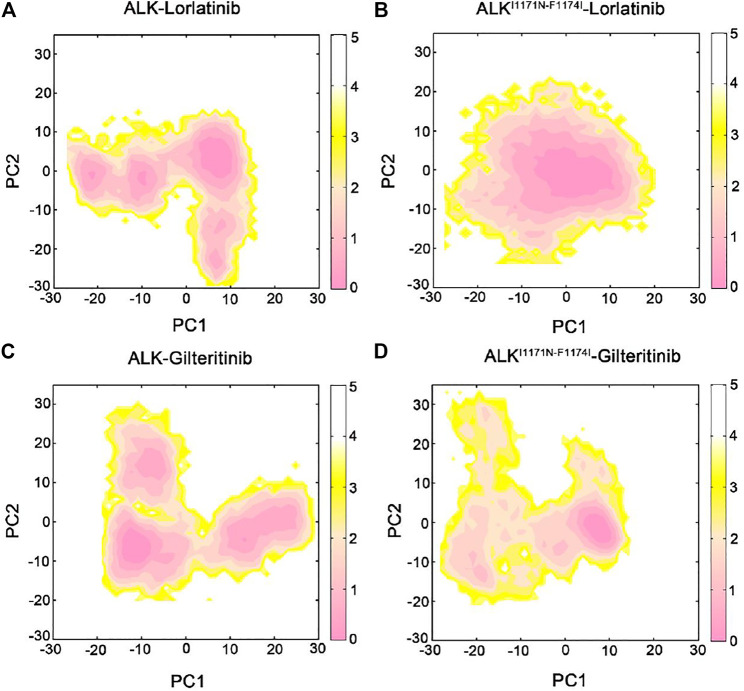
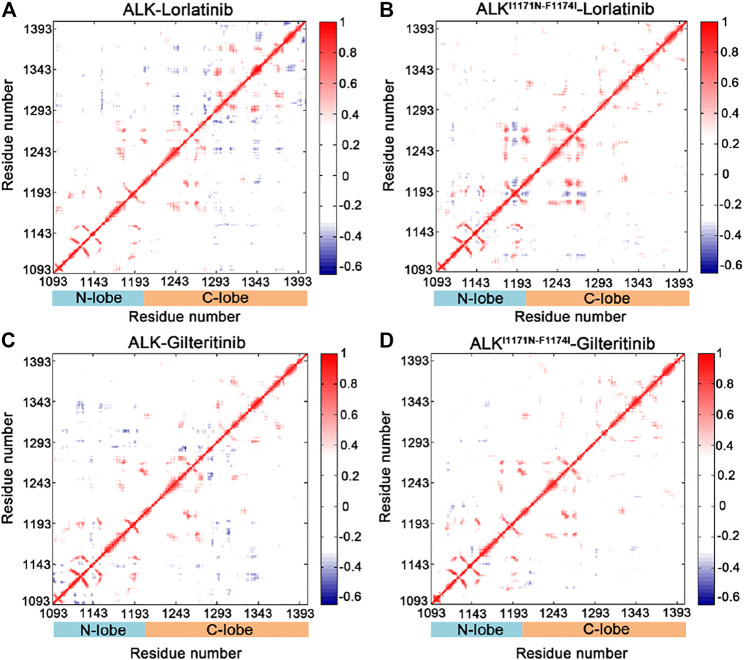
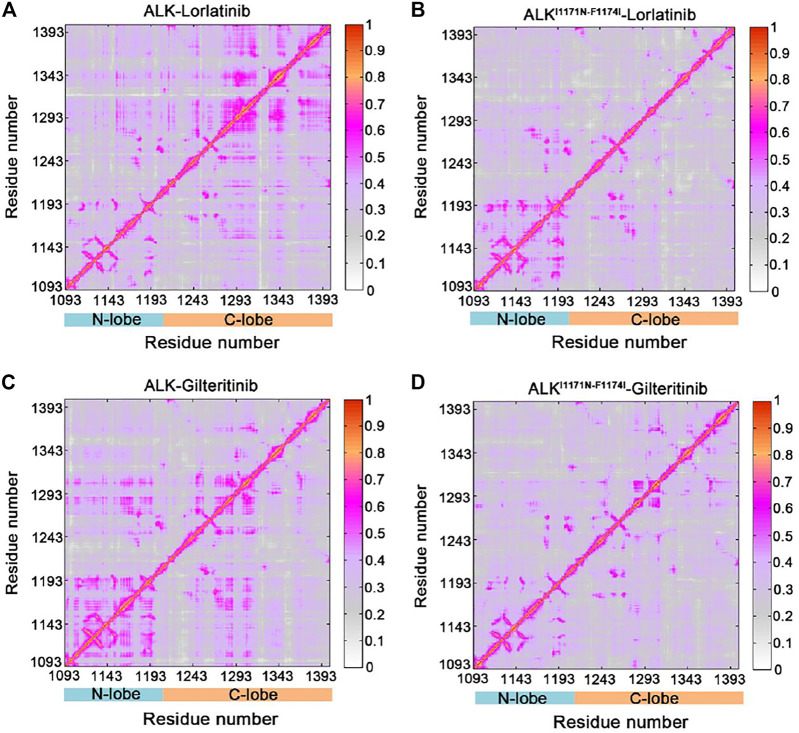
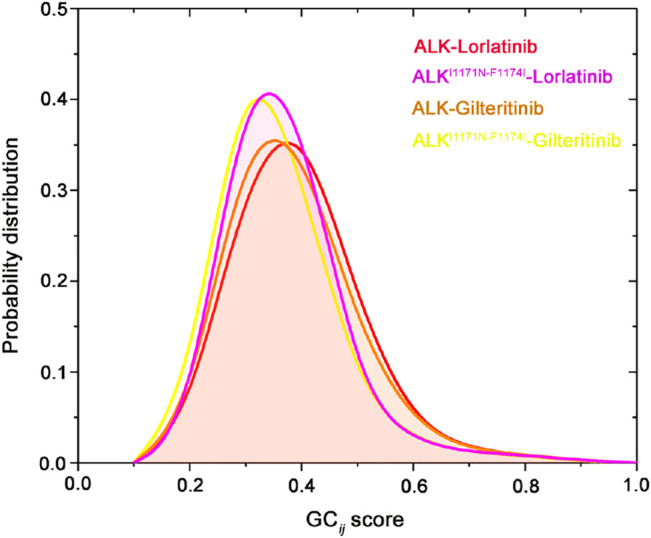
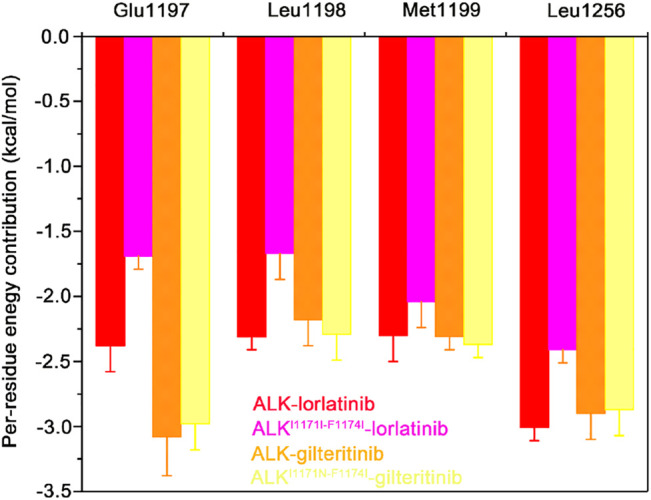
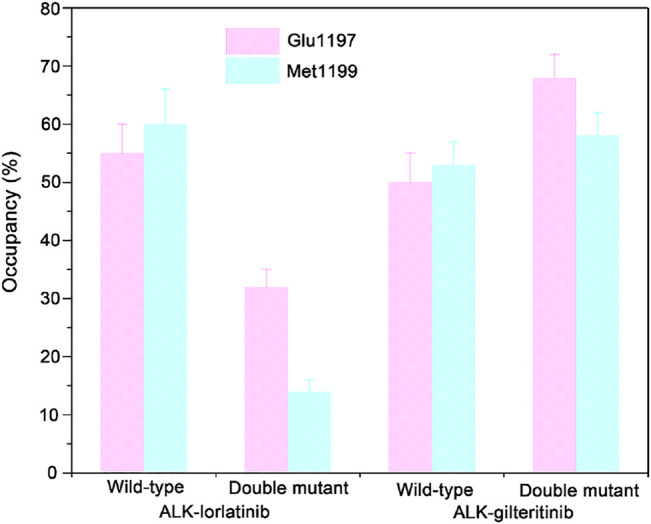
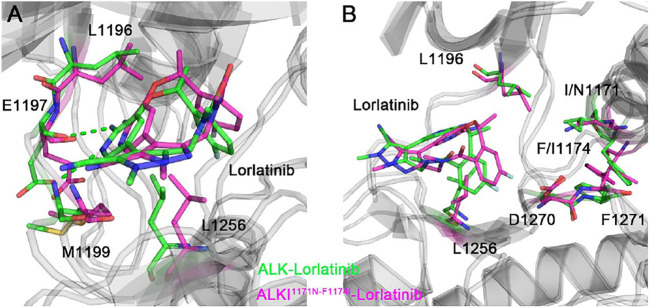
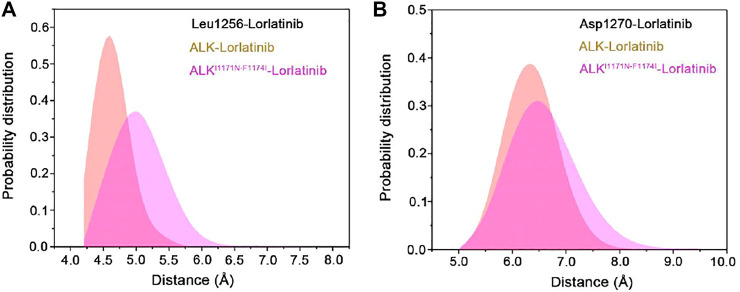
Anaplastic lymphoma kinase (ALK) is validated as a therapeutic molecular target in multiple malignancies, such as non-small cell lung cancer (NSCLC). However, the feasibility of targeted therapies exerted by ALK inhibitors is inevitably hindered owing to drug resistance. The emergence of clinically acquired drug mutations has become a major challenge to targeted therapies and personalized medicines. Thus, elucidating the mechanism of resistance to ALK inhibitors is helpful for providing new therapeutic strategies for the design of next-generation drug. Here, we used molecular docking and multiple molecular dynamics simulations combined with correlated and energetical analyses to explore the mechanism of how gilteritinib overcomes lorlatinib resistance to the double mutant ALK I1171N/F1174I. We found that the conformational dynamics of the ALK kinase domain was reduced by the double mutations I1171N/F1174I. Moreover, energetical and structural analyses implied that the double mutations largely disturbed the conserved hydrogen bonding interactions from the hinge residues Glu1197 and Met1199 in the lorlatinib-bound state, whereas they had no discernible adverse impact on the binding affinity and stability of gilteritinib-bound state. These discrepancies created the capacity of the double mutant ALK I1171N/F1174I to confer drug resistance to lorlatinib. Our result anticipates to provide a mechanistic insight into the mechanism of drug resistance induced by ALK I1171N/F1174I that are resistant to lorlatinib treatment in NSCLC.
间变性淋巴瘤激酶(ALK)已被确认为多种恶性肿瘤(如非小细胞肺癌(NSCLC))的治疗分子靶点。然而,由于耐药性,ALK抑制剂所发挥的靶向治疗的可行性不可避免地受到阻碍。临床获得性药物突变的出现已成为靶向治疗和个性化药物的一大挑战。因此,阐明对ALK抑制剂的耐药机制有助于为下一代药物设计提供新的治疗策略。在此,我们结合相关分析和能量分析,运用分子对接和多分子动力学模拟,探究吉列替尼如何克服洛拉替尼对双突变ALK I1171N/F1174I的耐药性机制。我们发现,双突变I1171N/F1174I降低了ALK激酶结构域的构象动力学。此外,能量和结构分析表明,双突变在很大程度上扰乱了洛拉替尼结合状态下铰链残基Glu1197和Met1199的保守氢键相互作用,而对吉列替尼结合状态的结合亲和力和稳定性没有明显的不利影响。这些差异使得双突变ALK I1171N/F1174I具有对洛拉替尼产生耐药性的能力。我们的研究结果有望为NSCLC中对洛拉替尼治疗耐药的ALK I1171N/F1174I诱导的耐药机制提供机制性见解。