Department of Pharmacology, All India Institute of Medical Sciences(AIIMS), Rishikesh, India.
Department of Radiation Oncology, All India Institute of Medical Sciences(AIIMS), Rishikesh, India.
Cancer Rep (Hoboken). 2021 Apr;4(2):e1312. doi: 10.1002/cnr2.1312. Epub 2020 Dec 9.
Cancer is the second most common cause of deaths worldwide. Likewise, in India, it is a major health problem, and disease burden is escalating every year. Cancer chemotherapy produces unfavorable effects on the well-being of an individual. Since the past few years, quality of life (QoL) is considered as the main goal of cancer treatment in the survival of a patient.
This current study aimed to assess the QoL and factors affecting it in adult cancer patients undergoing chemotherapy treatment.
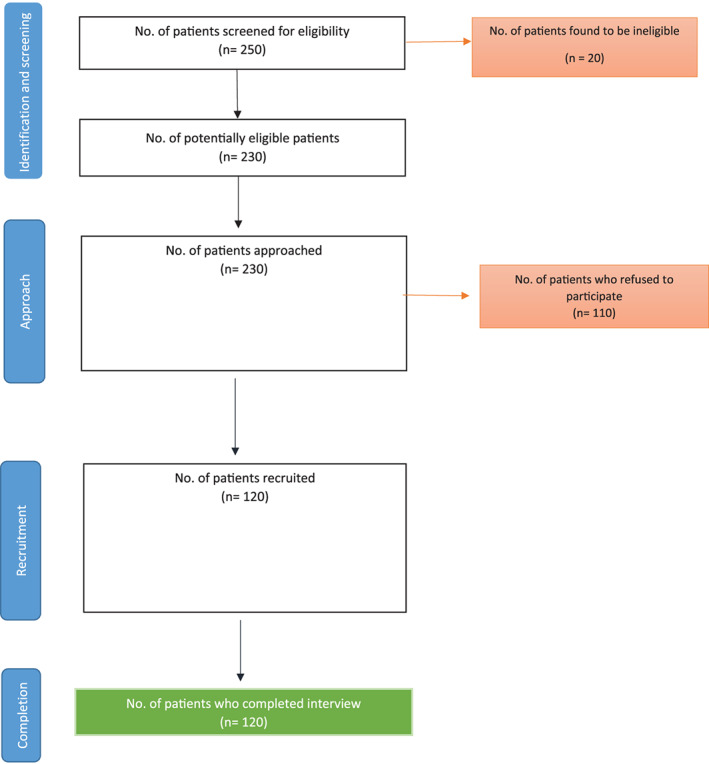
An analytical, cross-sectional study was conducted to achieve the objectives, employing the consecutive sampling method. A total of 120 adult (>19 years) patients were recruited from daycare chemotherapy unit of a tertiary care hospital. The data were collected using patient record form and Functional Assessment of Cancer Therapy-General (FACT-G), a quality of life (QoL) questionnaire. The overall mean score of quality of life (QoL) was 61.933 ± 5.85502. The domains of functional well-being and emotional well-being were most negatively affected after cancer chemotherapy. Education (illiteracy) and occupation (unemployment) were negatively associated with overall quality of life (QoL) of cancer patients on chemotherapy. Adverse drug reactions due to cancer chemotherapy negatively affect the quality of life (QoL) of cancer patients. Education (illiteracy) affects social well-being domain of cancer patients. Working in the government/private sector has a positive impact on functional well-being domain of quality of life (QoL).
The study findings suggest an overall low quality of life (QoL) among adult cancer patients undergoing chemotherapy at our setup. It has been identified as a stressful therapy, also affecting both psychological and physical well-being. Poor infrastructure, illiteracy, poverty, and lack of proper treatment facilities at most centres often lead to poor survival outcomes and hence focus has always been on achieving quantity of life rather than quality of life (QoL). This is further complicated due to nonavailability of validated tools in local vernacular, apathy of the treating physicians in the context of QoL aspects and social and cultural factors that are unique to this society. Psycho-oncology needs to become an integral entity of comprehensive cancer care.
癌症是全球第二大常见死因。同样,在印度,它也是一个主要的健康问题,并且疾病负担每年都在加剧。癌症化疗会对个人的健康产生不良影响。自过去几年以来,生活质量(QoL)已被视为癌症患者生存的主要治疗目标。
本研究旨在评估接受化疗的成年癌症患者的生活质量(QoL)及其影响因素。
采用横断面研究分析,采用连续抽样法进行。共招募了 120 名来自三级保健医院日间化疗病房的成年(>19 岁)癌症患者。使用患者病历表和癌症治疗功能评估一般量表(FACT-G)收集数据,这是一种生活质量(QoL)问卷。生活质量(QoL)的总体平均得分为 61.933±5.85502。癌症化疗后,功能健康和情感健康领域受到的影响最大。教育(文盲)和职业(失业)与接受化疗的癌症患者的总体生活质量(QoL)呈负相关。癌症化疗引起的药物不良反应对癌症患者的生活质量(QoL)产生负面影响。教育(文盲)会影响癌症患者的社会健康领域。在政府/私营部门工作对生活质量(QoL)的功能健康领域有积极影响。
本研究结果表明,在我们的机构中,接受化疗的成年癌症患者的整体生活质量(QoL)较低。它被认为是一种有压力的治疗方法,也会影响心理和身体健康。大多数中心的基础设施差、文盲、贫困和缺乏适当的治疗设施往往导致生存结局较差,因此,重点一直放在实现生存数量而不是生活质量(QoL)上。由于缺乏当地土语的验证工具、治疗医生对生活质量(QoL)方面的冷漠以及对这种社会特有的社会和文化因素,情况变得更加复杂。心理肿瘤学需要成为综合癌症治疗的一个组成部分。