Institute of Immunology, Christian-Albrechts-University of Kiel & UKSH Schleswig-Holstein, Kiel, Germany; Institute of Clinical Molecular Biology, Christian-Albrechts-University of Kiel, Kiel, Germany.
Institute of Clinical Molecular Biology, Christian-Albrechts-University of Kiel, Kiel, Germany.
Immunity. 2020 Dec 15;53(6):1258-1271.e5. doi: 10.1016/j.immuni.2020.11.016. Epub 2020 Nov 26.
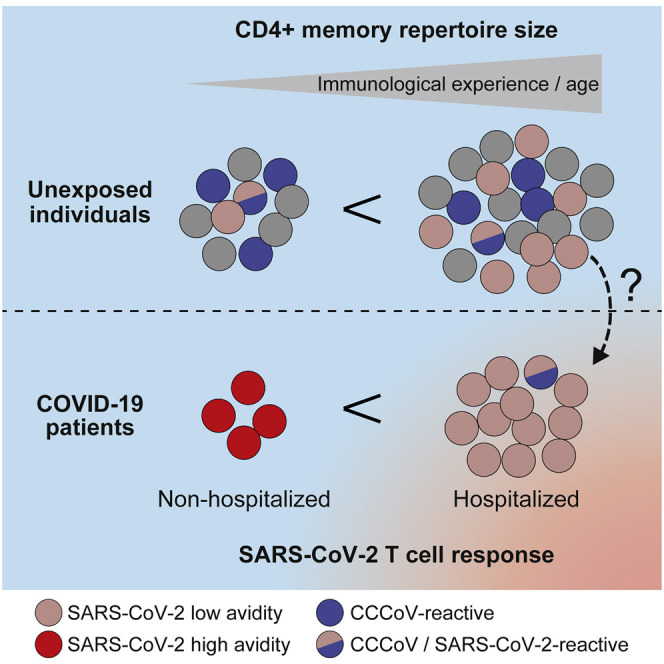
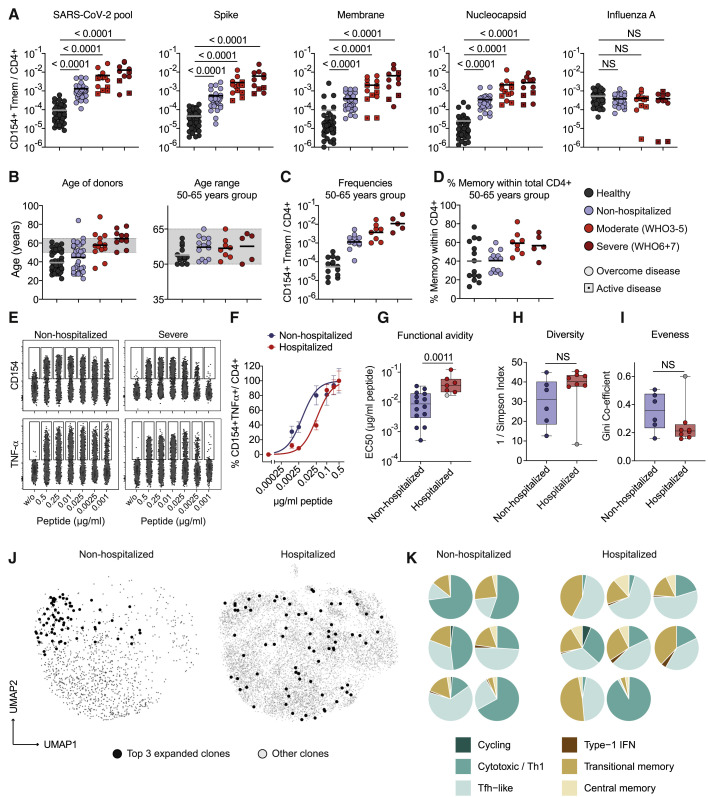
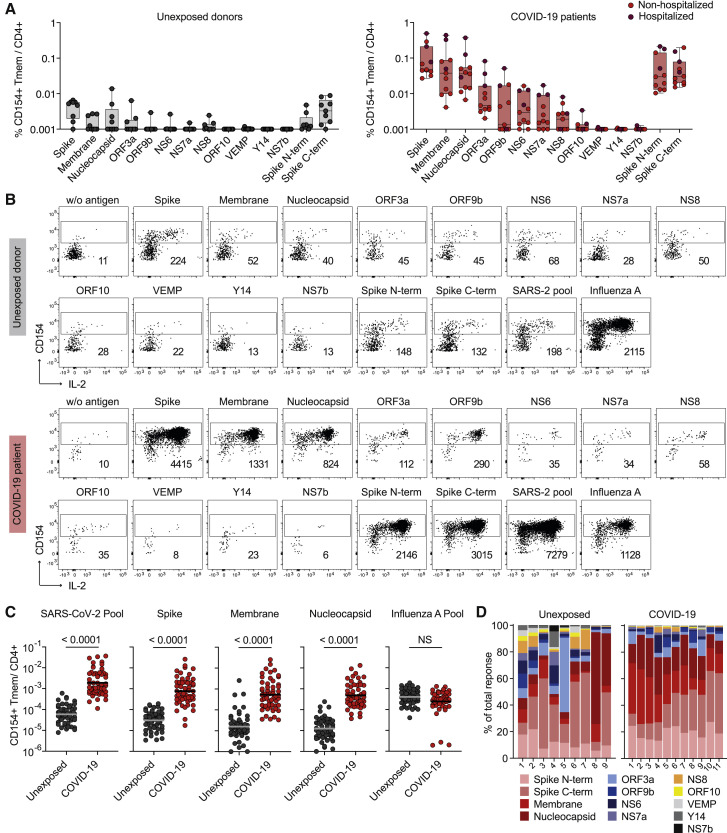
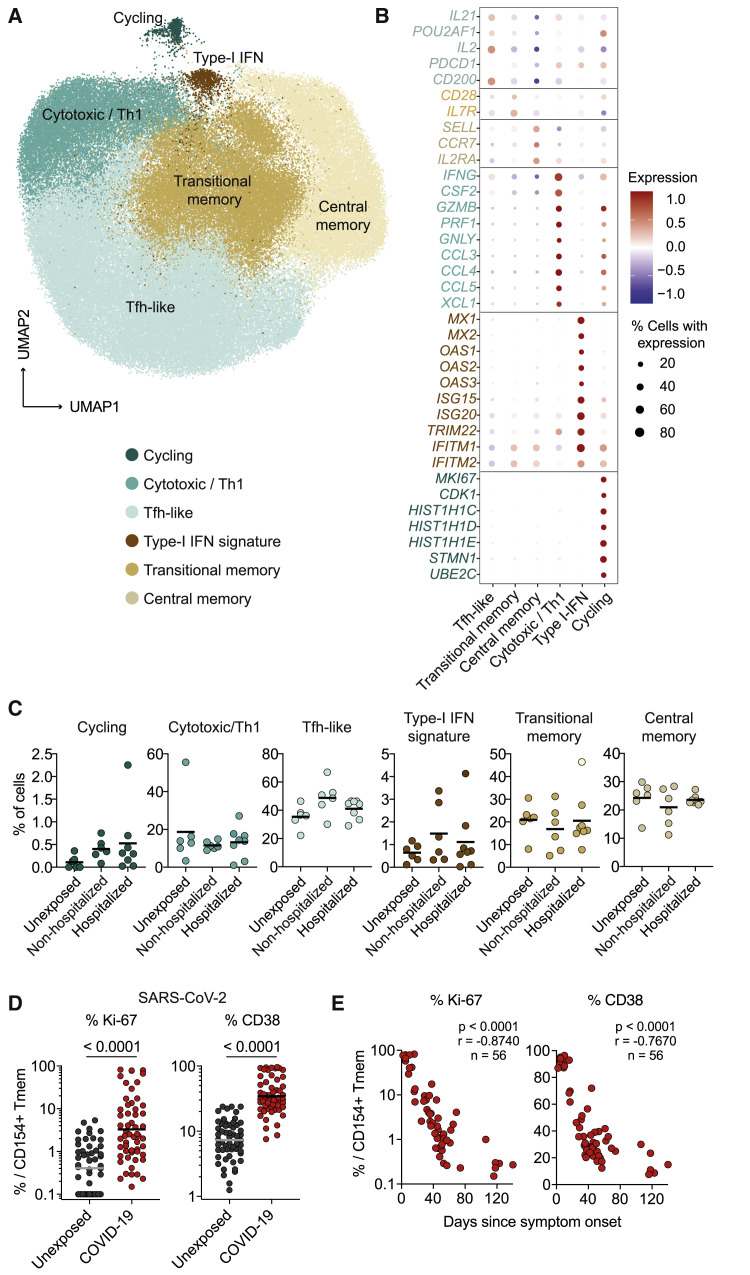
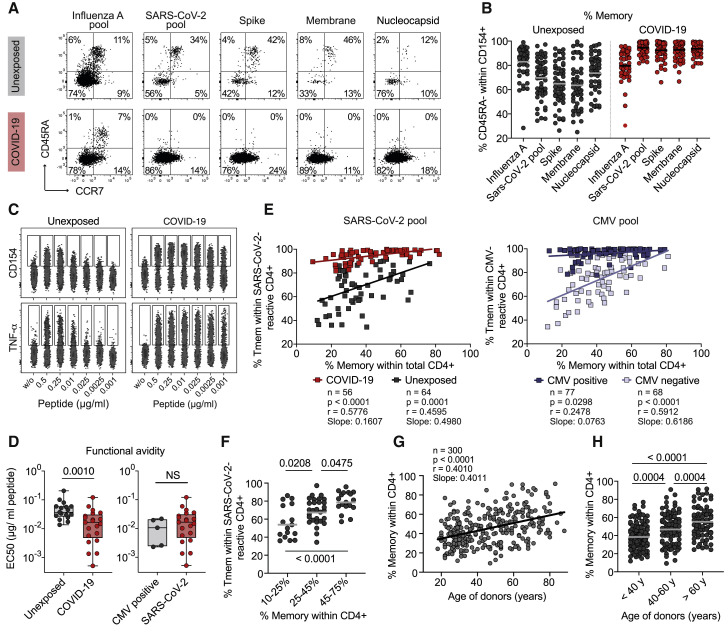
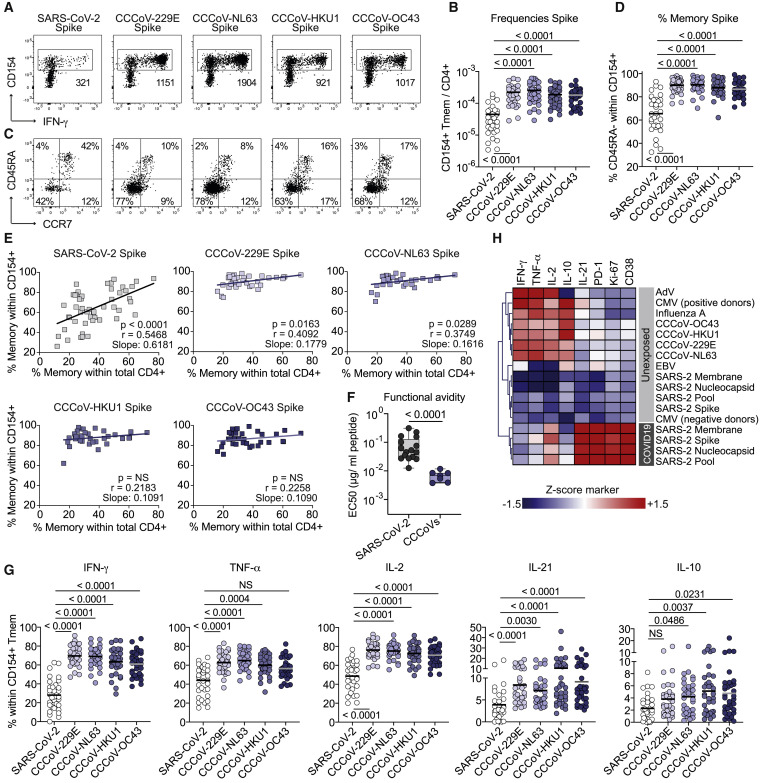
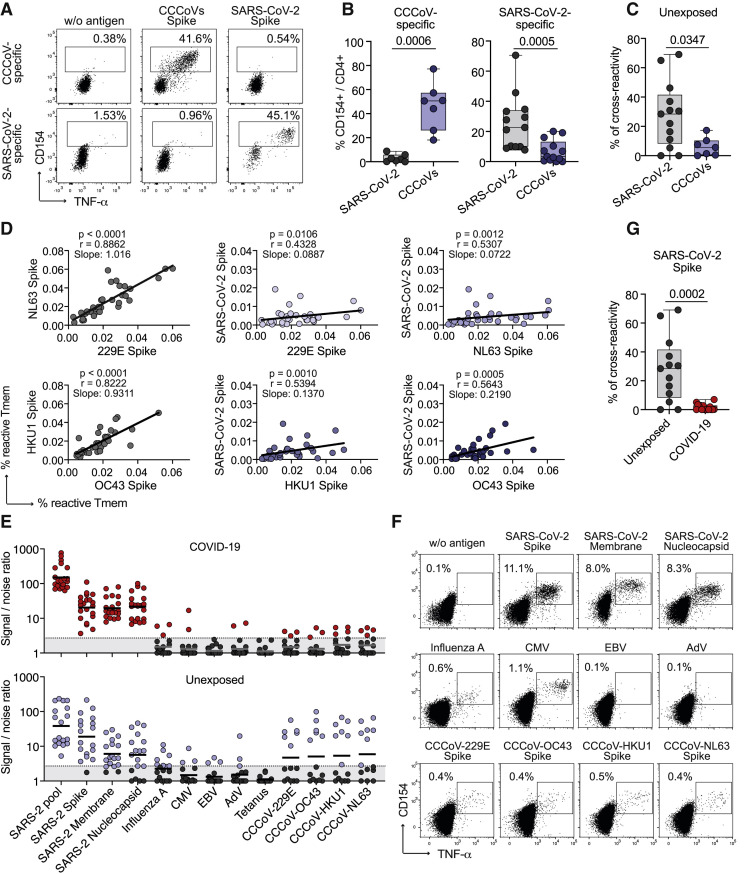
CD4 T cells reactive against SARS-CoV-2 can be found in unexposed individuals, and these are suggested to arise in response to common cold coronavirus (CCCoV) infection. Here, we utilized SARS-CoV-2-reactive CD4 T cell enrichment to examine the antigen avidity and clonality of these cells, as well as the relative contribution of CCCoV cross-reactivity. SARS-CoV-2-reactive CD4 memory T cells were present in virtually all unexposed individuals examined, displaying low functional avidity and multiple, highly variable cross-reactivities that were not restricted to CCCoVs. SARS-CoV-2-reactive CD4 T cells from COVID-19 patients lacked cross-reactivity to CCCoVs, irrespective of strong memory T cell responses against CCCoV in all donors analyzed. In severe but not mild COVID-19, SARS-CoV-2-specific T cells displayed low functional avidity and clonality, despite increased frequencies. Our findings identify low-avidity CD4 T cell responses as a hallmark of severe COVID-19 and argue against a protective role for CCCoV-reactive T cells in SARS-CoV-2 infection.
未暴露个体中可检测到针对 SARS-CoV-2 的 CD4 T 细胞,这些细胞被认为是对普通感冒冠状病毒(CCCoV)感染的反应而产生的。在这里,我们利用 SARS-CoV-2 反应性 CD4 T 细胞富集来研究这些细胞的抗原亲和力和克隆性,以及 CCCoV 交叉反应的相对贡献。几乎所有接受检查的未暴露个体中都存在 SARS-CoV-2 反应性 CD4 记忆 T 细胞,这些细胞表现出低功能亲和力和多种高度可变的交叉反应性,而不限于 CCCoVs。来自 COVID-19 患者的 SARS-CoV-2 反应性 CD4 T 细胞对 CCCoV 无交叉反应性,而所有分析供体中针对 CCCoV 均存在强烈的记忆 T 细胞反应。在严重但非轻症 COVID-19 中,尽管频率增加,但 SARS-CoV-2 特异性 T 细胞显示出低功能亲和力和克隆性。我们的研究结果确定了低亲和力 CD4 T 细胞反应是严重 COVID-19 的标志,并反对 CCCoV 反应性 T 细胞在 SARS-CoV-2 感染中具有保护作用。