Ishikawa Shigeo, Hiraka Toshitada, Kirii Kazukuni, Sugimoto Masahiro, Shimamoto Hiroaki, Sugano Ayako, Kitabatake Kenichiro, Toyoguchi Yuuki, Kanoto Masafumi, Nemoto Kenji, Soga Tomoyoshi, Tomita Masaru, Iino Mitsuyoshi
Department of Dentistry, Oral and Maxillofacial Plastic and Reconstructive Surgery, Faculty of Medicine, Yamagata University, 2-2-2 Iida-Nishi, Yamagata 990-9585, Japan.
Department of Radiology, Division of Diagnostic Radiology, Faculty of Medicine, Yamagata University, 2-2-2 Iida-Nishi, Yamagata 990-9585, Japan.
J Clin Med. 2020 Dec 7;9(12):3958. doi: 10.3390/jcm9123958.
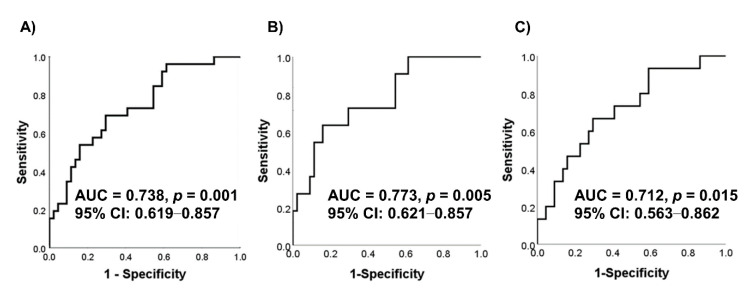
F-fluorodeoxyglucose (F-FDG) positron emission tomography (PET)/computed tomography (CT) is usually used for staging or evaluation of treatment response rather than for cancer screening. However, F-FDG PET/CT has also been used in Japan for cancer screening in people with no cancer symptoms, and accumulating evidence supports this application of F-FDG PET/CT. Previously, we have observed a correlation between the saliva and tumor metabolomic profiles in patients with oral cancer. Hence, if salivary metabolites demonstrate a significant correlation with PET parameters such as the maximum standardized uptake value (SUV), they may have the potential to be used as a screening tool before PET/CT to identify patients with high SUV. Hence, in this study, we aimed to explore the relationship between salivary metabolites and SUV of F-FDG PET/CT using previously collected data. F-FDG PET/CT was performed for staging 26 patients with oral cancer. The collected data were integrated and analyzed along with quantified salivary hydrophilic metabolites obtained from the same patients with oral cancer and controls ( = 44). In total, 11 metabolites showed significant correlations with SUV in the delayed phases. A multiple logistic regression model of the two metabolites showed the ability to discriminate between patients with oral cancer and controls, with an area under the receiver operating characteristic curve of 0.738 ( = 0.001). This study uniquely confirmed a relationship between salivary metabolites and SUV of PET/CT in patients with oral cancer; salivary metabolites were significantly correlated with SUV. These salivary metabolites can be used as a screening tool before PET/CT to identify patients with high SUV, i.e., to detect the presence of oral cancer.
F-氟脱氧葡萄糖(F-FDG)正电子发射断层扫描(PET)/计算机断层扫描(CT)通常用于癌症分期或治疗反应评估,而非癌症筛查。然而,F-FDG PET/CT在日本也已用于对无癌症症状人群的癌症筛查,且越来越多的证据支持F-FDG PET/CT的这一应用。此前,我们观察到口腔癌患者唾液与肿瘤代谢组学特征之间存在相关性。因此,如果唾液代谢产物与最大标准化摄取值(SUV)等PET参数显示出显著相关性,那么它们有可能在PET/CT检查前用作筛查工具,以识别SUV值高的患者。因此,在本研究中,我们旨在利用先前收集的数据探索唾液代谢产物与F-FDG PET/CT的SUV之间的关系。对26例口腔癌患者进行F-FDG PET/CT分期检查。将收集到的数据与从这些口腔癌患者及对照组(n = 44)获得的定量唾液亲水性代谢产物整合并进行分析。总共11种代谢产物在延迟期与SUV显示出显著相关性。两种代谢产物的多元逻辑回归模型显示出区分口腔癌患者与对照组的能力,受试者工作特征曲线下面积为0.738(P = 0.001)。本研究独特地证实了口腔癌患者唾液代谢产物与PET/CT的SUV之间的关系;唾液代谢产物与SUV显著相关。这些唾液代谢产物可在PET/CT检查前用作筛查工具,以识别SUV值高的患者,即检测口腔癌的存在。