Chemistry and Biochemistry, California State University San Marcos, 333 S. Twin Oaks Valley Rd, San Marcos, CA 92096, USA.
Department of Chemistry, University of Arkansas at Little Rock, 2801 S. University Ave, Little Rock, AR 72204, USA.
Sensors (Basel). 2020 Dec 7;20(23):6982. doi: 10.3390/s20236982.
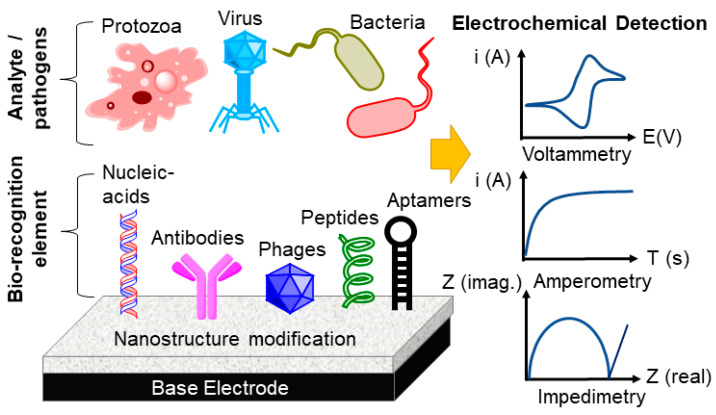
Quality checks, assessments, and the assurance of food products, raw materials, and food ingredients is critically important to ensure the safeguard of foods of high quality for safety and public health. Nevertheless, quality checks, assessments, and the assurance of food products along distribution and supply chains is impacted by various challenges. For instance, the development of portable, sensitive, low-cost, and robust instrumentation that is capable of real-time, accurate, and sensitive analysis, quality checks, assessments, and the assurance of food products in the field and/or in the production line in a food manufacturing industry is a major technological and analytical challenge. Other significant challenges include analytical method development, method validation strategies, and the non-availability of reference materials and/or standards for emerging food contaminants. The simplicity, portability, non-invasive, non-destructive properties, and low-cost of NIR spectrometers, make them appealing and desirable instruments of choice for rapid quality checks, assessments and assurances of food products, raw materials, and ingredients. This review article surveys literature and examines current challenges and breakthroughs in quality checks and the assessment of a variety of food products, raw materials, and ingredients. Specifically, recent technological innovations and notable advances in quartz crystal microbalances (QCM), electroanalytical techniques, and near infrared (NIR) spectroscopic instrument development in the quality assessment of selected food products, and the analysis of food raw materials and ingredients for foodborne pathogen detection between January 2019 and July 2020 are highlighted. In addition, chemometric approaches and multivariate analyses of spectral data for NIR instrumental calibration and sample analyses for quality assessments and assurances of selected food products and electrochemical methods for foodborne pathogen detection are discussed. Moreover, this review provides insight into the future trajectory of innovative technological developments in QCM, electroanalytical techniques, NIR spectroscopy, and multivariate analyses relating to general applications for the quality assessment of food products.
质量检查、评估和食品产品、原材料和食品成分的保证对于确保高质量食品的安全和公共卫生至关重要。然而,食品在分销和供应链中的质量检查、评估和保证受到各种挑战的影响。例如,开发能够实时、准确和灵敏地进行分析的便携式、灵敏、低成本和坚固的仪器,以实现食品制造业现场和/或生产线中的食品产品质量检查、评估和保证,这是一个重大的技术和分析挑战。其他重大挑战包括分析方法的开发、方法验证策略以及新兴食品污染物的参考材料和/或标准的缺乏。近红外(NIR)光谱仪的简单性、便携性、非侵入性、非破坏性特性和低成本,使其成为快速质量检查、评估和保证食品产品、原材料和成分的理想仪器。本文综述了文献,考察了当前各种食品产品、原材料和成分的质量检查和评估所面临的挑战和突破。具体而言,本文重点介绍了 2019 年 1 月至 2020 年 7 月期间,在选定食品产品的质量评估以及食品中食源性致病菌检测的食品原料和成分分析方面,石英晶体微天平(QCM)、电化学生物传感器技术和近红外(NIR)光谱仪技术的最新技术创新和显著进展,此外还讨论了用于 NIR 仪器校准和样品分析的化学计量学方法和光谱数据的多元分析以及用于食源性致病菌检测的电化学方法。最后,本文还探讨了 QCM、电化学生物传感器技术、NIR 光谱学和多元分析在与食品产品质量评估的一般应用相关的创新技术发展的未来轨迹。