Laboratoire de Bactériologie-Hygiène Hospitalière, Centre Hospitalier Universitaire Grenoble Alpes, 38000, Grenoble, France.
Université Grenoble Alpes, CNRS, Grenoble INP, TIMC-IMAG, 38000, Grenoble, France.
Ann Clin Microbiol Antimicrob. 2020 Dec 9;19(1):60. doi: 10.1186/s12941-020-00403-w.
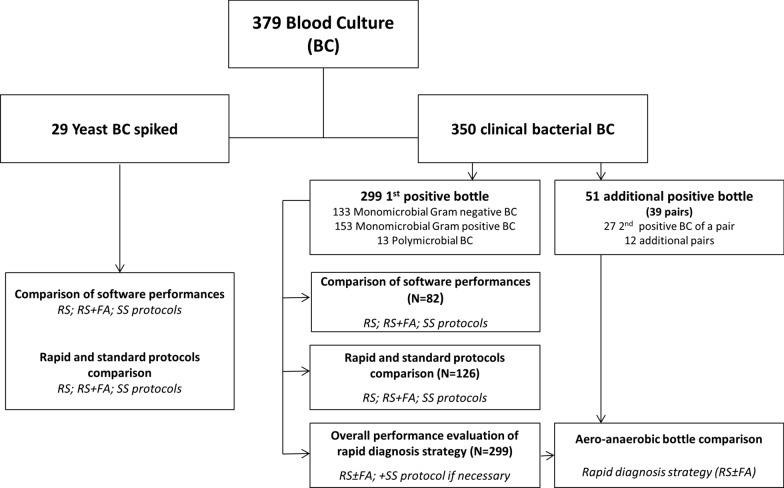
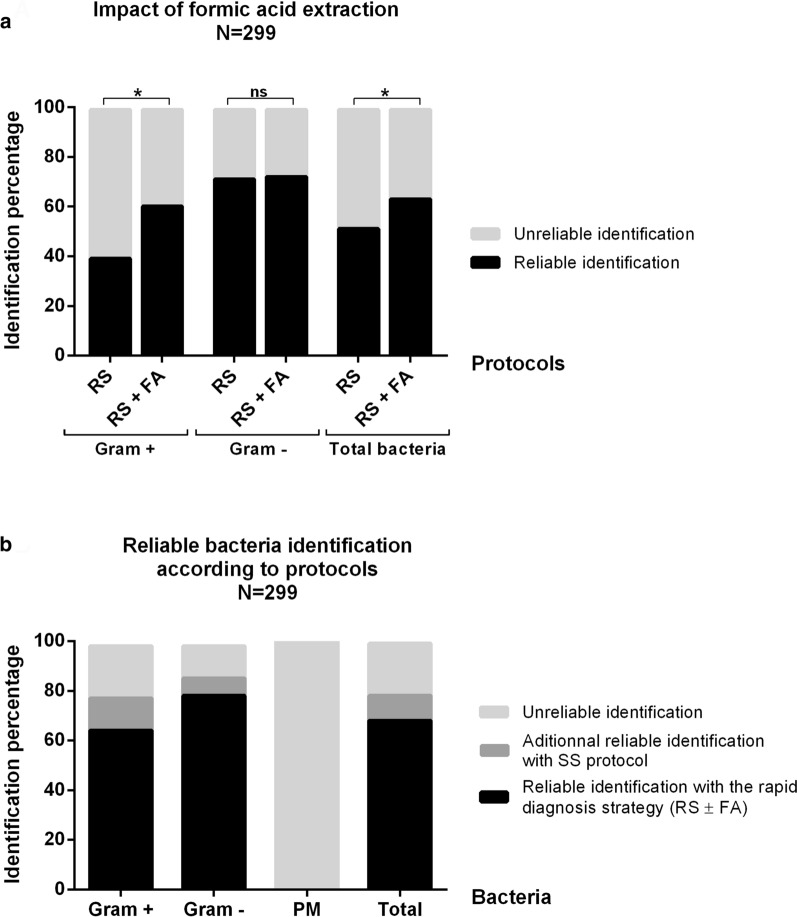
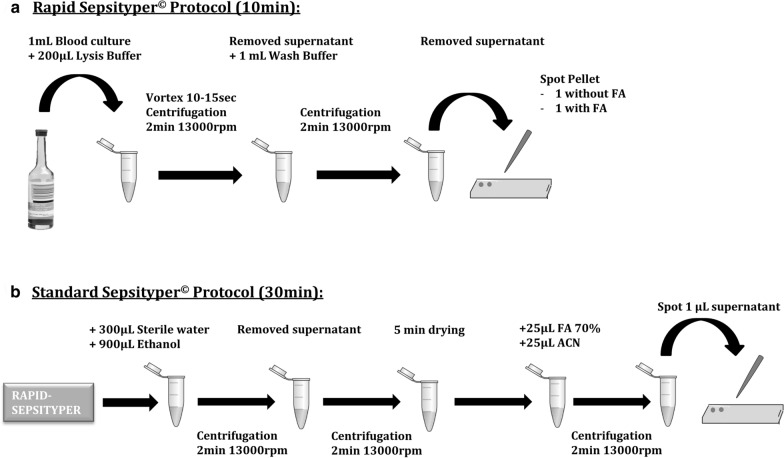
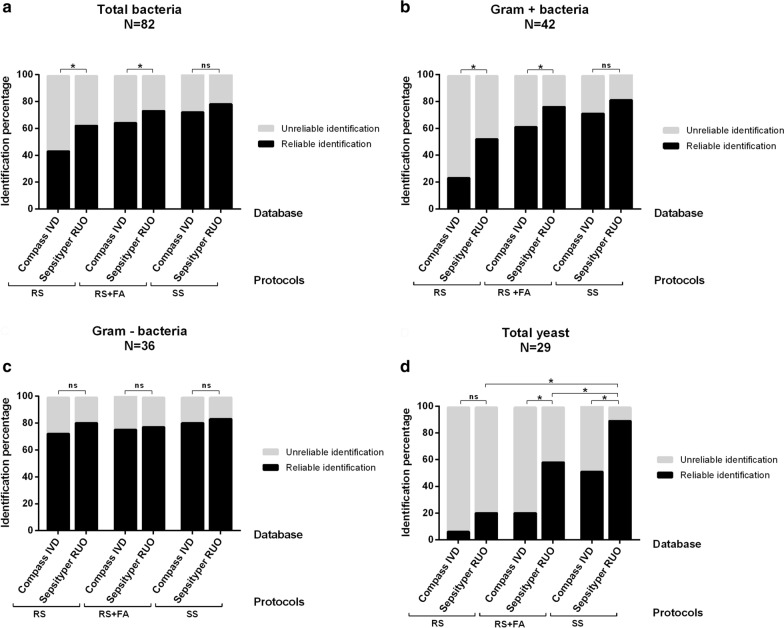
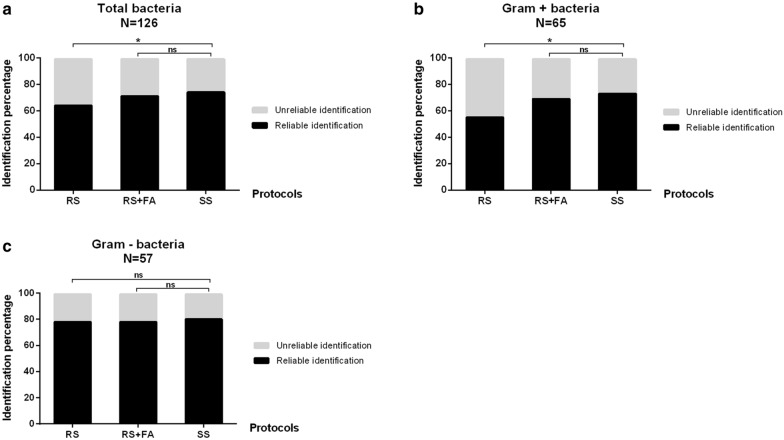
During bloodstream infections, rapid adaptation of empirical treatment according to the microorganism identified is essential to decrease mortality. The aim of the present study was to assess the microbiological performances of a new rapid version of the Sepsityper® kit (Bruker Daltonics) allowing identification of bacteria and yeast by MALDI-TOF mass spectrometry directly from positive blood cultures in 10 min and of the specific MBT-Sepsityper module for spectra analysis, designed to increase identification performance. Identification rates were determined prospectively on 350 bacterial and 29 fungal positive blood cultures, and compared to conventional diagnostic method. Our rapid diagnosis strategy (Rapid Sepsityper® protocol: one spot with and one without formic acid extraction step) combined to MBT-Sepsityper module provided 65.4%, 78.9% and 62% reliable identification to the species level of monomicrobial positive blood cultures growing respectively Gram-positive, Gram-negative bacteria or yeast. Importantly, identification rates of Gram-positive bacteria were higher in anaerobic than in aerobic bottles (77.8% vs 22.2%; p = 0.004), if formic acid extraction step was performed (60.8% vs 39.2%; p = 1.8e) and if specific MBT-Sepsityper module was used (76.2% vs 61.9%, p = 0.041) while no significant differences were observed for Gram-negative bacteria. For yeasts identification, formic acid extraction step improved rapid identification rate by 37.9% while the specific MBT-Sepsityper module increased overall performances by 38%, providing up to 89.7% reliable identification if associated with the standard Sepsityper® protocol. These performances, associated with a reduce turnaround time, may help to implement a rapid identification strategy of bloodstream infections in the routine workflow of microbiology laboratories.
在血流感染中,根据鉴定的微生物迅速调整经验性治疗方案对于降低死亡率至关重要。本研究旨在评估一种新的快速 Sepsityper®试剂盒(布鲁克·道尔顿)的微生物学性能,该试剂盒通过 MALDI-TOF 质谱技术可直接从阳性血培养物中在 10 分钟内鉴定细菌和酵母,并且具有特定的 MBT-Sepsityper 模块,用于设计增加鉴定性能的光谱分析。鉴定率是在 350 株细菌和 29 株真菌阳性血培养物中前瞻性确定的,并与常规诊断方法进行了比较。我们的快速诊断策略(快速 Sepsityper®方案:一个有和一个没有甲酸提取步骤的点)与 MBT-Sepsityper 模块相结合,对分别生长革兰氏阳性、革兰氏阴性细菌或酵母的单微生物阳性血培养物,提供了 65.4%、78.9%和 62%可靠的种水平鉴定。重要的是,如果进行甲酸提取步骤(77.8%比 22.2%;p=0.004)和使用特定的 MBT-Sepsityper 模块(76.2%比 61.9%,p=0.041),则革兰氏阳性菌的鉴定率在厌氧瓶中高于需氧瓶,而对于革兰氏阴性菌则没有观察到显著差异。对于酵母的鉴定,甲酸提取步骤可将快速鉴定率提高 37.9%,而特定的 MBT-Sepsityper 模块可将整体性能提高 38%,如果与标准 Sepsityper®方案结合使用,则可提供高达 89.7%的可靠鉴定。这些性能,加上缩短的周转时间,可能有助于在微生物学实验室的常规工作流程中实施血流感染的快速鉴定策略。