Department of Molecular Biology and Biochemistry, University of California Irvine, Irvine, California, USA.
Department of Physiology and Biophysics, Vaccine Research and Development Center, University of California Irvine, Irvine, California, USA.
J Biol Chem. 2021 Jan-Jun;296:100168. doi: 10.1074/jbc.RA120.015501. Epub 2020 Dec 14.
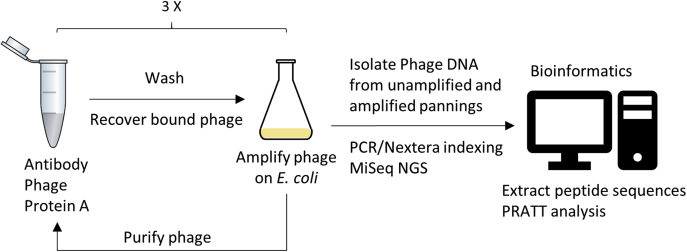
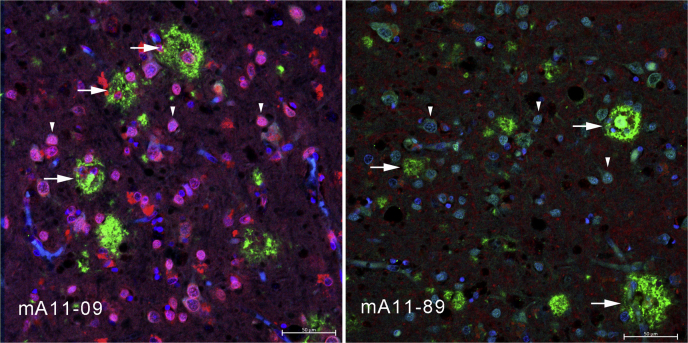
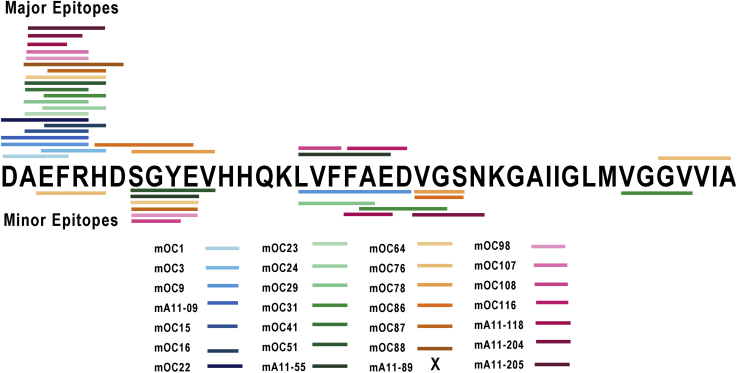
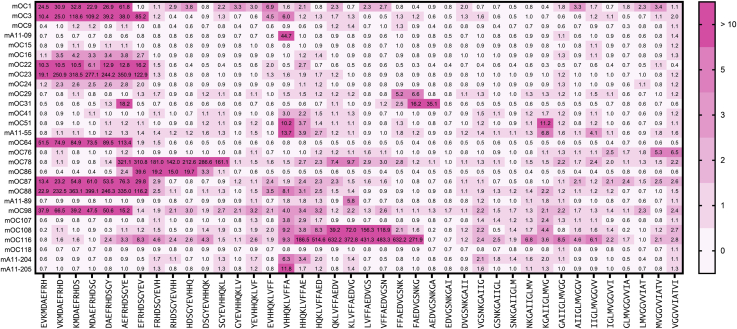
Antibodies against Aß amyloid are indispensable research tools and potential therapeutics for Alzheimer's disease. They display several unusual properties, such as specificity for aggregated forms of the peptide, the ability to distinguish polymorphic aggregate structures, and the ability to recognize generic aggregation-related epitopes formed by unrelated amyloid sequences. Understanding the mechanisms underlying these unusual properties and the structures of their corresponding epitopes is crucial for the understanding why antibodies display different therapeutic activities and for the development of more effective therapeutic agents. Here we employed a novel "epitomic" approach to map the fine structure of the epitopes of 28 monoclonal antibodies against amyloid-beta using immunoselection of random sequences from a phage display library, deep sequencing, and pattern analysis to define the critical sequence elements recognized by the antibodies. Although most of the antibodies map to major linear epitopes in the amino terminal 1 to 14 residues of Aß, the antibodies display differences in the target sequence residues that are critical for binding and in their individual preferences for nontarget residues, indicating that the antibodies bind to alternative conformations of the sequence by different mechanisms. Epitomic analysis also identifies discontinuous, nonoverlapping sequence Aß segments that may constitute the conformational epitopes that underlie the aggregation specificity of antibodies. Aggregation-specific antibodies recognize sequences that display a significantly higher predicted propensity for forming amyloid than antibodies that recognize the monomer, indicating that the ability of random sequences to aggregate into amyloid is a critical element of their binding mechanism.
针对 Aβ淀粉样蛋白的抗体是阿尔茨海默病研究不可或缺的工具和潜在的治疗方法。它们具有几个不寻常的特性,例如对肽聚集形式的特异性、区分多态聚集结构的能力,以及识别由不相关淀粉样序列形成的通用聚集相关表位的能力。了解这些不寻常特性的机制以及它们相应表位的结构对于理解为什么抗体显示不同的治疗活性以及开发更有效的治疗剂至关重要。在这里,我们采用了一种新的“表位组学”方法,使用噬菌体展示文库中的随机序列免疫选择、深度测序和模式分析来映射 28 种针对淀粉样蛋白-β的单克隆抗体的表位精细结构,以定义抗体识别的关键序列元素。尽管大多数抗体映射到 Aβ的氨基末端 1 到 14 个残基的主要线性表位,但抗体在结合的关键序列残基和对非目标残基的个体偏好方面存在差异,这表明抗体通过不同的机制结合到序列的替代构象。表位组学分析还确定了不连续、非重叠的 Aβ序列片段,这些片段可能构成构成抗体聚集特异性的构象表位。聚集特异性抗体识别的序列比识别单体的抗体显示出更高的形成淀粉样蛋白的预测倾向,这表明随机序列聚集形成淀粉样蛋白的能力是其结合机制的一个关键要素。