Osawa Itsuki, Goto Tadahiro, Yamamoto Yuji, Tsugawa Yusuke
Department of Medicine, The University of Tokyo Hospital, Tokyo, Japan.
Department of Clinical Epidemiology and Health Economics, School of Public Health, The University of Tokyo, 7-3-1 HongoBunkyo-ku, Tokyo, 113-0033, Japan.
NPJ Digit Med. 2020 Nov 11;3(1):148. doi: 10.1038/s41746-020-00354-8.
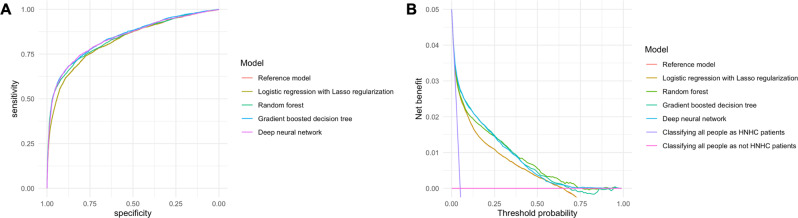
High-need, high-cost (HNHC) patients-usually defined as those who account for the top 5% of annual healthcare costs-use as much as half of the total healthcare costs. Accurately predicting future HNHC patients and designing targeted interventions for them has the potential to effectively control rapidly growing healthcare expenditures. To achieve this goal, we used a nationally representative random sample of the working-age population who underwent a screening program in Japan in 2013-2016, and developed five machine-learning-based prediction models for HNHC patients in the subsequent year. Predictors include demographics, blood pressure, laboratory tests (e.g., HbA1c, LDL-C, and AST), survey responses (e.g., smoking status, medications, and past medical history), and annual healthcare cost in the prior year. Our prediction models for HNHC patients combining clinical data from the national screening program with claims data showed a c-statistics of 0.84 (95%CI, 0.83-0.86), and overperformed traditional prediction models relying only on claims data.
高需求、高成本(HNHC)患者——通常被定义为那些占年度医疗费用前5%的人群——消耗了高达一半的医疗总费用。准确预测未来的HNHC患者并为他们设计针对性的干预措施,有可能有效控制快速增长的医疗支出。为实现这一目标,我们使用了2013年至2016年在日本接受筛查项目的具有全国代表性的在职年龄人口随机样本,并为次年的HNHC患者开发了五个基于机器学习的预测模型。预测因素包括人口统计学特征、血压、实验室检查(如糖化血红蛋白、低密度脂蛋白胆固醇和谷草转氨酶)、调查回复(如吸烟状况、用药情况和既往病史)以及上一年的年度医疗费用。我们将国家筛查项目的临床数据与理赔数据相结合的HNHC患者预测模型的c统计量为0.84(95%置信区间,0.83 - 0.86),并且优于仅依赖理赔数据的传统预测模型。