Rassouli Frank, Tinschert Peter, Barata Filipe, Steurer-Stey Claudia, Fleisch Elgar, Puhan Milo Alan, Baty Florent, Kowatsch Tobias, Brutsche Martin Hugo
Lung Center, Cantonal Hospital St. Gallen, St. Gallen, Switzerland.
Center for Digital Health Interventions, Institute of Technology Management, University of St. Gallen, St. Gallen, Switzerland.
J Asthma Allergy. 2020 Dec 3;13:649-657. doi: 10.2147/JAA.S278119. eCollection 2020.
The nature of nocturnal cough is largely unknown. It might be a valid marker for asthma control but very few studies characterized it as a basis for better defining its role and its use as clinical marker. This study investigated prevalence and characteristics of nocturnal cough in asthmatics over the course of four weeks.
In two centers, 94 adult patients with physician-diagnosed asthma were recruited. Patient-reported outcomes and nocturnal sensor data were collected by a smartphone with a chat-based study app.
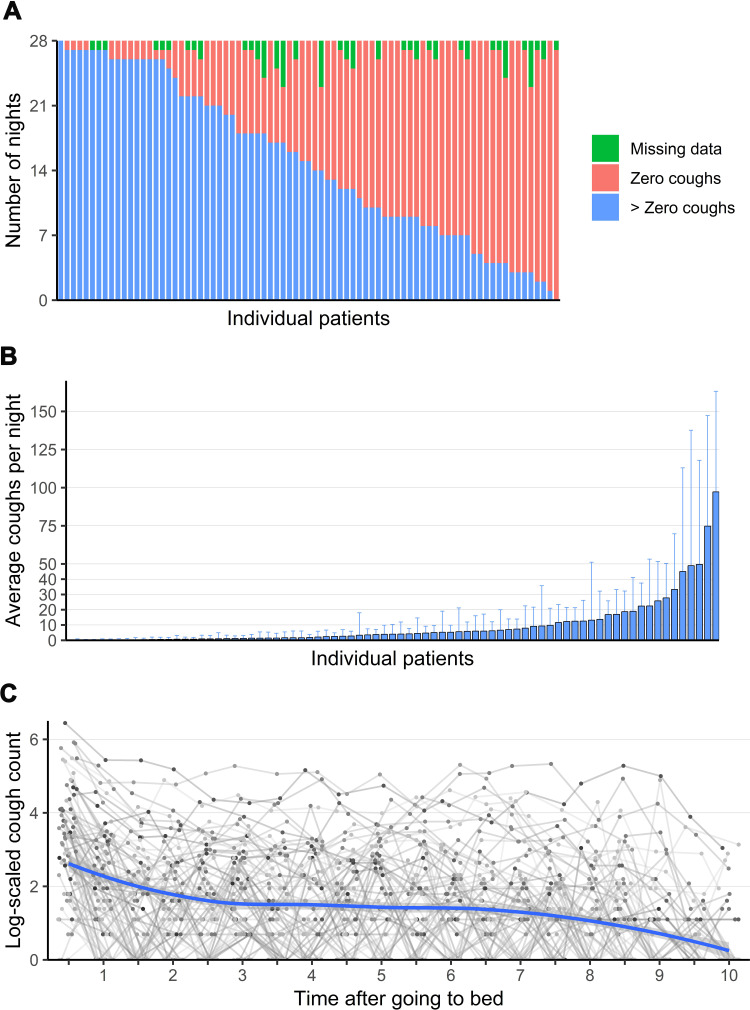
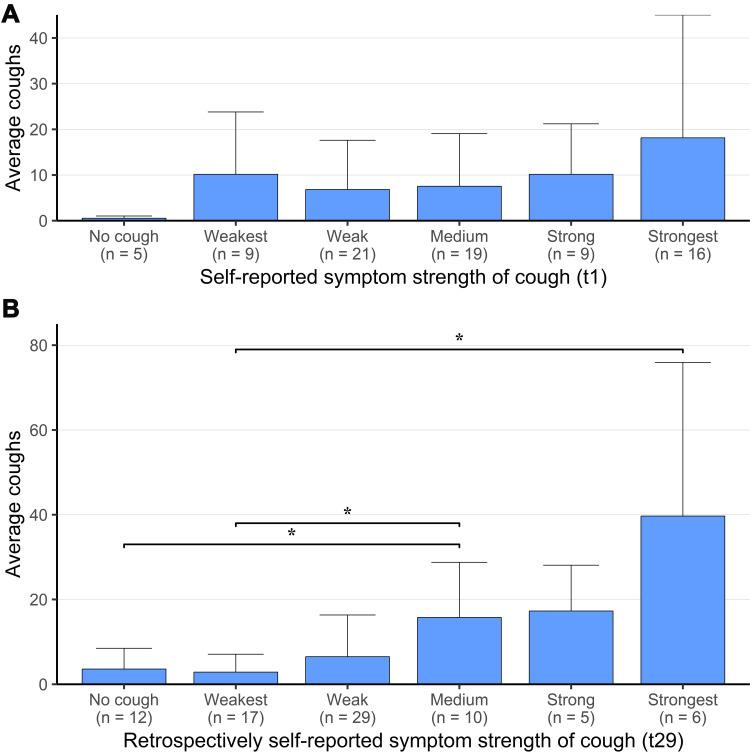
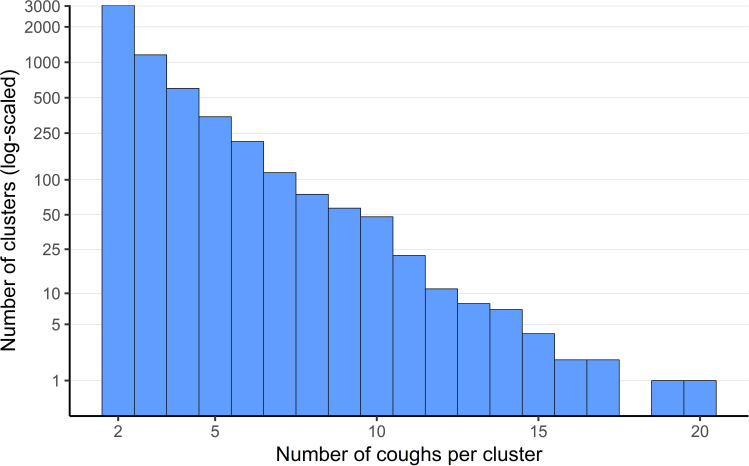
Patients coughed in 53% of 2212 nights (range: 0-345 coughs/night). Median coughs per hour were 0 (IQR 0-1). Nocturnal cough rates showed considerable inter-individual variance. The highest counts were measured in the first 30 min in bed (4.5-fold higher than rest of night). Eighty-six percent of coughs were part of a cough cluster. Clusters consisted of a median of two coughs (IQR 2-4). Nocturnal cough was persistent within patient.
To the best of the authors' knowledge, this study is the first to describe prevalence and characteristics of nocturnal cough in asthma over a period of one month, demonstrating that it was a prevalent symptom with large variance between patients and high persistence within patients. Cough events in asthmatics were 4.5 times more frequent within the first 30 min in bed indicating a potential role of positional change, and not more frequent during the early morning hours. An important next step will investigate the association between nocturnal cough and asthma control.
夜间咳嗽的本质在很大程度上尚不清楚。它可能是哮喘控制的一个有效指标,但很少有研究将其作为更好地界定其作用及作为临床指标用途的基础。本研究调查了哮喘患者在四周期间夜间咳嗽的患病率及特征。
在两个中心招募了94名经医生诊断为哮喘的成年患者。通过一款带有基于聊天的研究应用程序的智能手机收集患者报告的结果和夜间传感器数据。
在2212个夜晚中,53%的夜晚患者出现咳嗽(范围:每晚0 - 345次咳嗽)。每小时咳嗽的中位数为0(四分位间距0 - 1)。夜间咳嗽率显示出相当大的个体差异。上床后的前30分钟咳嗽次数最多(比夜间其余时间高4.5倍)。86%的咳嗽属于咳嗽集群的一部分。集群中咳嗽的中位数为两次(四分位间距2 - 4)。夜间咳嗽在患者个体内具有持续性。
据作者所知,本研究是首次描述哮喘患者在一个月期间夜间咳嗽的患病率及特征,表明它是一种普遍存在的症状,患者之间差异很大且在患者个体内具有高度持续性。哮喘患者在床上的前30分钟内咳嗽事件的频率是其余时间的4.5倍,这表明体位变化可能起作用,而在清晨时段咳嗽并不更频繁。下一步重要的工作将是研究夜间咳嗽与哮喘控制之间的关联。