Hedberg Pär, Nohlert Eva, Tegelberg Åke
Department of Clinical Physiology, Västmanland County Hospital, Västerås, Sweden.
Centre for Clinical Research, Uppsala University, Västerås, Sweden.
J Sleep Res. 2021 Aug;30(4):e13253. doi: 10.1111/jsr.13253. Epub 2020 Dec 9.
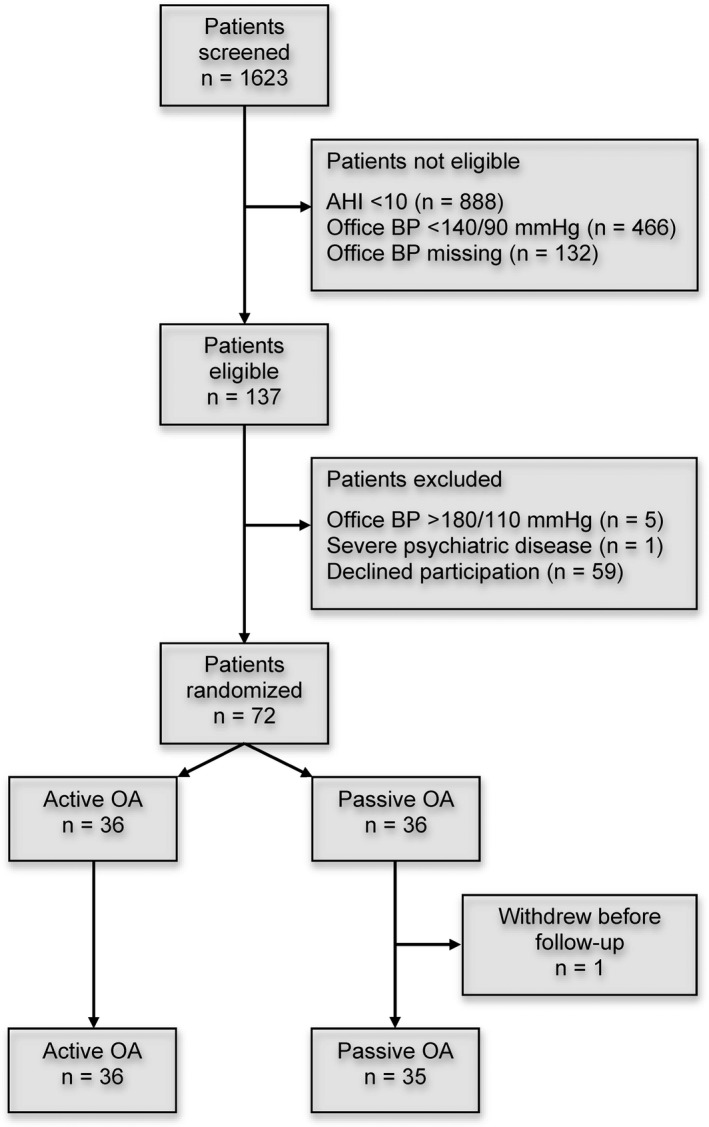
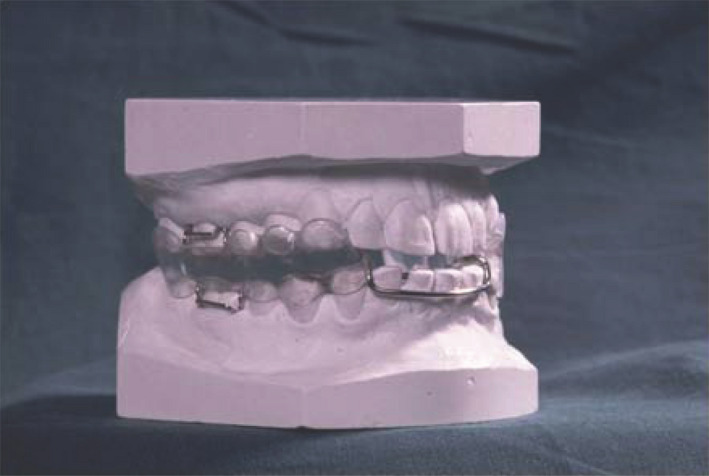
Obstructive sleep apnea (OSA) may lead to increased circulating concentrations of inflammatory biomarkers and treatment may change these. We aimed to assess the effect of oral appliance (OA) therapy on inflammatory biomarkers in a randomised controlled pilot trial. A total of 71 patients with OSA and systemic hypertension were randomly allocated to an active, mandible protruded (OAa) or a passive, mandible non-protruded device (OAp) treatment. Serum concentrations of the inflammatory biomarkers white blood cells, high-sensitivity C-reactive protein, interleukin 6, interleukin 10, and tumour necrosis factor-α were measured at baseline and after 3 months of OA treatment. The differences between treatment groups in biomarker concentration change during the treatment were presented as the Vargha and Delaney effect size and evaluated with the Wilcoxon-Mann-Whitney test. This effect size expresses the probability of a higher value in a random participant from one group compared with a random patient from the other group, and a value of 0.5 means stochastically equal groups. After 3 months of treatment, there was a significant reduction of the apnea-hypopnea index in the OAa group compared with the OAp group (effect size 0.258, 95% confidence interval 0.146-0.386, p < .001). There were no significant differences between the groups in any of the inflammatory markers' concentration changes during the treatment period (effect sizes between 0.488 and 0.524; all p values ≥.737). Thus, OA treatment for 3 months did not affect circulating concentrations of some common inflammatory markers in patients with OSA and systemic hypertension.
阻塞性睡眠呼吸暂停(OSA)可能导致炎症生物标志物的循环浓度升高,而治疗可能会改变这些浓度。我们旨在通过一项随机对照试验评估口腔矫治器(OA)治疗对炎症生物标志物的影响。共有71例OSA合并系统性高血压患者被随机分配接受主动式下颌前突矫治器(OAa)或被动式下颌非前突矫治器(OAp)治疗。在基线和OA治疗3个月后,测量炎症生物标志物白细胞、高敏C反应蛋白、白细胞介素6、白细胞介素10和肿瘤坏死因子-α的血清浓度。治疗组间生物标志物浓度变化的差异以Vargha和Delaney效应量表示,并采用Wilcoxon-Mann-Whitney检验进行评估。该效应量表示一组中随机抽取的参与者的值高于另一组中随机抽取的患者的值的概率,值为0.5表示两组随机相等。治疗3个月后,与OAp组相比,OAa组的呼吸暂停低通气指数显著降低(效应量0.258,95%置信区间0.146-0.386,p <.001)。治疗期间,两组间任何炎症标志物的浓度变化均无显著差异(效应量在0.488至0.524之间;所有p值≥.737)。因此,3个月的OA治疗对OSA合并系统性高血压患者的一些常见炎症标志物的循环浓度没有影响。