Department of Critical Care Medicine, State Key Laboratory of Complex Severe and Rare Diseases, Peking Union Medical College Hospital, Chinese Academy of Medical Science and Peking Union Medical College, Beijing, 100730, People's Republic of China.
Department of Emergency Medicine, Sir Run Run Shaw Hospital, Zhejiang University School of Medicine, Hangzhou, 310016, People's Republic of China.
Respir Res. 2020 Dec 10;21(1):325. doi: 10.1186/s12931-020-01588-6.
Although protective mechanical ventilation (MV) has been used in a variety of applications, lung injury may occur in both patients with and without acute respiratory distress syndrome (ARDS). The purpose of this study is to use machine learning to identify clinical phenotypes for critically ill patients with MV in intensive care units (ICUs).
A retrospective cohort study was conducted with 5013 patients who had undergone MV and treatment in the Department of Critical Care Medicine, Peking Union Medical College Hospital. Statistical and machine learning methods were used. All the data used in this study, including demographics, vital signs, circulation parameters and mechanical ventilator parameters, etc., were automatically extracted from the electronic health record (EHR) system. An external database, Medical Information Mart for Intensive Care III (MIMIC III), was used for validation.
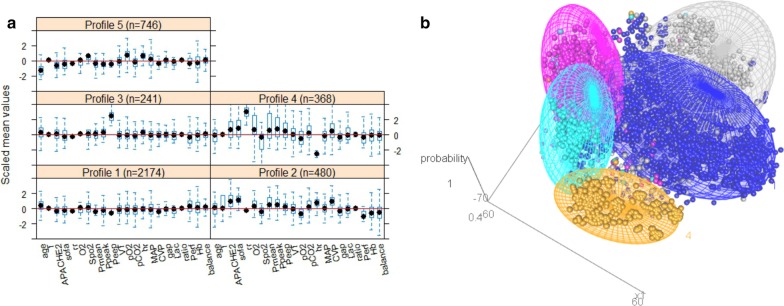
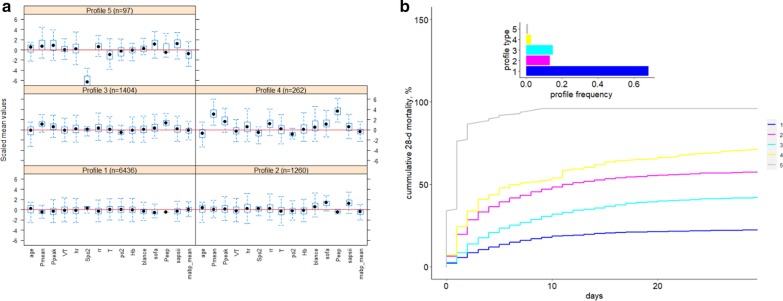
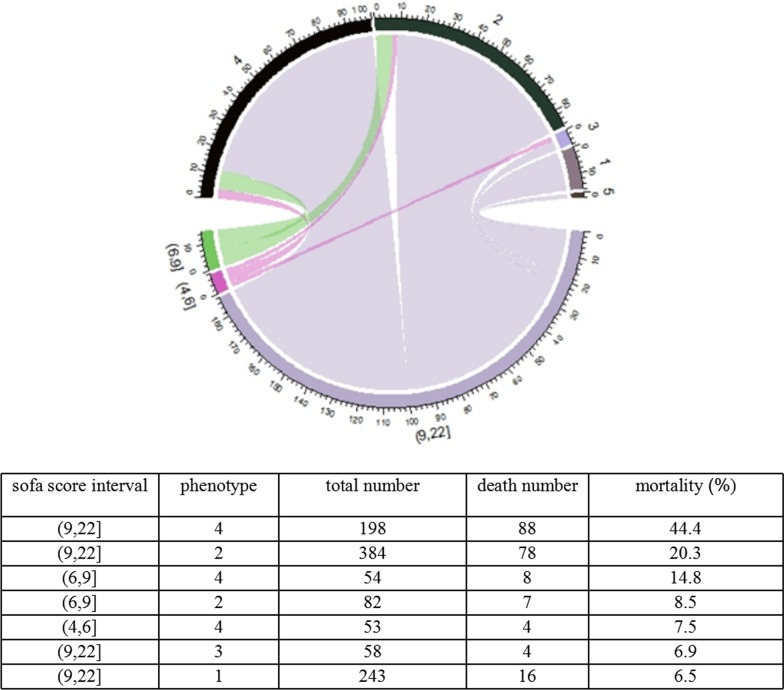
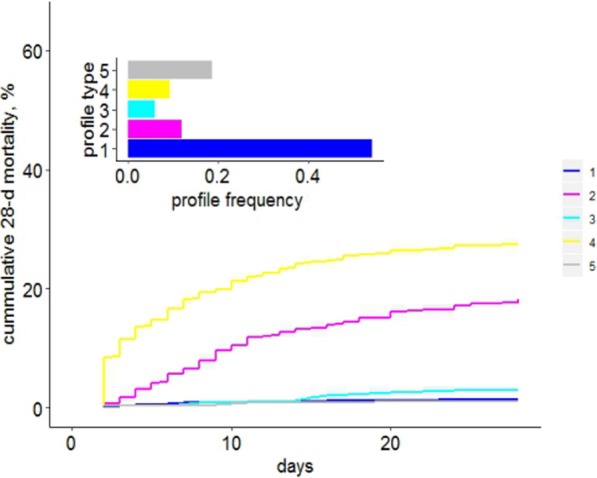
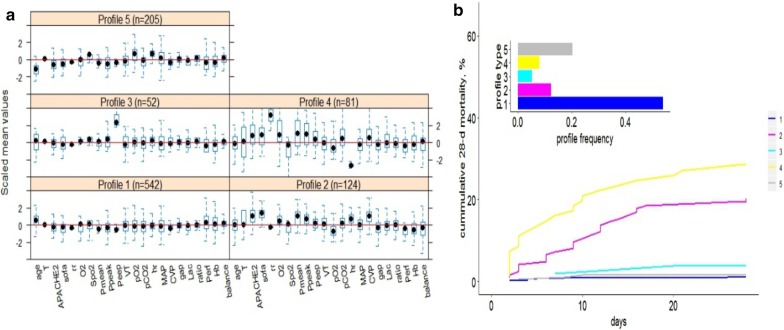
Phenotypes were derived from a total of 4009 patients who underwent MV using a latent profile analysis of 22 variables. The associations between the phenotypes and disease severity and clinical outcomes were assessed. Another 1004 patients in the database were enrolled for validation. Of the five derived phenotypes, phenotype I was the most common subgroup (n = 2174; 54.2%) and was mostly composed of the postoperative population. Phenotype II (n = 480; 12.0%) led to the most severe conditions. Phenotype III (n = 241; 6.01%) was associated with high positive end-expiratory pressure (PEEP) and low mean airway pressure. Phenotype IV (n = 368; 9.18%) was associated with high driving pressure, and younger patients comprised a large proportion of the phenotype V group (n = 746; 18.6%). In addition, we found that the mortality rate of Phenotype IV was significantly higher than that of the other phenotypes. In this subgroup, the number of patients in the sequential organ failure assessment (SOFA) score segment (9,22] was 198, the number of deaths was 88, and the mortality rate was higher than 44%. However, the cumulative 28-day mortality of Phenotypes IV and II, which were 101 of 368 (27.4%) and 87 of 480 (18.1%) unique patients, respectively, was significantly higher than those of the other phenotypes. There were consistent phenotype distributions and differences in biomarker patterns by phenotype in the validation cohort, and external verification with MIMIC III further generated supportive results.
Five clinical phenotypes were correlated with different disease severities and clinical outcomes, which suggested that these phenotypes may help in understanding heterogeneity in MV treatment effects.
尽管保护性机械通气(MV)已在各种应用中得到应用,但急性呼吸窘迫综合征(ARDS)患者和非 ARDS 患者均可能发生肺损伤。本研究旨在使用机器学习来识别重症监护病房(ICU)中接受 MV 的危重症患者的临床表型。
对在我院重症医学科接受 MV 治疗的 5013 例患者进行回顾性队列研究。采用统计和机器学习方法。本研究使用的所有数据,包括人口统计学、生命体征、循环参数和机械通气参数等,均从电子病历(EHR)系统中自动提取。使用外部数据库,即医学信息采集网络 III(MIMIC III)进行验证。
通过对 22 个变量的潜在剖面分析,从 4009 名接受 MV 的患者中得出表型。评估了表型与疾病严重程度和临床结局之间的关系。数据库中的另外 1004 例患者被纳入验证。在 5 种衍生的表型中,表型 I(n=2174;54.2%)是最常见的亚组,主要由术后人群组成。表型 II(n=480;12.0%)导致的病情最严重。表型 III(n=241;6.01%)与高呼气末正压(PEEP)和低平均气道压相关。表型 IV(n=368;9.18%)与高驱动压相关,年轻患者在表型 V 组中占很大比例(n=746;18.6%)。此外,我们发现表型 IV 的死亡率明显高于其他表型。在这个亚组中,序贯器官衰竭评估(SOFA)评分段(9,22]的患者数量为 198,死亡人数为 88,死亡率高于 44%。然而,表型 IV 和 II 的 28 天累积死亡率分别为 368 例中的 101 例(27.4%)和 480 例中的 87 例(18.1%)独特患者,明显高于其他表型。在验证队列中,不同表型的生物标志物模式也存在一致的表型分布和差异,使用 MIMIC III 进行外部验证也得出了支持性结果。
五种临床表型与不同的疾病严重程度和临床结局相关,这表明这些表型可能有助于理解 MV 治疗效果的异质性。