Department of Internal Medicine, Rakičan General Hospital, Ul. dr. Vrbnjaka 6, 9000, Murska Sobota, Slovenia.
International Centre for Cardiovascular Diseases MC Medicor d.d., Izola, Slovenia.
BMC Med Genomics. 2020 Dec 10;13(1):184. doi: 10.1186/s12920-020-00845-3.
We aimed to examine the role of the rs6060566 polymorphism of the reactive oxygen species modulator 1 (ROMO1) gene in the development of myocardial infarction (MI) in Caucasians with type 2 diabetes (T2DM).
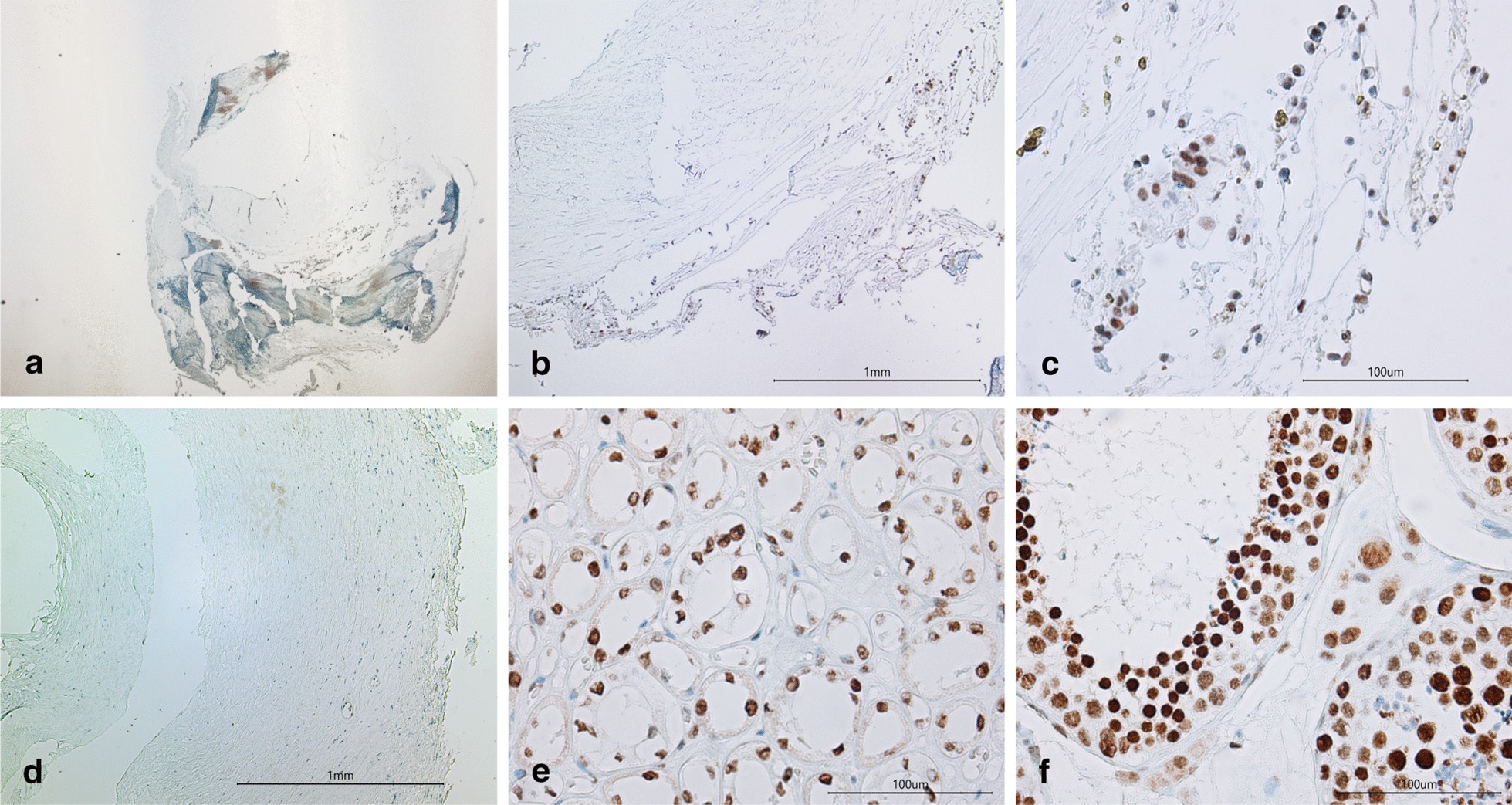
A total of 1072 subjects with T2DM were enrolled in this cross-sectional case-control study: 335 subjects with MI and 737 subjects without clinical signs of coronary artery disease (CAD). The genetic analysis of the rs6060566 polymorphism was performed in all subjects. To assess the degree of coronary artery obstruction, a subpopulation of 128 subjects with T2DM underwent coronary computed tomography angiography. Next, endarterectomy samples were obtained during myocardial revascularization from diffusely diseased coronary arteries in 40 cases, which were analysed for ROMO1 expression according to their genotype.
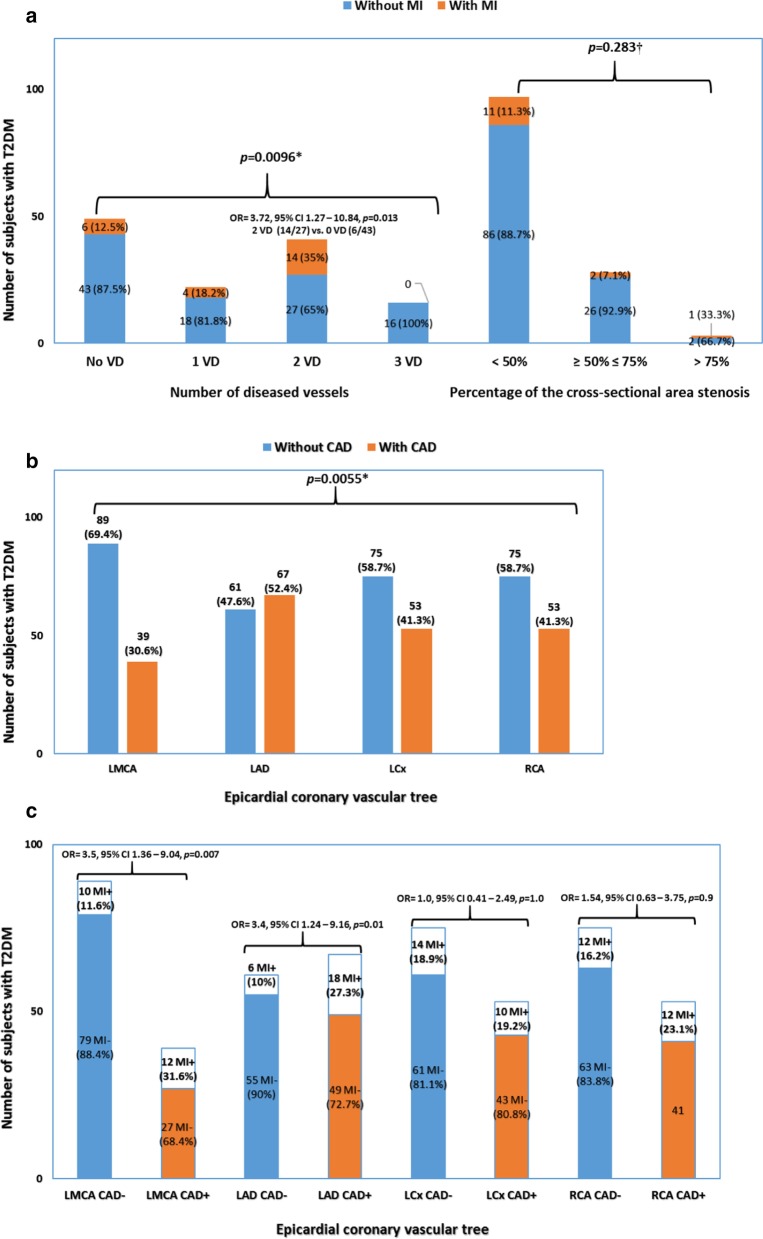
There were no statistically significant associations between different genotypes or alleles of the rs6060566 polymorphism and MI in subjects with T2DM. The carriers of the C allele of the ROMO1 rs6060566 had a threefold increased likelihood of having 50-75% coronary artery stenosis (Adjusted OR = 3.27, 95% CI 1.16-9.20). Subjects with two affected coronary arteries had a 3.72 fold higher prevalence of MI (OR = 3.72, 95% CI 1.27-10.84). With CAD in LMCA or LAD, MI prevalence was about 3.5-fold higher (p = 0.07 for LMCA and p = 0.01 for LAD). Furthermore, the carriers of the rs6060566 C allele showed higher number of positive cells for ROMO1 expression in endarterectomy samples of coronary arteries.
According to our study, the rs6060566 polymorphism of the ROMO1 gene is not a risk factor for MI in Caucasians with T2DM. However, we found that subjects carrying the C allele were at a 3.27-fold increased risk of developing severe CAD compared with those who had non-obstructive CAD. Moreover, C allele carriers showed a statistically higher number of cells positive for ROMO1 compared with T allele carriers in coronary endarterectomy samples.
我们旨在研究活性氧调节剂 1(ROMO1)基因的 rs6060566 多态性在 2 型糖尿病(T2DM)合并心肌梗死(MI)患者中的作用。
这项横断面病例对照研究共纳入了 1072 名 T2DM 患者:335 名 MI 患者和 737 名无冠状动脉疾病(CAD)临床征象的患者。所有受试者均进行了 rs6060566 多态性的基因分析。为了评估冠状动脉阻塞程度,T2DM 患者的亚组中有 128 名患者接受了冠状动脉计算机断层血管造影检查。接下来,在弥漫性病变的冠状动脉内进行心肌血运重建时,从 40 例患者中获得内膜切除术样本,并根据其基因型分析 ROMO1 表达。
在 T2DM 患者中,rs6060566 多态性的不同基因型或等位基因与 MI 之间无统计学显著关联。ROMO1 rs6060566 的 C 等位基因携带者发生 50%-75%冠状动脉狭窄的可能性增加三倍(校正 OR=3.27,95%CI 1.16-9.20)。存在两条受累冠状动脉的患者 MI 患病率增加 3.72 倍(OR=3.72,95%CI 1.27-10.84)。在前降支或回旋支动脉有 CAD 时,MI 患病率增加约 3.5 倍(LMCA 的 p 值=0.07,LAD 的 p 值=0.01)。此外,ROMO1 内膜切除术样本中,携带 rs6060566 C 等位基因的患者的 ROMO1 表达阳性细胞数更高。
根据我们的研究,ROMO1 基因的 rs6060566 多态性不是 T2DM 合并 MI 的危险因素。然而,我们发现与非阻塞性 CAD 相比,携带 C 等位基因的患者发生严重 CAD 的风险增加 3.27 倍。此外,与 T 等位基因携带者相比,冠状动脉内膜切除术样本中携带 C 等位基因的患者 ROMO1 表达阳性细胞数更高。