Shi Jie, Zhang Weiwei, Niu Yixin, Lin Ning, Li Xiaoyong, Zhang Hongmei, Hu Renming, Ning Guang, Fan Jiangao, Qin Li, Su Qing, Yang Zhen
Department of Endocrinology, Xinhua Hospital, Shanghai Jiao Tong University School of Medicine, Shanghai, China.
Institute of Endocrinology and Diabetology, Department of Endocrinology and Metabolism, Huashan Hospital, Fudan University, Shanghai, China.
Cardiovasc Diabetol. 2020 Dec 10;19(1):209. doi: 10.1186/s12933-020-01185-3.
Proprotein convertase subtilisin/kexin type 9 (PCSK9) regulates cholesterol metabolism by targeting the low-density lipoprotein receptor. Recent studies have shown that circulating PCSK9 is associated with glucose homeostasis and insulin resistance. The aim of this study was to examine the association of circulating PCSK9 levels and risk for the development of type 2 diabetes in individuals with prediabetes.
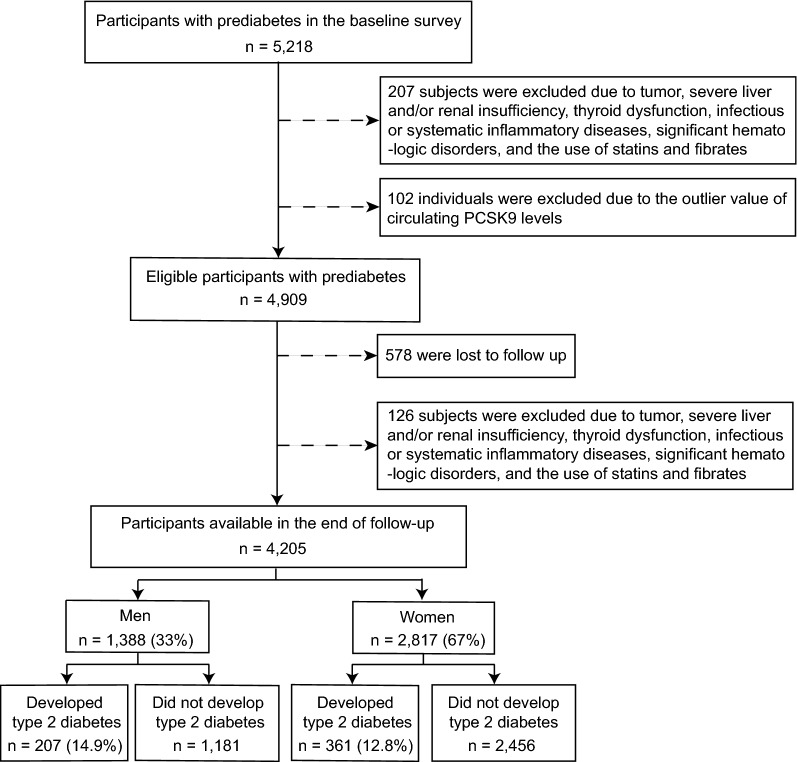
A population-based prospective study was conducted among 4205 Chinese subjects with prediabetes (average age 56.1 ± 7.5 years). Incident type 2 diabetes was diagnosed according to 2010 American Diabetes Association criteria. Circulating PCSK9 levels were measured using a commercially available enzyme-linked immunosorbent assay (ELISA). The association of circulating PCSK9 levels with the risk of incident type 2 diabetes was assessed by Cox regression analysis.
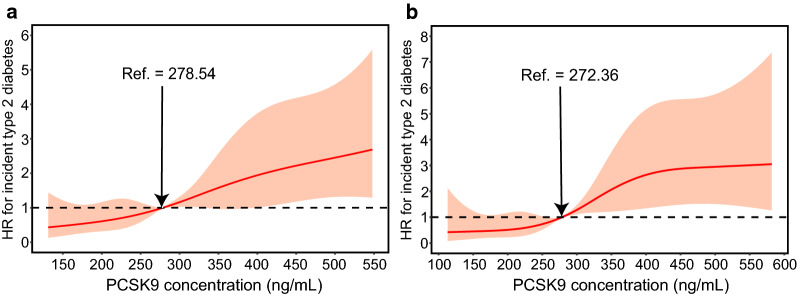
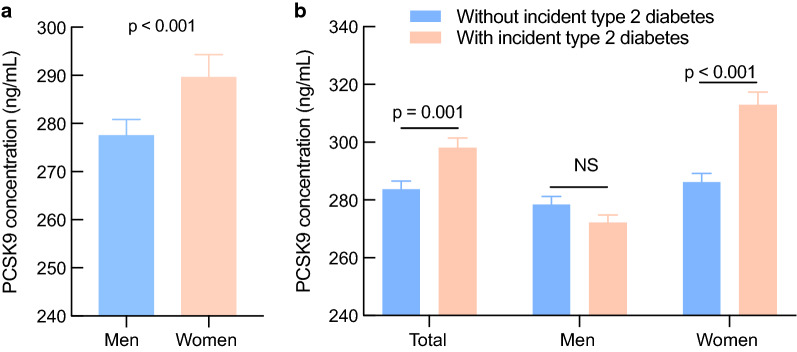
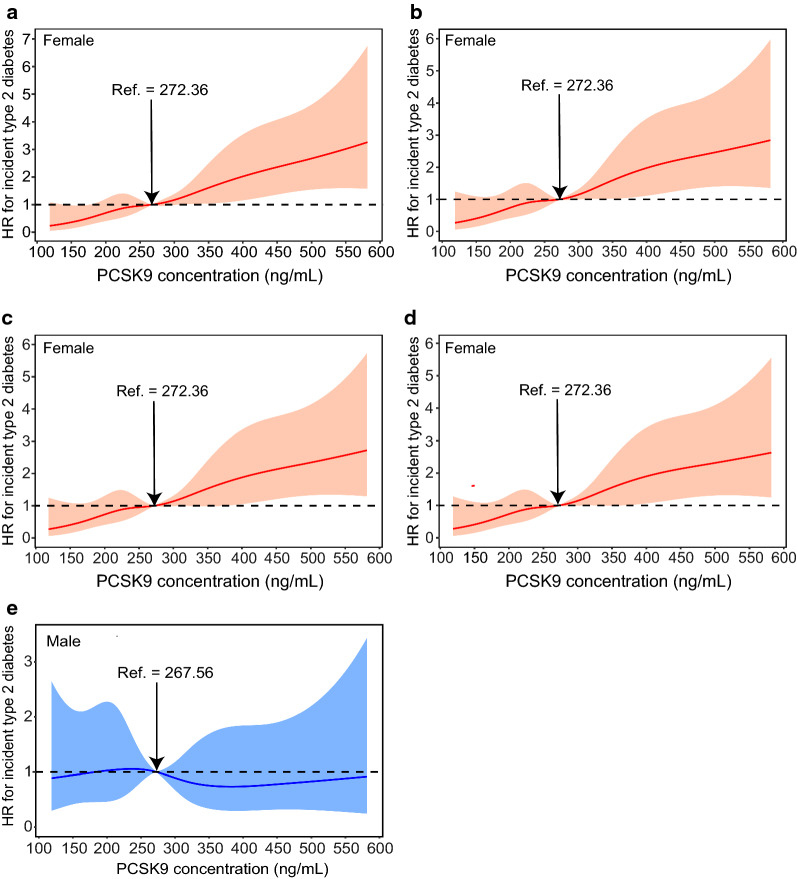
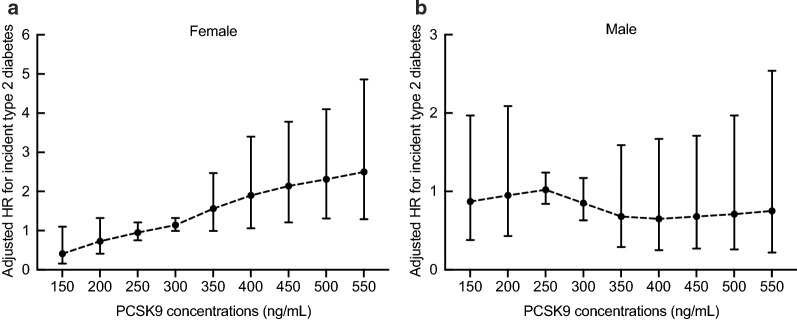
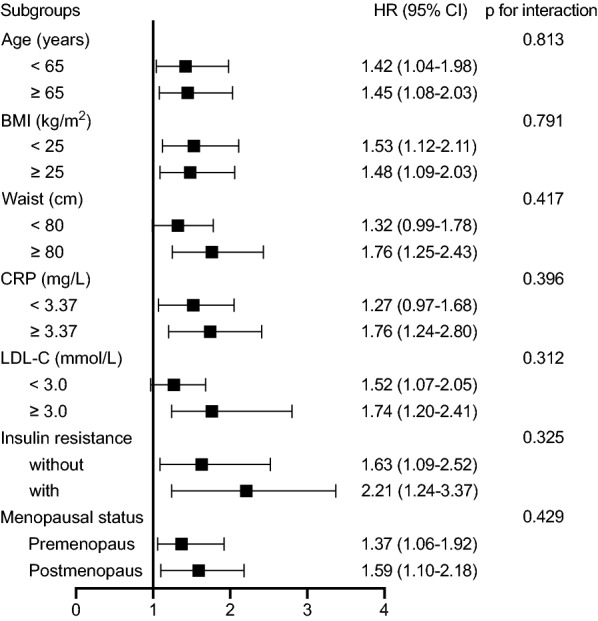
During a median follow-up period of 3.1 years, 568 subjects developed type 2 diabetes. Baseline circulating PCSK9 levels were significantly higher in female subjects developing incident type 2 diabetes than in those not developing incident type 2 diabetes (p < 0.001). In female subjects, the risk of incident type 2 diabetes was significantly higher in the highest PCSK9 quartile group (hazard ratio 2.16; 95% confidence interval 1.16-4.04) than in the lowest quartile group after adjustments for age, body mass index, waist circumference, C-reactive protein, γ-glutamyltransferase, triglycerides, low-density lipoprotein cholesterol, systolic blood pressure, and homeostatic model assessment of insulin resistance score. No significant association was observed between PCSK9 and incident type 2 diabetes in male subjects.
Elevated circulating PCSK9 levels are associated with an increased incidence of type 2 diabetes in female subjects with prediabetes.
前蛋白转化酶枯草溶菌素/kexin 9型(PCSK9)通过作用于低密度脂蛋白受体来调节胆固醇代谢。近期研究表明,循环中的PCSK9与葡萄糖稳态及胰岛素抵抗相关。本研究旨在探讨处于糖尿病前期的个体中,循环PCSK9水平与2型糖尿病发生风险之间的关联。
对4205名中国糖尿病前期受试者(平均年龄56.1±7.5岁)进行了一项基于人群的前瞻性研究。根据2010年美国糖尿病协会标准诊断新发2型糖尿病。使用市售的酶联免疫吸附测定(ELISA)法测量循环PCSK9水平。通过Cox回归分析评估循环PCSK9水平与新发2型糖尿病风险之间的关联。
在中位随访期3.1年期间,568名受试者发生了2型糖尿病。发生新发2型糖尿病的女性受试者的基线循环PCSK9水平显著高于未发生新发2型糖尿病的女性受试者(p<0.001)。在女性受试者中,在对年龄、体重指数、腰围、C反应蛋白、γ-谷氨酰转移酶、甘油三酯、低密度脂蛋白胆固醇、收缩压和胰岛素抵抗稳态模型评估得分进行调整后,PCSK9最高四分位组发生2型糖尿病的风险显著高于最低四分位组(风险比2.16;95%置信区间1.16 - 4.04)。在男性受试者中,未观察到PCSK9与新发2型糖尿病之间存在显著关联。
在患有糖尿病前期的女性受试者中,循环PCSK9水平升高与2型糖尿病发病率增加相关。