Department of Psychiatry and Mental Health Research, St. Vincent's University Hospital and School of Medicine and Health Sciences, University College Dublin, Dublin, Ireland
Cardiff University School of Medicine, College of Biomedical and Life Sciences, Cardiff University, Cardiff, UK.
BMJ Open. 2020 Dec 10;10(12):e040245. doi: 10.1136/bmjopen-2020-040245.
Although there is much focus on burnout and psychological distress among doctors, studies about stress and well-being in medical students are limited but could inform early intervention and prevention strategies.
The primary aim of this mixed-method, cross-sectional survey was to compare objective and subjective levels of stress in final-year medical students (2017) and to explore their perspectives on the factors they considered relevant to their well-being.
University College Dublin, the largest university in Ireland.
161 of 235 medical students participated in this study (response rate 69%).
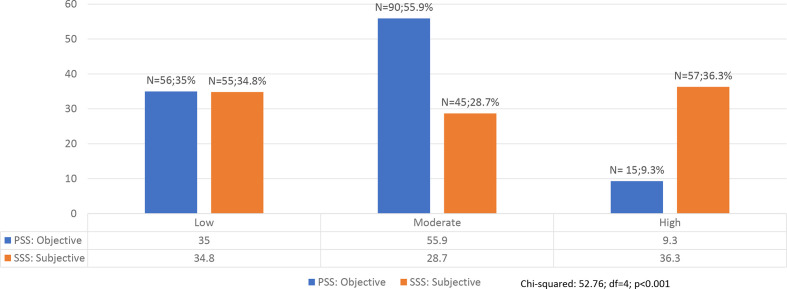
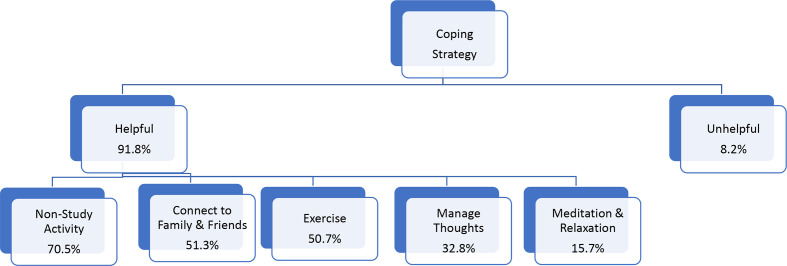
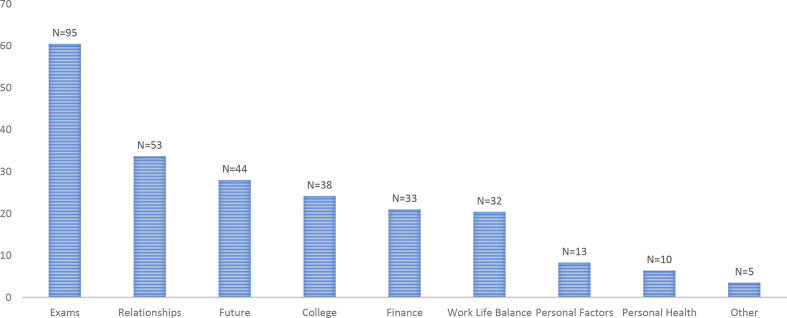
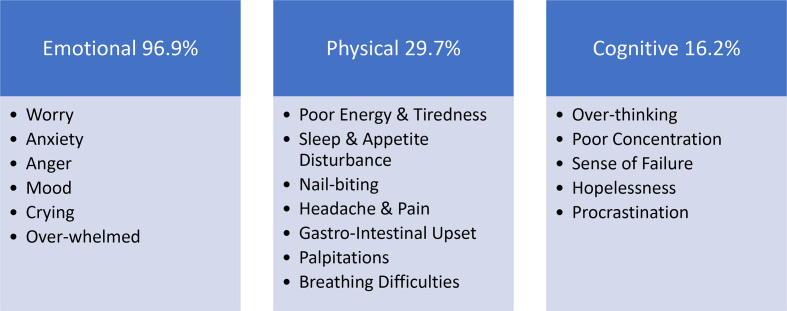
65.2% of students scored over accepted norms for the Perceived Stress Scale (34.8% low, 55.9% moderate and 9.3% high). 35% scored low, 28.7% moderate and 36.3% high on the Subjective Stress Scale. Thematic analysis identified worry about exams, relationships, concern about the future, work-life balance and finance; one in three students reported worry, irritability and hostility; many felt worn out. Cognitive impacts included overthinking, poor concentration, sense of failure, hopelessness and procrastination. Almost a third reported sleep and appetite disturbance, fatigue and weariness. A quarter reported a 'positive reaction' to stress. Positive strategies to manage stress included connection and talking, exercise, non-study activity and meditation. Unhelpful strategies included isolation and substance use. No student reported using the college support services or sought professional help.
Medical students experience high levels of psychological distress, similar to their more senior doctor colleagues. They are disinclined to avail of traditional college help services. Toxic effects of stress may impact their cognition, learning, engagement and empathy and may increase patient risk and adverse outcomes. The focus of well-being in doctors should be extended upstream and embedded in the curriculum where it could prevent future burnout, improve retention to the profession and deliver better outcomes for patients.
尽管医生的职业倦怠和心理困扰受到广泛关注,但医学学生的压力和幸福感研究却很有限,但这些研究可以为早期干预和预防策略提供信息。
这项混合方法、横断面调查的主要目的是比较最后一年医学生(2017 年)的客观和主观压力水平,并探讨他们对认为与自己幸福感相关的因素的看法。
爱尔兰最大的都柏林大学学院。
共有 235 名医学生中的 161 名参加了这项研究(应答率为 69%)。
65.2%的学生在感知压力量表上的得分超过了可接受的标准(34.8%低、55.9%中等和 9.3%高)。35%的学生在主观压力量表上得分较低,28.7%中等,36.3%较高。主题分析确定了对考试、人际关系、对未来的担忧、工作与生活的平衡和财务的担忧;三分之一的学生报告有担忧、易怒和敌意;许多人感到疲惫不堪。认知影响包括过度思考、注意力不集中、失败感、绝望和拖延。近三分之一的人报告睡眠和食欲紊乱、疲劳和疲倦。四分之一的人报告对压力有“积极反应”。应对压力的积极策略包括联系和交谈、锻炼、非学习活动和冥想。无益的策略包括孤立和药物滥用。没有学生报告使用学院支持服务或寻求专业帮助。
医学学生经历着与他们更资深的医生同行相似的高水平心理困扰。他们不愿意利用传统的学院帮助服务。压力的毒性影响可能会影响他们的认知、学习、参与度和同理心,并可能增加患者的风险和不良后果。医生的幸福感应在更上游的阶段得到关注,并嵌入课程中,从而可以预防未来的职业倦怠,提高对该职业的保留率,并为患者提供更好的结果。