Lakehead University School of Social Work, Thunder Bay, Ontario, Canada.
J Interpers Violence. 2022 Jun;37(11-12):NP8916-NP8940. doi: 10.1177/0886260520978190. Epub 2020 Dec 11.
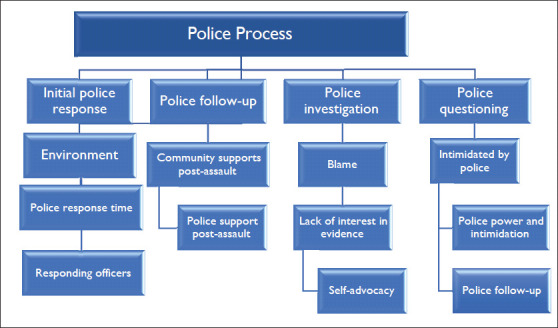
One in four women will experience sexual assault in their lifetime. Although less than 5% of sexual assaults are reported to law enforcement, one in five cases reported to police are deemed baseless (by police) and therefore coded as "unfounded." Police officers are in a unique position to act as gatekeepers for justice in sexual assault cases, given their responsibility to investigate sexual assault reports. However, high rates of unfounded sexual assaults reveal that dismissing sexual violence has become common practice amongst the police. Much of the research on unfounded sexual assault is based on police perceptions of the sexual assault, as indicated in police reports. Women's perspectives about their experiences with police are not represented in research. This qualitative study explored women's experiences when their sexual assault report was disbelieved by the police. Data collection included open-ended and semi-structured interviews with 23 sexual assault survivors. Interviews covered four areas including the sexual assault, the experience with the police, the experience of not being believed, and the impact on their health and well-being. Interviews were audio-recorded, transcribed, and entered into NVIVO for analysis. Data were analyzed using Colaizzi's analytic method, resulting in the identification of four themes, including, (a) vulnerability, (b) drug and alcohol use during the assault, (c) police insensitivity, and (d) police process. The women in this study who experienced a sexual assault and reported the assault to police were hopeful that police would help them and justice would be served. Instead, these women were faced with insensitivity, blaming questions, lack of investigation, and lack of follow-up from the police, all of which contributed to not being believed by the institutions designed to protect them. The findings from this research demonstrate that police officers must gain a deeper understanding of trauma and sensitive communication with survivors of sexual assault.
四分之一的女性在一生中会遭受性侵犯。尽管向执法部门报告的性侵犯案件不到 5%,但向警方报告的五分之一案件被认为是没有根据的(被警方),因此被编码为“无根据”。鉴于警察有责任调查性侵犯报告,他们在性侵犯案件中处于充当正义把关人的独特地位。然而,大量无根据的性侵犯案件表明,驳回性暴力已成为警察中的常见做法。关于无根据性侵犯的大部分研究都是基于警察对性侵犯的看法,如警方报告所示。女性对自己与警察打交道的经历的看法在研究中没有得到体现。这项定性研究探讨了女性在其性侵犯报告被警方驳回时的经历。数据收集包括对 23 名性侵犯幸存者的开放式和半结构化访谈。访谈涵盖了四个方面,包括性侵犯、与警方的经历、不被相信的经历以及对他们的健康和福祉的影响。访谈进行了录音、转录,并输入 NVIVO 进行分析。使用 Colaizzi 的分析方法对数据进行了分析,结果确定了四个主题,包括(a)脆弱性,(b)侵犯期间的毒品和酒精使用,(c)警察麻木不仁,以及(d)警察程序。这项研究中的女性经历了性侵犯并向警方报案,她们希望警方能够帮助她们,正义得到伸张。然而,这些女性却面临着警察的麻木不仁、指责性的问题、缺乏调查以及警方缺乏跟进,所有这些都导致她们不被旨在保护她们的机构所相信。这项研究的结果表明,警察必须更深入地了解创伤,并与性侵犯幸存者进行敏感的沟通。