Department of Radiology, West China Hospital, Sichuan University, Chengdu, China.
Department of Radiology, Zhongnan Hospital of Wuhan University, China.
Travel Med Infect Dis. 2021 Jan-Feb;39:101950. doi: 10.1016/j.tmaid.2020.101950. Epub 2020 Dec 8.
To investigate and compare the clinical and imaging features among family members infected with COVID-19.
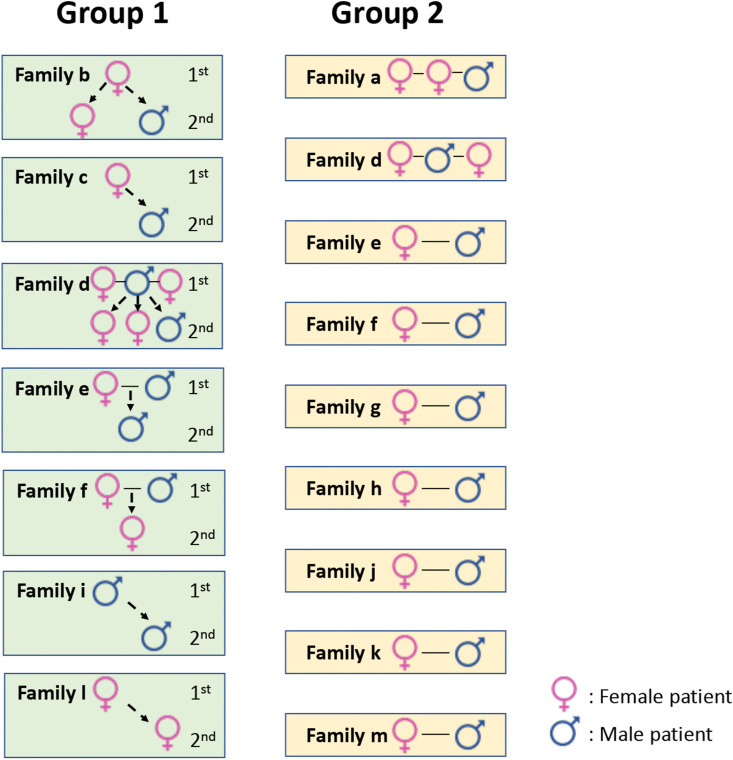
We retrospectively collected a total of 34 COVID-19 cases (15 male, 19 female, aged 48 ± 16 years, ranging from 10 to 81 years) from 13 families from January 17, 2020 through February 15, 2020. Patients were divided into two groups: Group 1 - part of the family members (first-generation) who had exposure history and others (second-generation) infected through them, and Group 2 - patients from the same family having identical exposure history. We collected clinical symptoms, laboratory findings, and high-resolution computed tomography (HRCT) features for each patient. Comparison tests were performed between the first- and second-generation patients in Group 1.
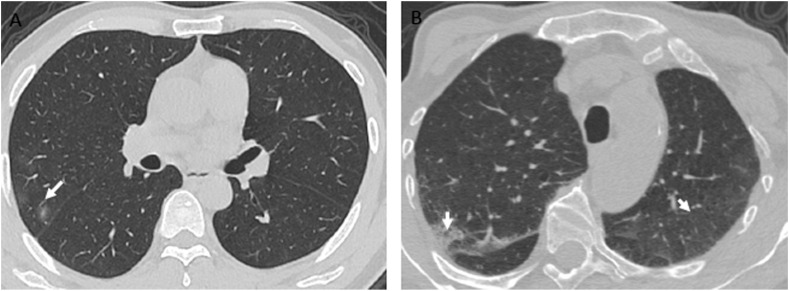
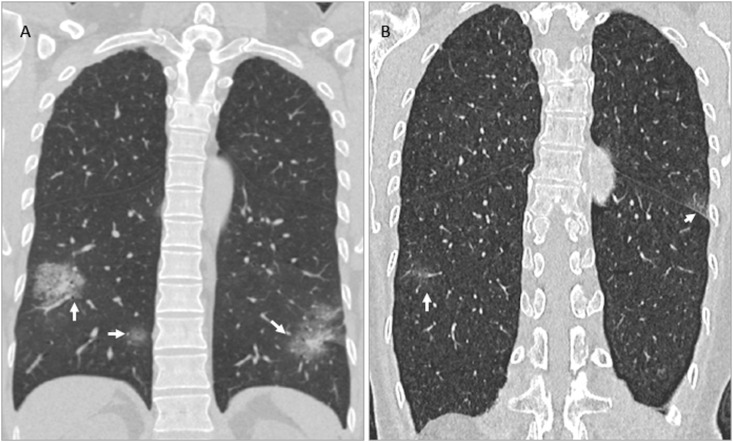
In total there were 21 patients in Group 1 and 20 patients in Group 2. For Group 1, first-generation patients had significantly higher white blood cell count (6.5 × 10/L (interquartile range (IQR): 4.9-9.2 × 10/L) vs 4.5 × 10/L (IQR: 3.7-5.3 × 10/L); P = 0.0265), higher neutrophil count (4.9 × 10/L (IQR: 3.6-7.3 × 10/L) vs 2.9 × 10/L (IQR: 2.1-3.3 × 10/L); P = 0.0111), and higher severity scores on HRCT (3.9 ± 2.4 vs 2.0 ± 1.3, P = 0.0362) than the second-generation patients. Associated underlying diseases (odds ratio, 8.0, 95% confidence interval: 3.4-18.7, P = 0.0013) were significantly correlated with radiologic severity scores in second-generation patients.
Analysis of the family cluster cases suggests that COVID-19 had no age or sex predominance. Secondarily infected patients in a family tended to develop milder illness, but this was not true for those with existing comorbidities.
调查并比较 COVID-19 感染患者家庭成员的临床和影像学特征。
我们回顾性收集了 2020 年 1 月 17 日至 2 月 15 日期间来自 13 个家庭的 34 例 COVID-19 患者(15 名男性,19 名女性,年龄 48±16 岁,范围为 10-81 岁)。患者分为两组:组 1-有暴露史的部分家庭成员(第一代)和通过他们感染的其他人(第二代),以及组 2-具有相同暴露史的同一家庭的患者。我们收集了每位患者的临床症状、实验室检查和高分辨率计算机断层扫描(HRCT)特征。对组 1 中的第一代和第二代患者进行了比较检验。
组 1 中有 21 例患者,组 2 中有 20 例患者。对于组 1,第一代患者的白细胞计数明显较高(6.5×10/L(四分位距(IQR):4.9-9.2×10/L)比 4.5×10/L(IQR:3.7-5.3×10/L);P=0.0265),中性粒细胞计数较高(4.9×10/L(IQR:3.6-7.3×10/L)比 2.9×10/L(IQR:2.1-3.3×10/L);P=0.0111),HRCT 严重程度评分较高(3.9±2.4 比 2.0±1.3,P=0.0362)。与第二代患者相比,存在相关基础疾病(比值比,8.0,95%置信区间:3.4-18.7,P=0.0013)与 HRCT 严重程度评分显著相关。
对家庭聚集病例的分析表明,COVID-19 无年龄或性别优势。家庭中再次感染的患者倾向于病情较轻,但对于有合并症的患者则不然。