Department of Ultrasound Intervention, Harbin Medical University Cancer Hospital, Harbin, China.
Heilongjiang Provincial Academy of Medical Sciences, Harbin, China.
BMC Gastroenterol. 2020 Dec 11;20(1):418. doi: 10.1186/s12876-020-01551-1.
Gastric cancer is more common in men than in women, but underlying reasons have not been completely understood. This study aimed to assess patterns of the sex difference in the incidence of gastric cancer in the United States.
Using data from 13 cancer registries in the Surveillance, Epidemiology, and End Results Program, we analyzed the age-specific sex difference in the incidence of gastric cancer by ethnicity, anatomic site and histological type in the United States during 1992-2014. We assessed the temporal trends in the sex differences in the incidence of gastric cancer during the study period.
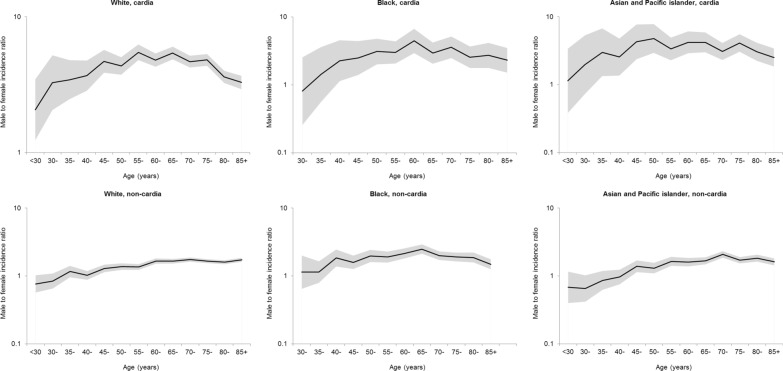
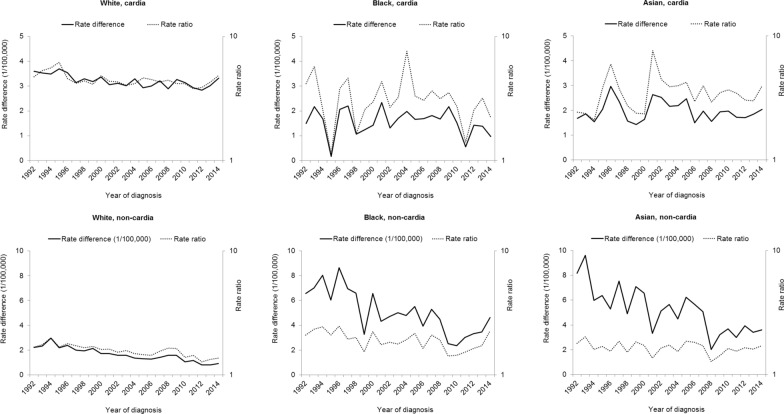
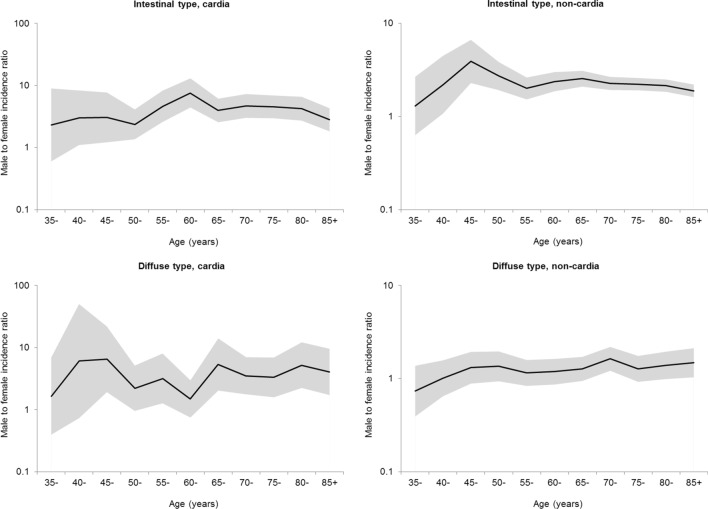
The male-to-female incidence ratio of cardia cancer increased with age until peaking at ages 55-69 years and decreased thereafter, while the ratio for non-cardia gastric cancer increased with age before ages < 60 years and remained stable onwards. The age-specific patterns in the sex difference of gastric cancer incidence varied between intestinal and diffuse histological types. The sex difference in the incidence of cardia cancer remained relatively stable except for that the absolute difference between the sexes in whites decreased on average by 0.8% per year from 1992 to 2014. The absolute incidence difference between the sexes in non-cardia gastric cancer decreased over time in whites, blacks, and Asian and Pacific islanders by approximately 4% per year. The male-to-female incidence ratio of non-cardia gastric cancer decreased over time in whites and blacks, but remained relatively stable in Asian and Pacific islanders.
Both extrinsic and intrinsic factors may have contributed to the sex difference in gastric cancer. Sex hormones may play a role in the development of cardia cancer and intestinal type of gastric cancer.
胃癌在男性中比在女性中更为常见,但根本原因尚未完全阐明。本研究旨在评估美国胃癌发病率性别差异的模式。
使用监测、流行病学和最终结果计划中的 13 个癌症登记处的数据,我们分析了 1992 年至 2014 年期间按种族、解剖部位和组织学类型在美国发生的胃癌的年龄特异性性别差异。我们评估了研究期间胃癌发病率性别差异的时间趋势。
贲门癌的男女性发病率比值随着年龄的增长而增加,直到 55-69 岁达到峰值,然后下降,而非贲门胃癌的比值在 60 岁之前随年龄增长而增加,之后保持稳定。胃癌发病率性别差异的年龄特异性模式在肠型和弥漫型组织学类型之间有所不同。贲门癌的性别差异相对稳定,除了白人的性别绝对差异平均每年减少 0.8%,从 1992 年到 2014 年。白人、黑人以及亚洲和太平洋岛民中,非贲门胃癌的性别差异随着时间的推移逐渐减少,每年约为 4%。白人及黑人中非贲门胃癌的男女性发病率比值随着时间的推移而下降,但在亚洲和太平洋岛民中相对稳定。
外在和内在因素可能都促成了胃癌的性别差异。性激素可能在贲门癌和肠型胃癌的发展中发挥作用。