Bhargava Anurag, Shewade Hemant Deepak
Department of Medicine, Yenepoya Medical College, Yenepoya (Deemed to Be University), Mangaluru, 575018, India; Department of Medicine, McGill University, Montreal, H4A 3J1, Canada; Center for Nutrition Studies, Yenepoya (Deemed to Be University), Mangaluru, 575018, India.
The Union South East Asia, New Delhi, 110016, India.
Indian J Tuberc. 2020 Dec;67(4S):S139-S146. doi: 10.1016/j.ijtb.2020.07.004. Epub 2020 Jul 10.
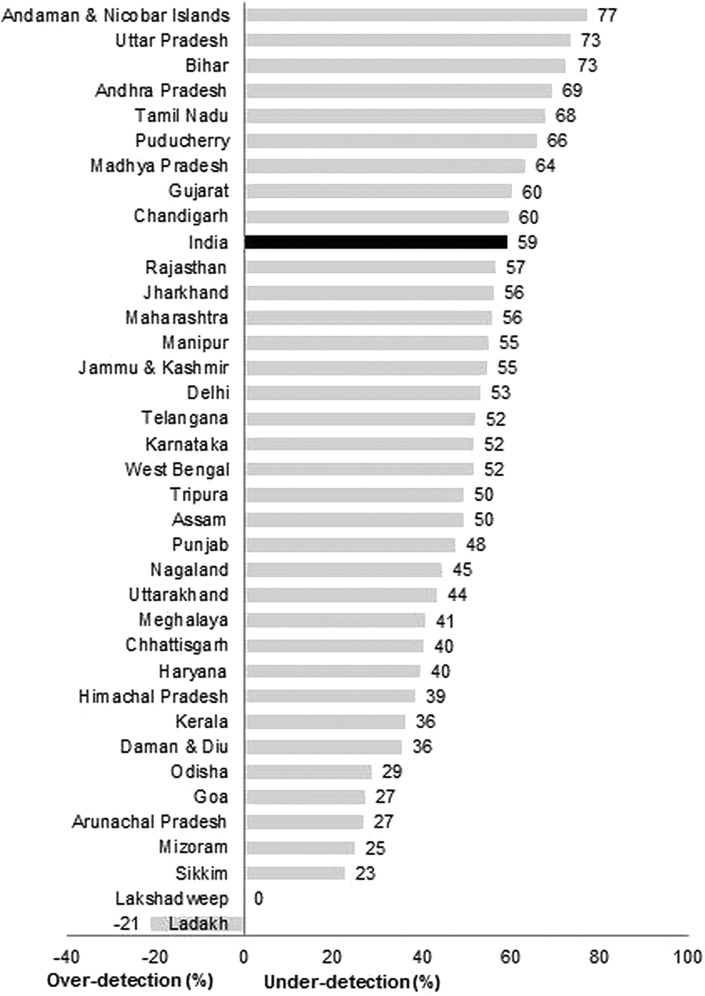
India has the highest burden of incident tuberculosis (TB) cases and deaths globally. TB is strongly associated with poverty and this risk is largely mediated by undernutrition in India. COVID-19 response related lockdown has resulted in an economic crisis which may double levels of poverty, has exacerbated food insecurity, and disrupted TB services. These developments may have serious implications for TB progression and transmission in India. The nutritional status of a population is a strong determinant of the TB incidence, and undernutrition in adults alone accounts for 32-44% of TB incidence in India. A systematic review has shown that a 14% increase in TB incidence can occur per one unit decrease in body mass index (BMI), across the BMI range of 18.5-30 kg/m2. We believe that one unit decrease in BMI (corresponding to a 2-3 kg weight loss) may result in the poor in India as a result of the lockdown and its aftermath. This may result in an increase in estimated (uncertainty interval) incident TB by 185 610 (180 230, 190 990) cases. A 59% reduction in TB case detection between end March and May 2020, may result in an estimated (uncertainty interval) additional 87 711 (59 998, 120 630) TB deaths [19.5% increase (14.5, 24.7)] in 2020. Disadvantaged social groups and those living in states with higher levels of poverty, under-nutrition,and migrant workers are at particular risk. We suggest enhanced rations including pulses through the public distribution system and direct cash transfers to the poor pending restoration of livelihoods. TB services should be resumed immediately with enhanced efforts at case detection including active case finding. To prevent deaths among TB detected within the national TB programme, systemic identification, referral and management of severe disease at notification should be considered.
印度是全球新发结核病病例和死亡负担最高的国家。结核病与贫困密切相关,在印度,这种风险很大程度上是由营养不良介导的。与应对新冠疫情相关的封锁导致了经济危机,这可能使贫困水平翻倍,加剧了粮食不安全状况,并扰乱了结核病服务。这些情况可能对印度的结核病进展和传播产生严重影响。人群的营养状况是结核病发病率的一个重要决定因素,仅成年人的营养不良就占印度结核病发病率的32%至44%。一项系统评价表明,在体重指数(BMI)为18.5至30kg/m²的范围内,BMI每降低一个单位,结核病发病率可增加14%。我们认为,由于封锁及其后果,印度贫困人口的BMI降低一个单位(相当于体重减轻2至3公斤)。这可能导致估计(不确定区间)新增185610(180230,190990)例结核病病例。2020年3月底至5月期间结核病病例发现率降低59%,可能导致估计(不确定区间)额外增加87711(59998,120630)例结核病死亡[增加19.5%(14.5,24.7)]。弱势群体以及生活在贫困、营养不良程度较高的邦的人群和农民工面临特别风险。我们建议通过公共分配系统增加包括豆类在内的口粮配给,并在恢复生计之前向贫困人口直接发放现金。应立即恢复结核病服务,并加大病例发现力度,包括主动病例发现。为防止在国家结核病规划中发现的结核病患者死亡,应考虑在通知时对重症进行系统识别、转诊和管理。