Radiotherapy Planning Department, Maria Skłodowska-Curie National Research Institute of Oncology, Gliwice Branch, Poland.
J Appl Clin Med Phys. 2021 Jan;22(1):156-164. doi: 10.1002/acm2.13123. Epub 2020 Dec 12.
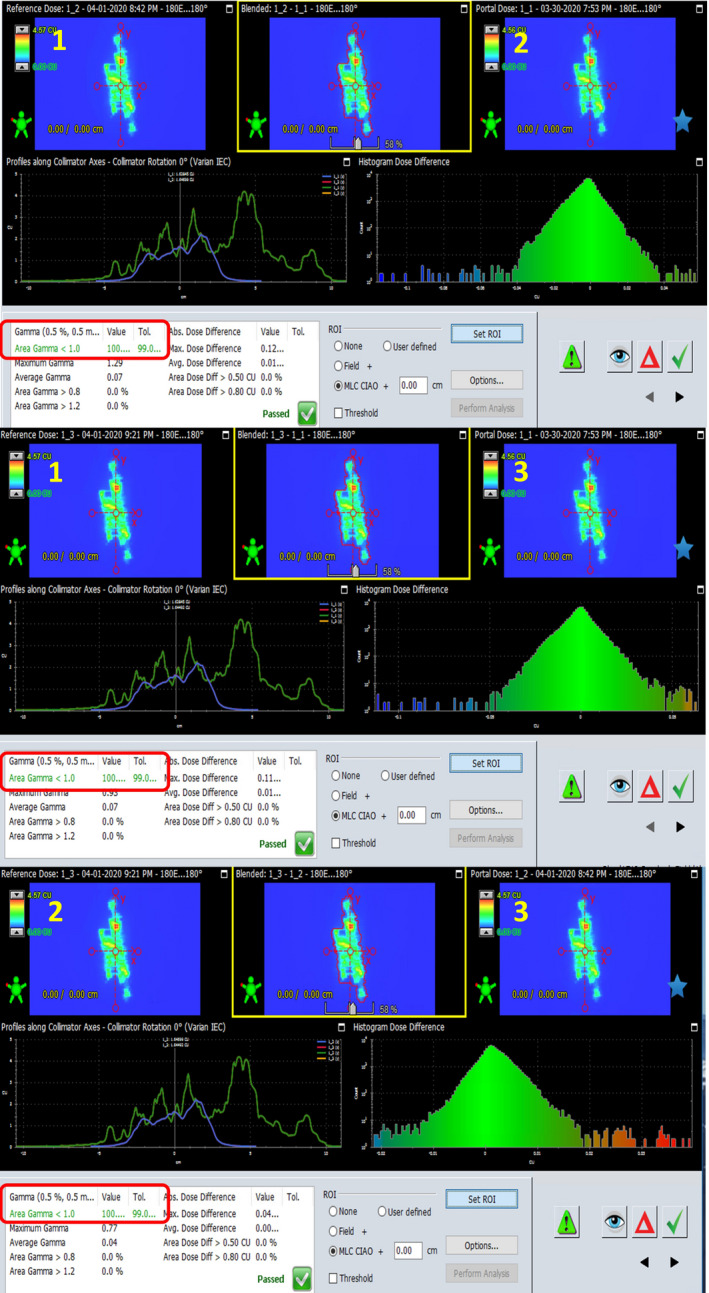
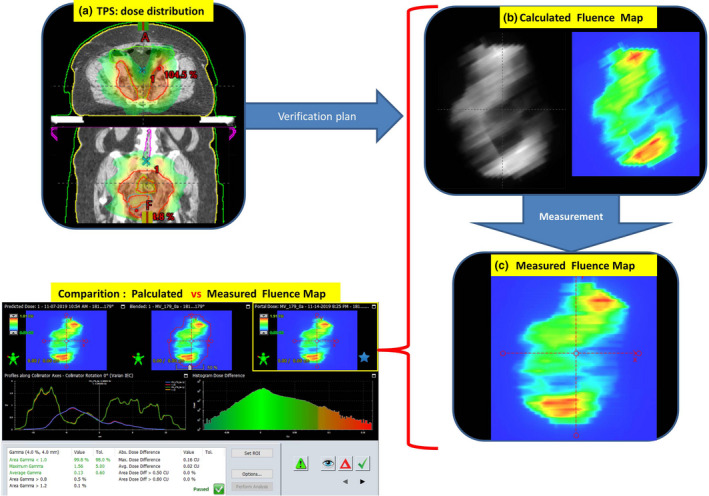
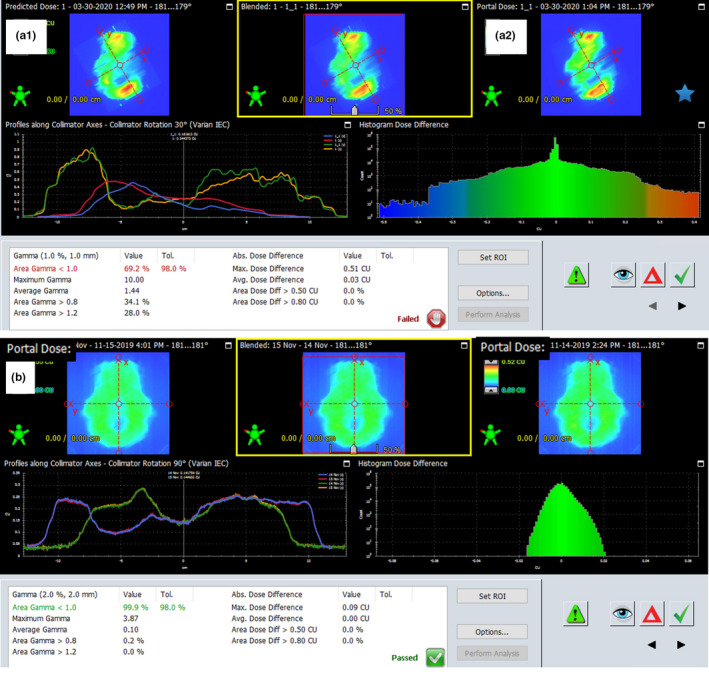
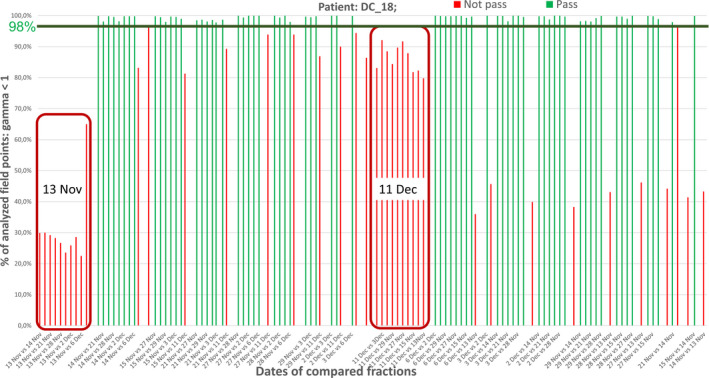
The accuracy of radiotherapy is the subject of continuous discussion, and dosimetry methods, particularly in dynamic techniques, are being developed. At the same time, many oncology centers develop quality procedures, including pretreatment and online dose verification and proper patient tracking methods. This work aims to present the possibility of using portal dosimetry in the assessment of radiotherapy repeatability. The analysis was conducted on 74 cases treated with dynamic techniques. Transit dosimetry was made for each collision-free radiation beam. It allowed the comparison of summary fluence maps, obtained for fractions with the corresponding summary maps from all other treatment fractions. For evaluation of the compatibility in the fluence map pairs (6798), the gamma coefficient was calculated. The results were considered in four groups, depending on the used radiotherapy technique: stereotactic fractionated radiotherapy, breath-hold, free-breathing, and conventionally fractionated other cases. The chi or Fisher's exact test was made depending on the size of the analyzed set and also Mann-Whitney U-test was used to compare treatment repeatability of different techniques. The aim was to test whether the null hypothesis of error-free therapy was met. The patient is treated repeatedly if the P-value in all the fluence maps sets is higher than the level of 0.01. The best compatibility between treatment fractions was obtained for the stereotactic technique. The technique with breath-holding gave the lowest percentage of compliance of the analyzed fluence pairs. The results indicate that the repeatability of the treatment is associated with the radiotherapy technique. Treated volume location is also an essential factor found in the evaluation of treatment accuracy. The EPID device is a useful tool in assessing the repeatability of radiotherapy. The proposed method of fluence maps comparison also allows us to assess in which therapeutic session the patient was treated differently from the other fractions.
放射治疗的准确性是一个持续讨论的话题,剂量学方法,特别是在动态技术中,正在不断发展。与此同时,许多肿瘤中心制定了质量程序,包括预处理和在线剂量验证以及适当的患者跟踪方法。本工作旨在探讨利用电子射野影像装置(EPID)进行剂量测量在评估放射治疗重复性中的可能性。对 74 例采用动态技术治疗的患者进行了分析。对每一个无碰撞的射束进行了传输剂量测量。这使得可以比较各个分次的总剂量分布与所有其他分次的相应总剂量分布的摘要图。为了评估剂量分布图对(6798)的兼容性,计算了伽马系数。根据所使用的放射治疗技术,将结果分为四组:立体定向分割放疗、屏气、自由呼吸和常规分割的其他情况。根据分析集的大小,使用卡方或 Fisher 确切检验,也使用曼-惠特尼 U 检验比较不同技术的治疗重复性。目的是检验无误差治疗的零假设是否成立。如果所有剂量分布图集中的 P 值均高于 0.01,则认为患者需要重复治疗。立体定向技术获得了最佳的分次治疗兼容性。屏气技术的分析剂量对符合率最低。结果表明,治疗的重复性与放射治疗技术有关。治疗体积的位置也是评估治疗准确性时的一个重要因素。EPID 设备是评估放射治疗重复性的有用工具。提出的剂量分布比较方法还允许我们评估在哪个治疗阶段患者与其他分次的治疗方式不同。