Minami Taichiro, Iwata Yasunori, Wada Takashi
Renal Division, Department of Medicine, Brigham and Women's Hospital, 4 Blackfan Street, Boston, MA, USA.
Department of Nephrology and Laboratory Medicine, Kanazawa University, Kanazawa, Ishikawa, Japan.
Inflamm Regen. 2020 Dec 15;40(1):31. doi: 10.1186/s41232-020-00140-9.
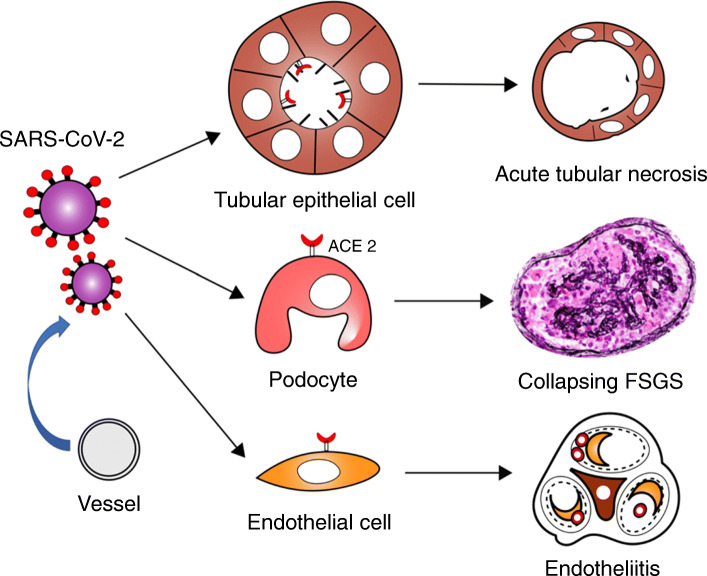
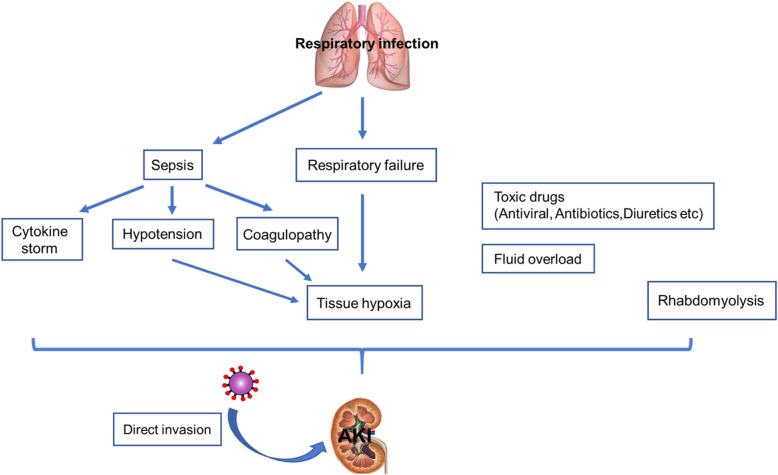
The world today is facing a pandemic caused by severe acute respiratory syndrome coronavirus-2 (SARS-CoV-2), which mainly causes a respiratory disease known as coronavirus disease 2019 (COVID-19). Therefore, its pathogenesis and complications should be identified and understood. SARS-CoV-2 infects the host using the angiotensin-converting enzyme 2 (ACE2) as its receptor, which is expressed in several organs including the lungs, heart, kidneys, and intestines. Kidney complications are relatively common, and acute kidney injury (AKI) is a life-threatening complication in patients with COVID-19. In this review, the renal histological patterns of COVID-19 are described in detail, and its potential mechanisms associated with AKI are discussed.
当今世界正面临由严重急性呼吸综合征冠状病毒2(SARS-CoV-2)引起的大流行,该病毒主要引发一种名为2019冠状病毒病(COVID-19)的呼吸系统疾病。因此,需要识别并了解其发病机制和并发症。SARS-CoV-2利用血管紧张素转换酶2(ACE2)作为受体感染宿主,ACE2在包括肺、心脏、肾脏和肠道在内的多个器官中表达。肾脏并发症相对常见,急性肾损伤(AKI)是COVID-19患者中危及生命的并发症。在本综述中,详细描述了COVID-19的肾脏组织学模式,并讨论了其与AKI相关的潜在机制。