Department of Nephrology, Union Hospital, Tongji Medical College, Huazhong University of Science and Technology, Wuhan 430022, China.
5th Medical Department, Medical Faculty Mannheim, University of Heidelberg, D-68167 Mannheim, Germany.
Biomolecules. 2022 Mar 4;12(3):403. doi: 10.3390/biom12030403.
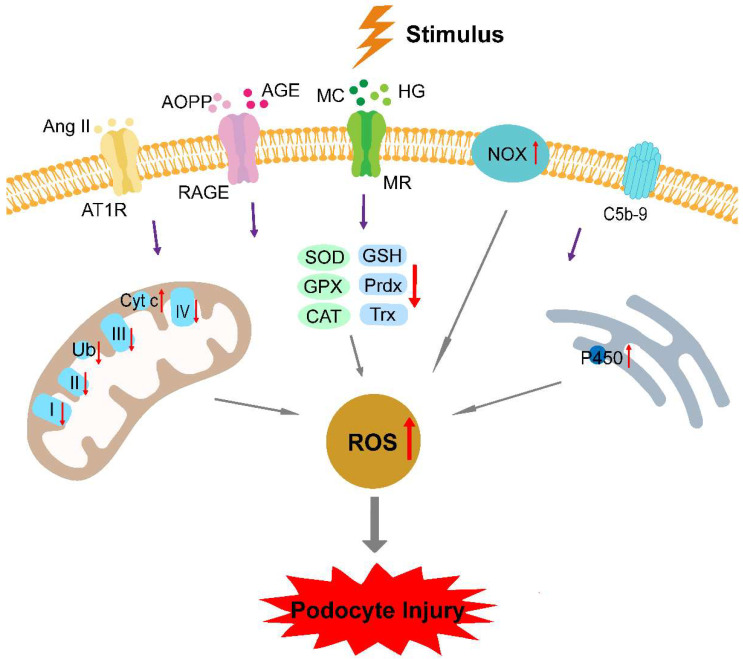
Podocytopathies are kidney diseases that are driven by podocyte injury with proteinuria and proteinuria-related symptoms as the main clinical presentations. Albeit podocytopathies are the major contributors to end-stage kidney disease, the underlying molecular mechanisms of podocyte injury remain to be elucidated. Mitochondrial oxidative stress is associated with kidney diseases, and increasing evidence suggests that oxidative stress plays a vital role in the pathogenesis of podocytopathies. Accumulating evidence has placed mitochondrial oxidative stress in the focus of cell death research. Excessive generated reactive oxygen species over antioxidant defense under pathological conditions lead to oxidative damage to cellular components and regulate cell death in the podocyte. Conversely, exogenous antioxidants can protect podocyte from cell death. This review provides an overview of the role of mitochondrial oxidative stress in podocytopathies and discusses its role in the cell death of the podocyte, aiming to identify the novel targets to improve the treatment of patients with podocytopathies.
足细胞病是由足细胞损伤引起的肾脏疾病,以蛋白尿和蛋白尿相关症状为主要临床表现。尽管足细胞病是导致终末期肾病的主要原因,但足细胞损伤的潜在分子机制仍有待阐明。线粒体氧化应激与肾脏疾病有关,越来越多的证据表明氧化应激在足细胞病的发病机制中起着至关重要的作用。大量证据将线粒体氧化应激置于细胞死亡研究的焦点。在病理条件下,抗氧化防御能力超过了过量生成的活性氧,导致细胞成分的氧化损伤,并调节足细胞中的细胞死亡。相反,外源性抗氧化剂可以保护足细胞免于细胞死亡。本综述概述了线粒体氧化应激在足细胞病中的作用,并讨论了其在足细胞细胞死亡中的作用,旨在确定改善足细胞病患者治疗的新靶点。