Jung Minkyo, Kim Doory, Mun Ji Young
Neural Circuit Research Group, Korea Brain Research Institute, Daegu, South Korea.
Department of Chemistry, Research Institute for Convergence of Basic Sciences, Institute of Nano Science and Technology, Research Institute for Natural Sciences, Hanyang University, Seoul, South Korea.
Front Cell Dev Biol. 2020 Nov 26;8:588556. doi: 10.3389/fcell.2020.588556. eCollection 2020.
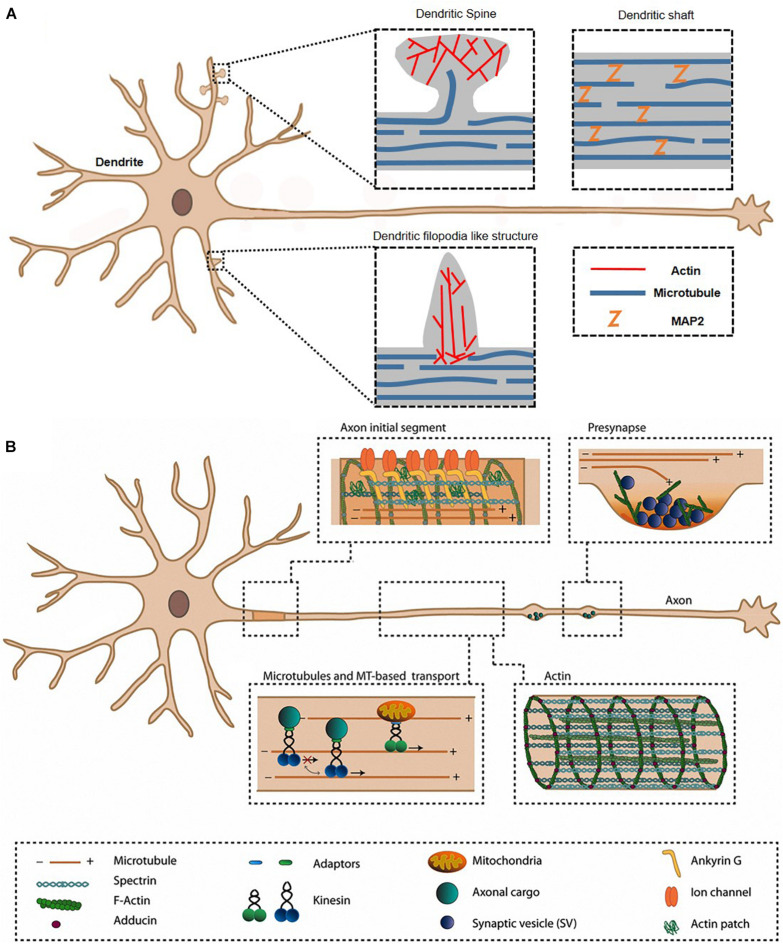
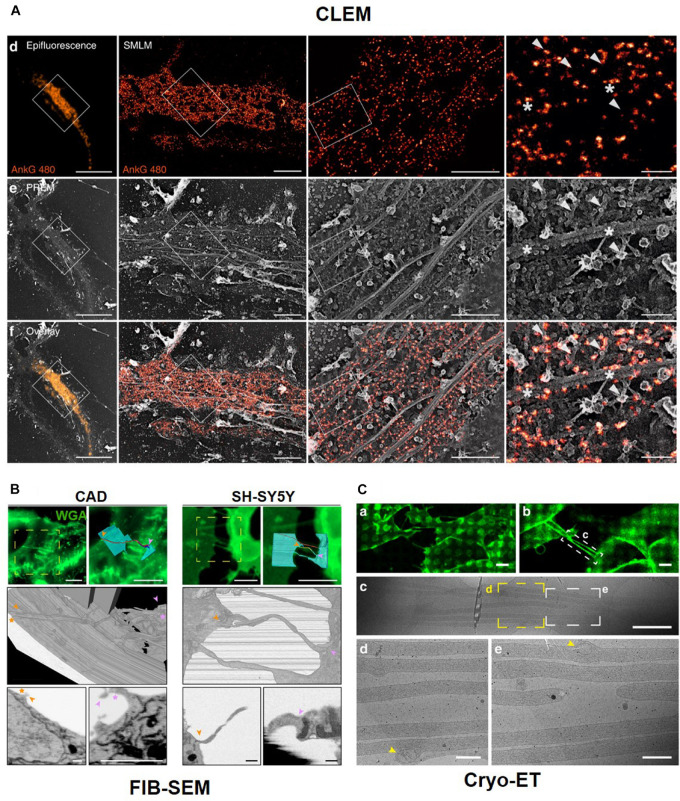
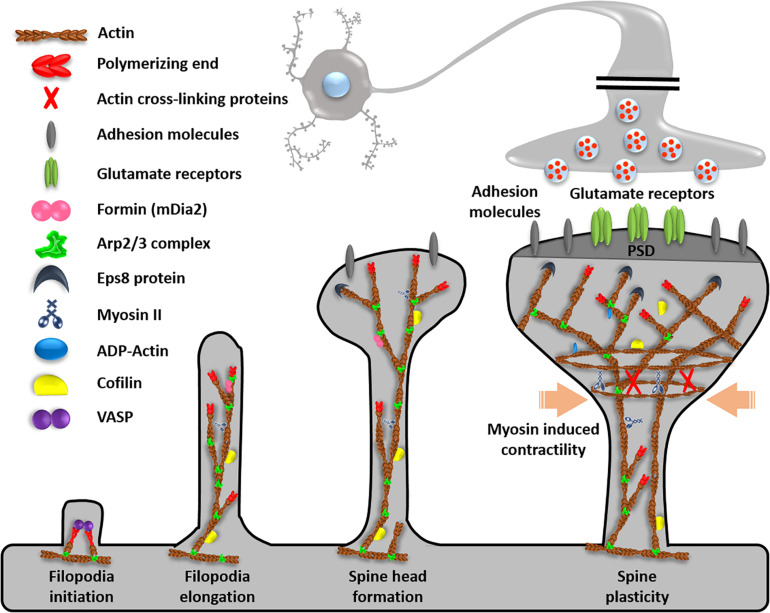
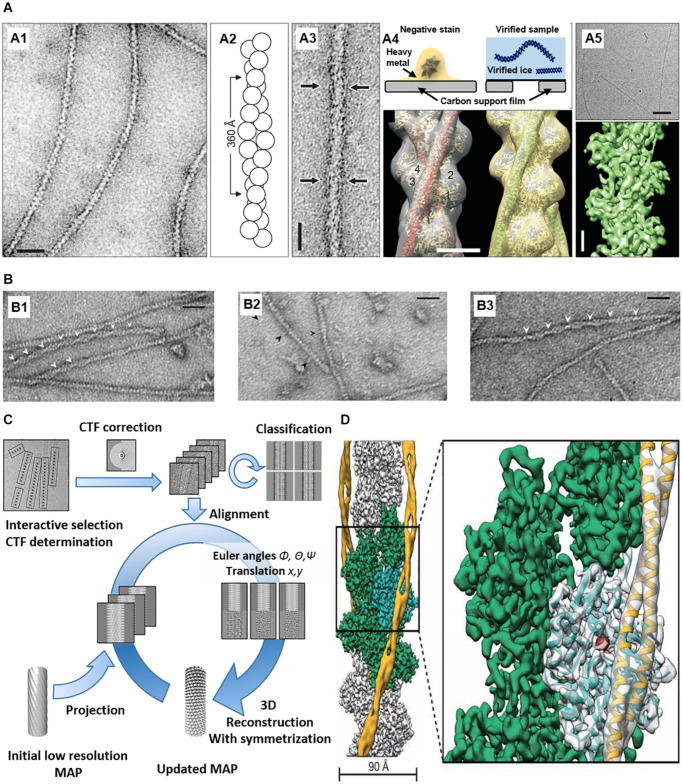
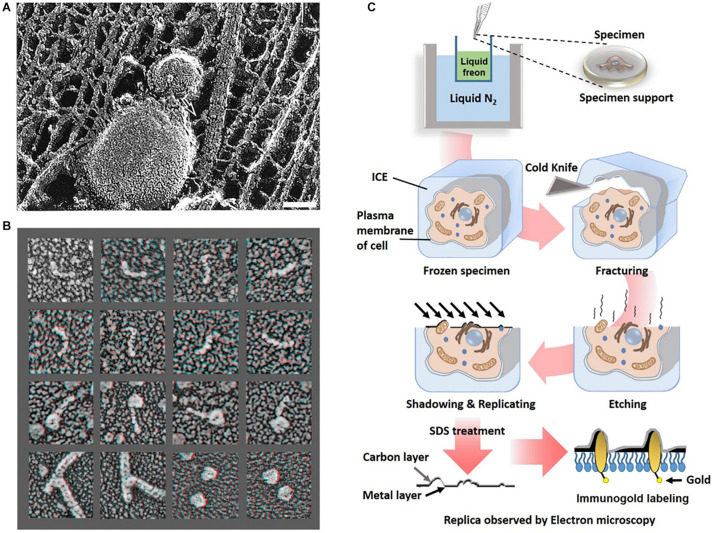
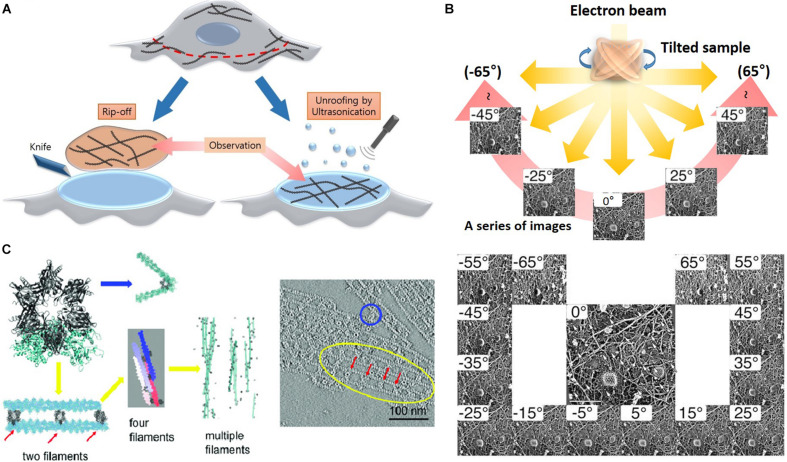
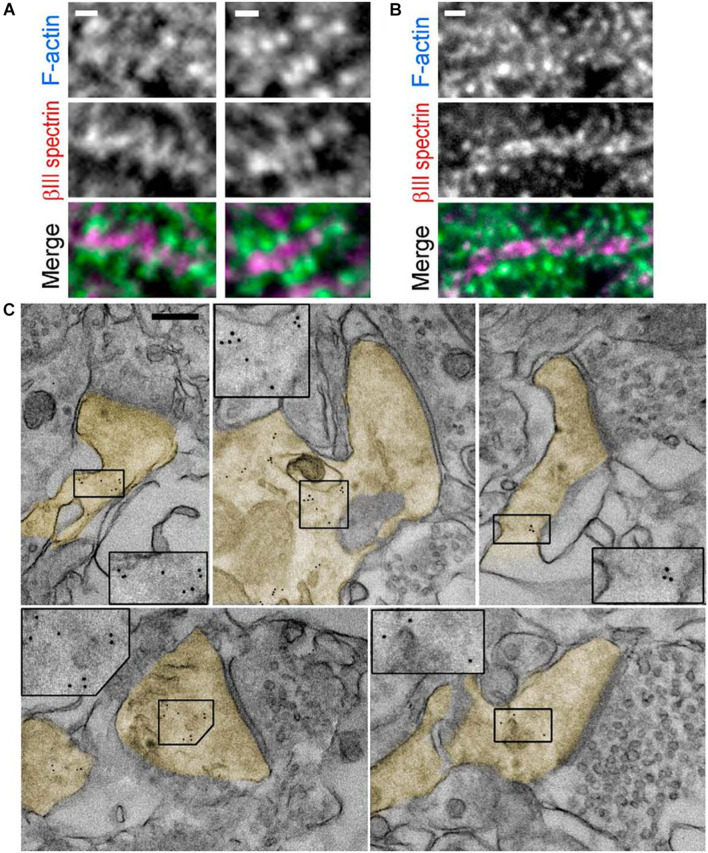
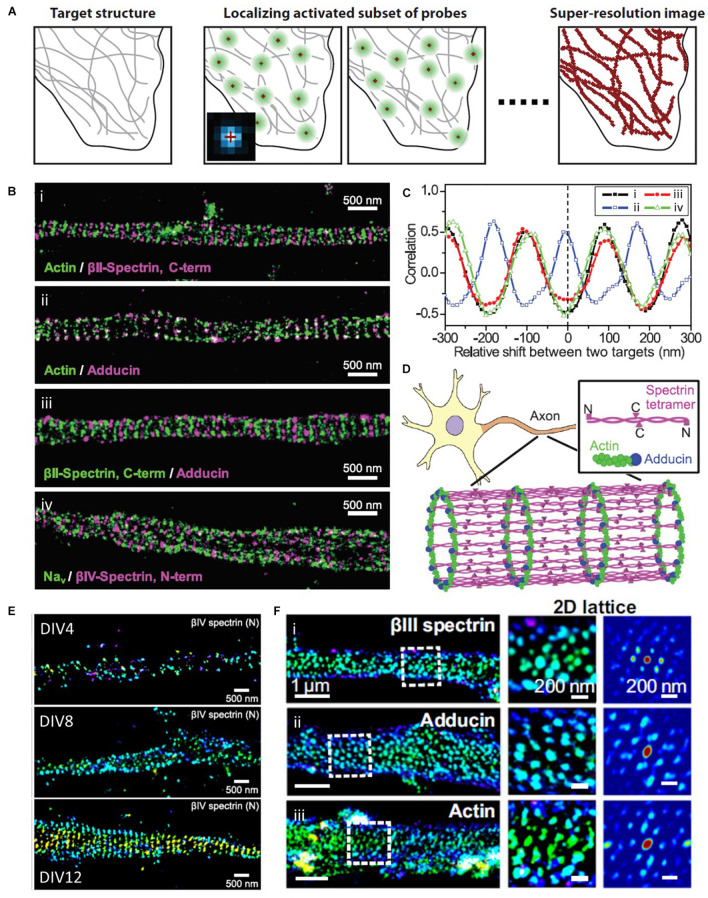
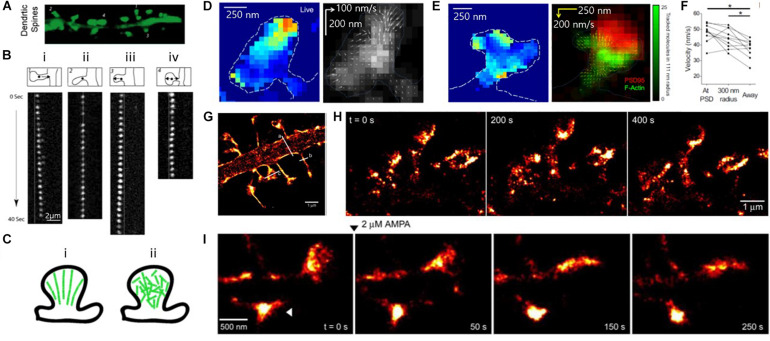
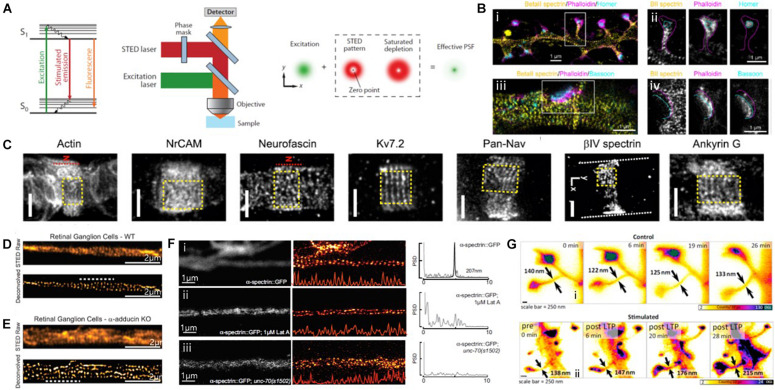
Actin networks and actin-binding proteins (ABPs) are most abundant in the cytoskeleton of neurons. The function of ABPs in neurons is nucleation of actin polymerization, polymerization or depolymerization regulation, bundling of actin through crosslinking or stabilization, cargo movement along actin filaments, and anchoring of actin to other cellular components. In axons, ABP-actin interaction forms a dynamic, deep actin network, which regulates axon extension, guidance, axon branches, and synaptic structures. In dendrites, actin and ABPs are related to filopodia attenuation, spine formation, and synapse plasticity. ABP phosphorylation or mutation changes ABP-actin binding, which regulates axon or dendritic plasticity. In addition, hyperactive ABPs might also be expressed as aggregates of abnormal proteins in neurodegeneration. Those changes cause many neurological disorders. Here, we will review direct visualization of ABP and actin using various electron microscopy (EM) techniques, super resolution microscopy (SRM), and correlative light and electron microscopy (CLEM) with discussion of important ABPs in neuron.
肌动蛋白网络和肌动蛋白结合蛋白(ABP)在神经元的细胞骨架中最为丰富。ABP在神经元中的功能包括肌动蛋白聚合的成核作用、聚合或解聚调节、通过交联或稳定作用使肌动蛋白成束、货物沿肌动蛋白丝的移动以及肌动蛋白与其他细胞成分的锚定。在轴突中,ABP - 肌动蛋白相互作用形成一个动态的、深层的肌动蛋白网络,该网络调节轴突的延伸、导向、轴突分支和突触结构。在树突中,肌动蛋白和ABP与丝状伪足的衰减、树突棘的形成以及突触可塑性有关。ABP的磷酸化或突变会改变ABP - 肌动蛋白的结合,从而调节轴突或树突的可塑性。此外,在神经退行性变中,过度活跃的ABP也可能以异常蛋白质聚集体的形式表达。这些变化会导致许多神经系统疾病。在这里,我们将回顾使用各种电子显微镜(EM)技术、超分辨率显微镜(SRM)以及相关光电子显微镜(CLEM)对ABP和肌动蛋白进行直接可视化的研究,并讨论神经元中重要的ABP。