Gier Nadine R, Strelow Enrique, Krampe Caspar
Faculty of Business Administration and Economics, Chair of Marketing, Heinrich Heine University Düsseldorf, Düsseldorf, Germany.
Faculty of Business Administration and Economics, Chair of Marketing and Sales, Justus Liebig University Gießen, Gießen, Germany.
Front Neurosci. 2020 Nov 20;14:575494. doi: 10.3389/fnins.2020.575494. eCollection 2020.
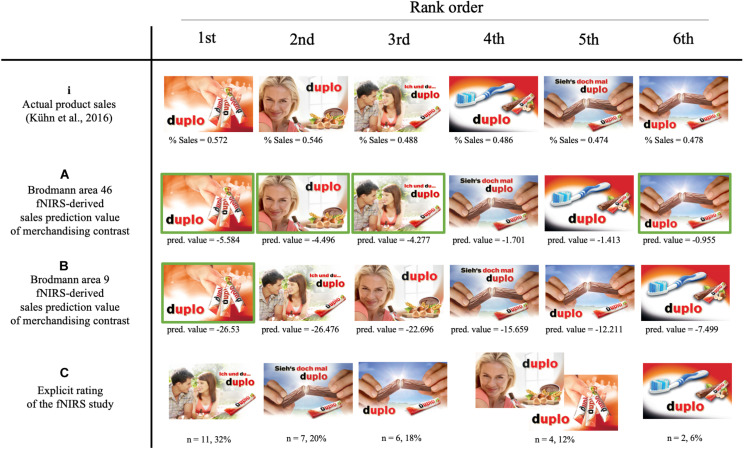
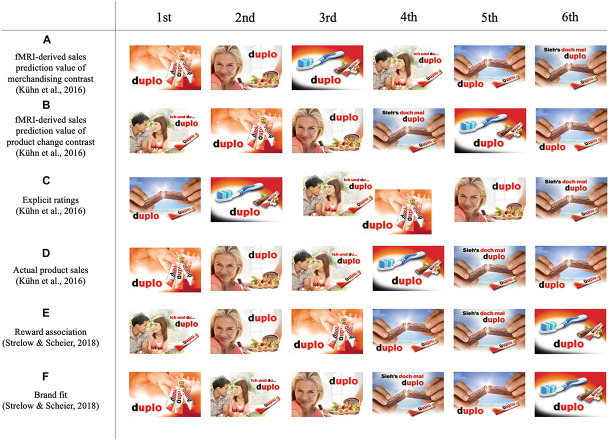
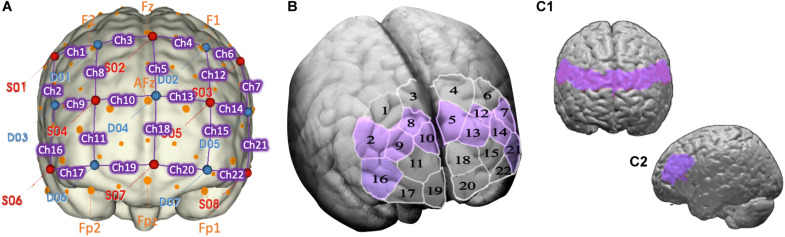
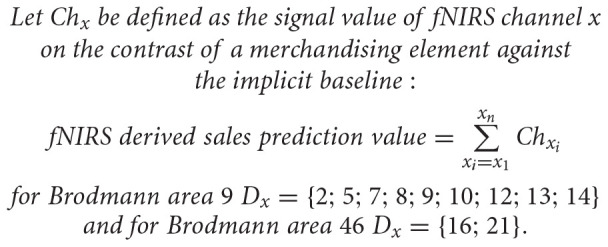
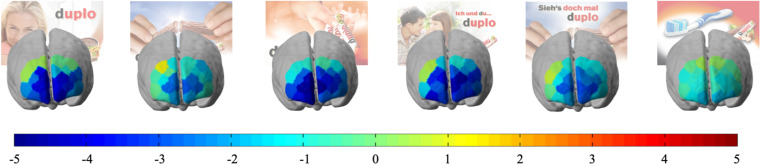
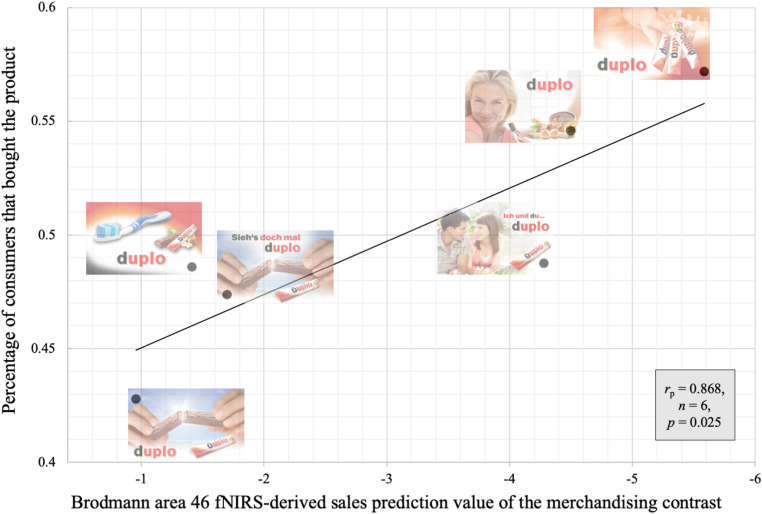
The (re-)launch of products is frequently accompanied by point-of-sale (PoS) marketing campaigns in order to foster sales. Predicting the success of these merchandising elements at the PoS on sales is of interest to research and practice, as the misinvestments that are based on the fragmented PoS literature are tremendous. Likewise, the predictive power of neuropsychological methods has been demonstrated in various research work. Nevertheless, the practical application of these neuropsychological methods is still limited. In order to foster the application of neuropsychological methods in research and practice, the current research work aims to explore, whether mobile functional near-infrared spectroscopy (fNIRS) - as a portable neuroimaging method - has the potential to predict the success of PoS merchandising elements by rendering significant neural signatures of brain regions of the dorsolateral prefrontal cortex (dlPFC), highlighting its potential to forecast shoppers' behaviour aka sales at the PoS. Building on previous research findings, the results of the given research work indicate that the neural signal of brain regions of the dlPFC, measured with mobile fNIRS, is able to predict actual sales associated with PoS merchandising elements, relying on the . More precisely, the research findings support the hypothesis that the reduced neural activity of brain regions associated with the dlPFC can predict sales at the PoS, emphasising another crucial neural signature to predict shoppers' purchase behaviour, next to the frequently cited . The research findings offer an innovative perspective on how to design and evaluate PoS merchandising elements, indicating fruitful theoretical and practical implications.
产品的(重新)推出通常伴随着销售点(PoS)营销活动以促进销售。预测这些销售点商品元素对销售的成功影响,对于研究和实践来说很有意义,因为基于零散的销售点文献所进行的错误投资是巨大的。同样,神经心理学方法的预测能力在各种研究工作中已得到证明。然而,这些神经心理学方法的实际应用仍然有限。为了促进神经心理学方法在研究和实践中的应用,当前的研究工作旨在探索,作为一种便携式神经成像方法的移动功能近红外光谱(fNIRS)是否有潜力通过呈现背外侧前额叶皮层(dlPFC)脑区的显著神经特征来预测销售点商品元素的成功,突出其预测购物者行为即销售点销售额的潜力。基于先前的研究结果,给定研究工作的结果表明,用移动fNIRS测量的dlPFC脑区的神经信号能够预测与销售点商品元素相关的实际销售额,这依赖于……更确切地说,研究结果支持这样的假设,即与dlPFC相关的脑区神经活动减少可以预测销售点的销售额,强调了除了经常被引用的……之外的另一个预测购物者购买行为的关键神经特征。研究结果为如何设计和评估销售点商品元素提供了一个创新的视角,表明了富有成效的理论和实践意义。