Simón María Rosa, Fleitas María Constanza, Castro Ana Carolina, Schierenbeck Matías
Cerealicultura, Facultad de Ciencias Agrarias y Forestales, Universidad Nacional de La Plata, La Plata, Argentina.
Comisión de Investigaciones Científicas Provincia Buenos Aires, La Plata, Argentina.
Front Plant Sci. 2020 Nov 19;11:569401. doi: 10.3389/fpls.2020.569401. eCollection 2020.
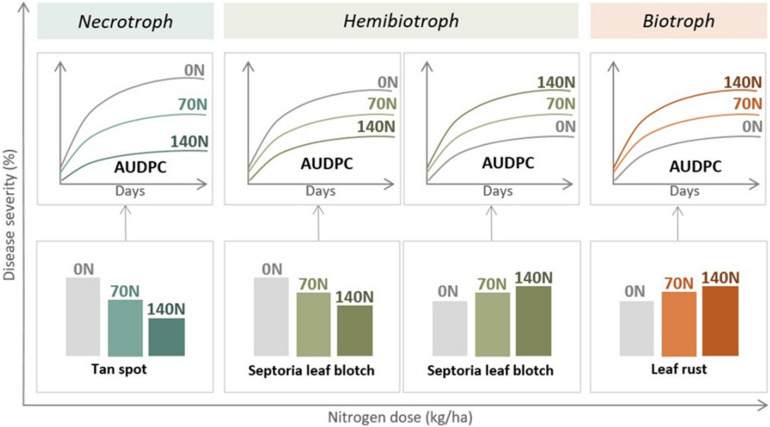
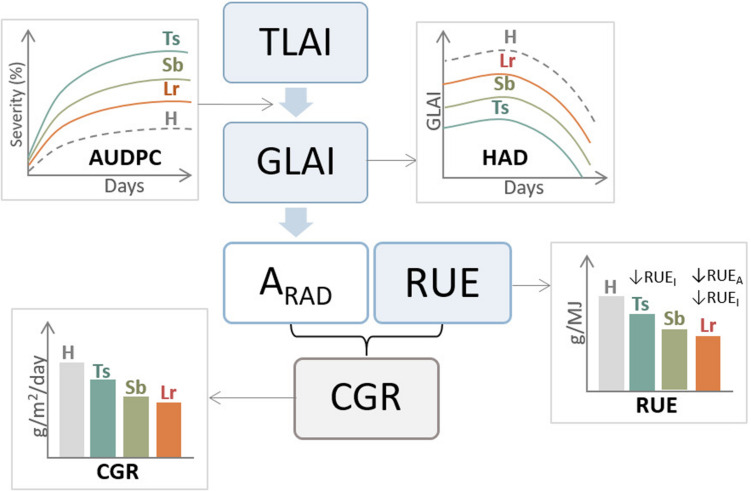
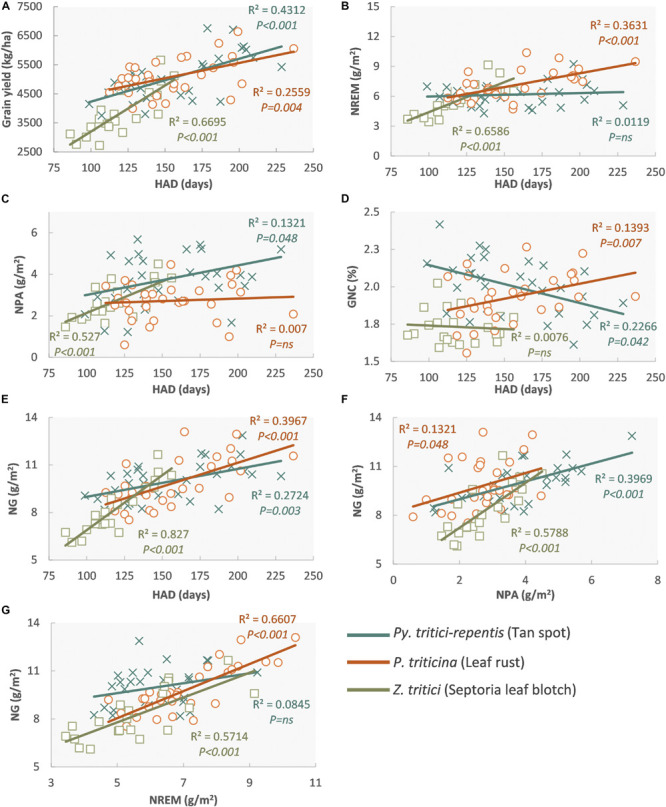
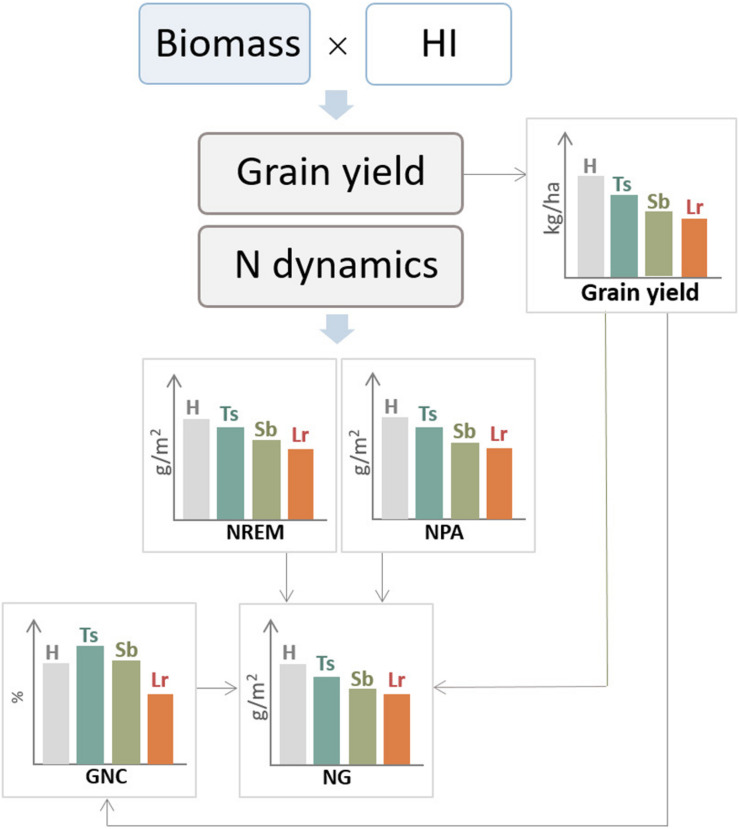
Foliar fungal diseases may cause important losses on yield and quality of wheat ( L.). They may impact crop growth rate differently, modifying nitrogen (N) dynamics and carbohydrate accumulation in the grain. The relationship between N and carbohydrates accumulation determines the grain protein concentration, which impacts the gluten concentration and rheological properties of the wheat flour. In addition, types of fungicides and N fertilization can influence the intensity of foliar diseases and have an effect on the milling and end-use quality, depending on the bread-making aptitude of the genotypes, the nutritional habit of the pathogen involved, the amount and time of infection, environmental factors, and interactions between these factors. In that way, N fertilization may modify the severity of the diseases according to the nutritional habit of the pathogen involved. Some fungicides, such as strobilurins and carboxamides, produce high levels of disease control and prolong the healthy leaf area duration, which translates into important yield responses, potentially compromising the grain protein concentration by additional carbohydrate production, with consequences in the bread-making quality. Furthermore, infections caused by biotrophic pathogens can be more damaging to N deposition than to dry matter accumulation, whereas the reverse has been generally true for diseases caused by necrotrophic pathogens. The time of infection could also affect yield components and N dynamics differentially. Early epidemics may reduce the number of grains per area and the N remobilization, whereas late epidemics may affect the thousand kernel weight and mainly the N absorption post-flowering. A review updating findings of the effects of infections caused by foliar fungal pathogens of different nutritional habits and the incidence of several factors modifying these effects on the above-ground biomass generation, N dynamics, protein and gluten concentration, milling, rheological properties, loaf volume, and other quality-related traits is summarized. Three main pathogens in particular, for which recent information is available, were taken as representative of biotrophic (), necrotrophic (-), and hemibiotrophic () nutritional habit, and some general models of their effects are proposed. New challenges for researchers to minimize the impact of foliar diseases on end-use quality are also discussed.
叶部真菌病害可能会给小麦(Triticum aestivum L.)的产量和品质造成重大损失。它们对作物生长速率的影响可能不同,会改变氮素(N)动态以及籽粒中的碳水化合物积累。氮与碳水化合物积累之间的关系决定了籽粒蛋白质浓度,而这又会影响小麦面粉的面筋浓度和流变学特性。此外,杀菌剂类型和氮肥施用会影响叶部病害的严重程度,并对制粉和最终使用品质产生影响,这取决于基因型的制面包能力、相关病原菌的营养习性、感染量和时间、环境因素以及这些因素之间的相互作用。这样一来,氮肥施用可能会根据相关病原菌的营养习性改变病害的严重程度。一些杀菌剂,如甲氧基丙烯酸酯类和羧酰胺类,能有效控制病害并延长健康叶面积持续时间,这会带来显著的产量响应,但额外的碳水化合物生成可能会影响籽粒蛋白质浓度,进而影响面包制作品质。此外,活体营养型病原菌引起的感染对氮素积累的损害可能比对干物质积累的损害更大,而对于死体营养型病原菌引起的病害,情况通常相反。感染时间也可能对产量构成因素和氮素动态产生不同影响。早期流行病害可能会减少单位面积的籽粒数和氮素再转运,而晚期流行病害可能会影响千粒重,主要是影响开花后的氮素吸收。本文综述了不同营养习性的叶部真菌病原菌感染的影响,以及若干因素对地上生物量生成、氮素动态、蛋白质和面筋浓度、制粉、流变学特性、面包体积及其他品质相关性状的影响,并对现有研究结果进行了更新。特别选取了三种有最新信息的主要病原菌,分别代表活体营养型(Blumeria graminis)、死体营养型(Septoria tritici)和半活体营养型(Zymoseptoria tritici)营养习性,并提出了它们影响的一些通用模型。还讨论了研究人员在尽量减少叶部病害对最终使用品质影响方面面临的新挑战。