Primo Julia de O, Bittencourt Carla, Acosta Selene, Sierra-Castillo Ayrton, Colomer Jean-François, Jaerger Silvia, Teixeira Verônica C, Anaissi Fauze J
Laboratório de Materiais e Compostos Inorgânicos (LabMat), Departamento de Química, Universidade Estadual Do Centro-Oeste, Guarapuava, Brazil.
Chimie des Interactions Plasma-Surface (ChIPS), Research Institute for Materials Science and Engineering, Université de Mons, Mons, Belgium.
Front Chem. 2020 Nov 27;8:571790. doi: 10.3389/fchem.2020.571790. eCollection 2020.
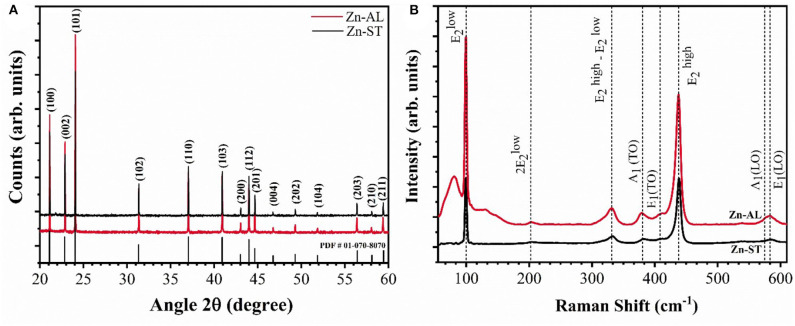
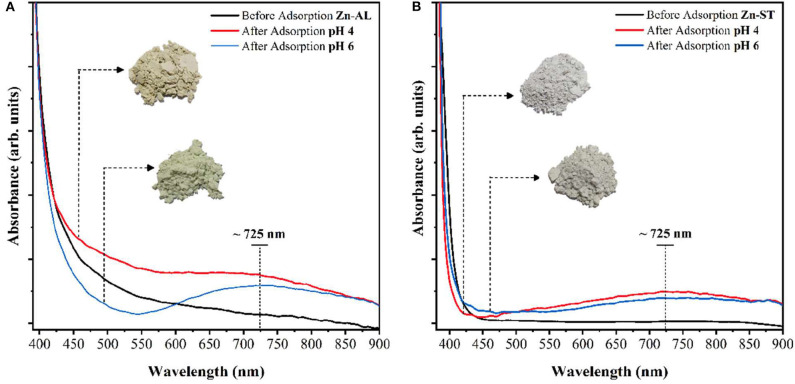
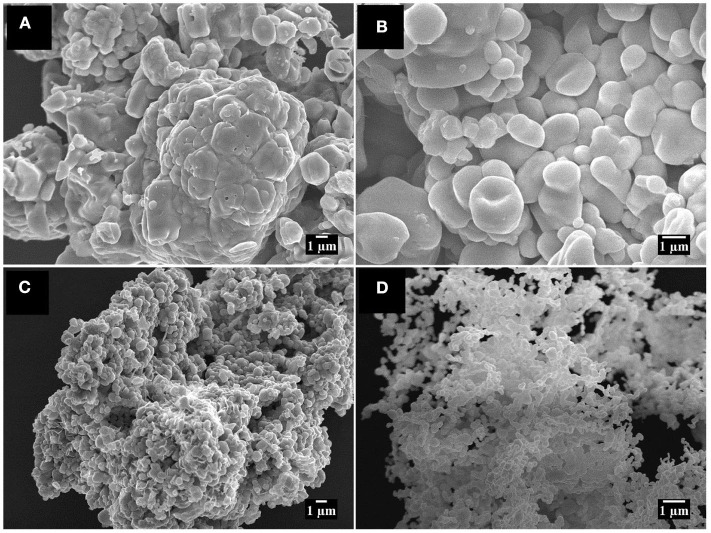
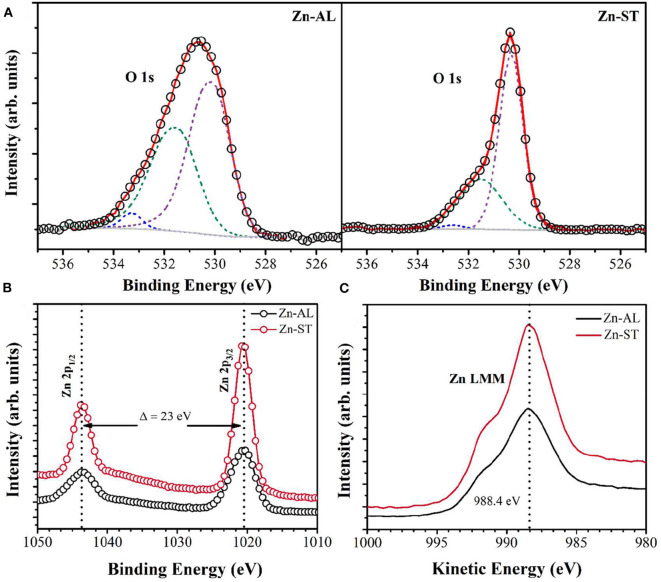
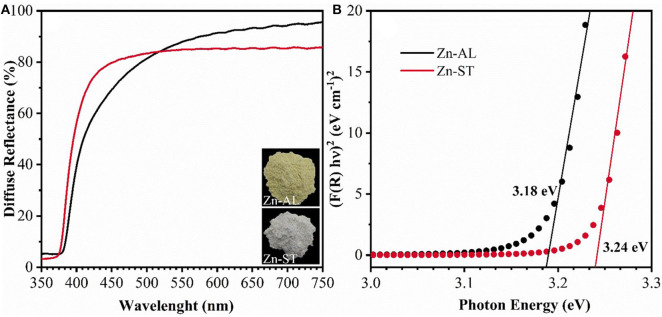
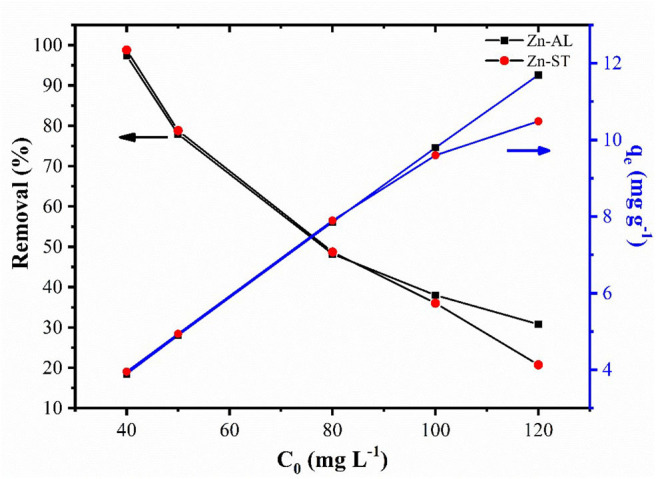
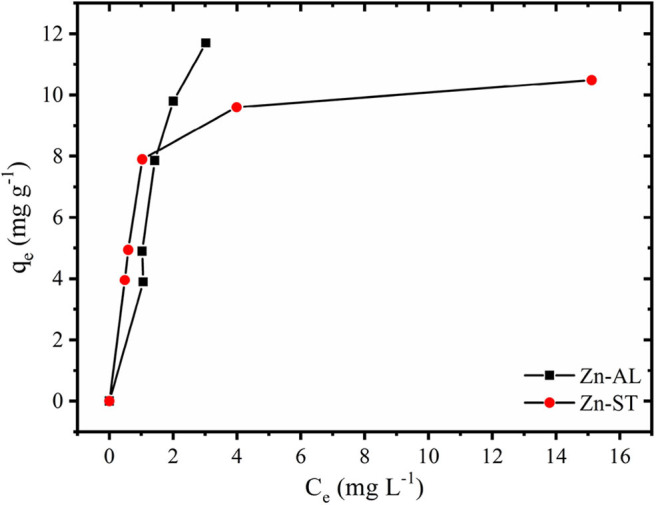
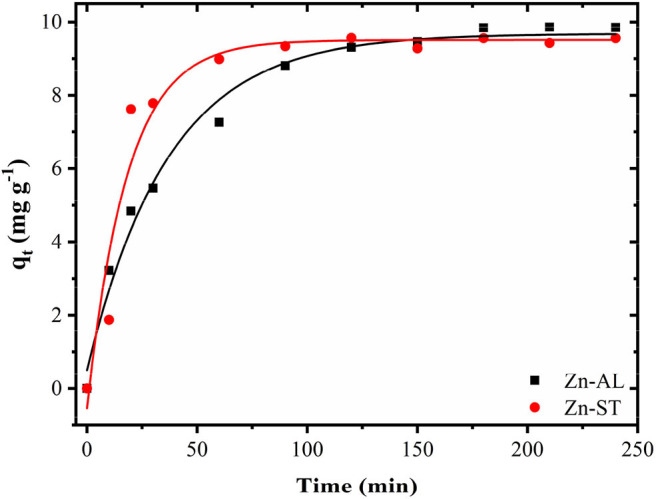
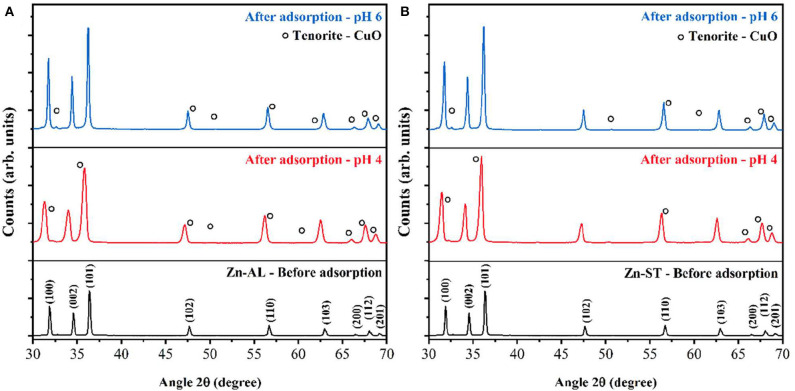
Zinc Oxide nanoparticles have been synthesized by two simple routes using Aloe vera (green synthesis, route I) or Cassava starch (gelatinization, route II). The XRD patterns and Raman spectra show that both synthesis routes lead to single-phase ZnO. XPS results indicate the presence of zinc atoms with oxidation state Zn. SEM images of the ZnO nanoparticles synthesized using Cassava starch show the presence of pseudo-spherical nanoparticles and nanosheets, while just pseudo-spherical nanoparticles were observed when Aloe vera was used. The UV-Vis spectra showed a slight difference in the absorption edge of the ZnO particles obtained using Aloe vera (3.18 eV) and Cassava starch (3.24 eV). The ZnO nanoparticles were tested as adsorbents for the removal of copper in wastewater, it is shown that at low Cu ion concentration (~40 mg/L) the nanoparticles synthesized by both routes have the same removal efficiency, however, increasing the absorbate concentration (> 80 mg/L) the ZnO nanoparticles synthesized using Aloe vera have a higher removal efficiency. The synthesized ZnO nanoparticles can be used as effective and environmental-friendly metal trace absorbers in wastewater.
采用两种简单方法合成了氧化锌纳米颗粒,一种使用芦荟(绿色合成法,路线I),另一种使用木薯淀粉(糊化法,路线II)。X射线衍射图谱和拉曼光谱表明,两种合成路线均得到单相ZnO。X射线光电子能谱结果表明存在氧化态为Zn的锌原子。使用木薯淀粉合成的ZnO纳米颗粒的扫描电子显微镜图像显示存在准球形纳米颗粒和纳米片,而使用芦荟时仅观察到准球形纳米颗粒。紫外可见光谱显示,使用芦荟(3.18 eV)和木薯淀粉(3.24 eV)获得的ZnO颗粒在吸收边缘存在细微差异。将ZnO纳米颗粒作为吸附剂用于去除废水中的铜,结果表明,在低铜离子浓度(约40 mg/L)下,两种路线合成的纳米颗粒具有相同的去除效率,然而,增加吸附质浓度(>80 mg/L)时,使用芦荟合成的ZnO纳米颗粒具有更高的去除效率。合成的ZnO纳米颗粒可作为废水中有效且环保的金属痕量吸收剂。