Jordão Karyne Sumico de Lima Uyeno, Assumpção Daniela de, Barros Marilisa Berti de Azevedo, Barros Filho Antonio de Azevedo
Universidade Estadual de Campinas, Campinas, SP, Brazil.
Rev Paul Pediatr. 2020 Dec 14;39:e2019295. doi: 10.1590/1984-0462/2021/39/2019295. eCollection 2020.
To assess vitamin E intake and its relationship with sociodemographic variables, and to identify the main dietary sources of the nutrient in the diet of adolescents.
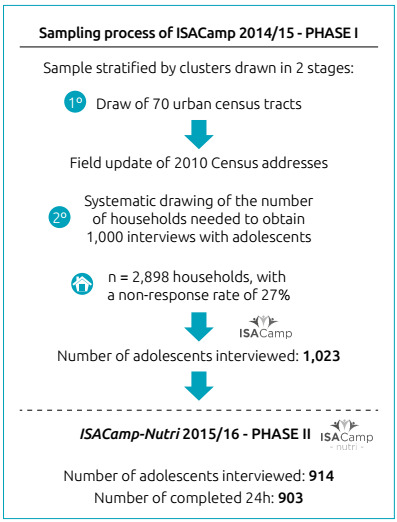
This is a population-based cross-sectional study that used data from 891 adolescents living in Campinas, SP, participating in ISACamp 2014/15 (Health Survey) and ISACamp-Nutri 2015/16 (Food Consumption and Nutritional Status Survey). The nutrient intake averages were estimated using the Generalized Linear Model, adjusted for the total energy of the diet. Dietary sources of vitamin E were identified from the calculation of the relative contribution.
The average vitamin E intake was 3.2 mg for adolescents aged 10 to 13 years and 3.5 mg for those aged 14 to 19 years, results far below the recommended values of 9 and 12 mg, respectively. The prevalence of inadequacy was 92.5%. -Ten -foods/-food groups represented 85.7% of vitamin E present in the adolescents' diet; the vegetable oils group accounted for more than a quarter of the contribution (25.5%), followed by cookies (9.1%) and beans (8.9%).
There were a low intake and a high prevalence of inadequate vitamin E intake among adolescents in Campinas, with vegetable oil as the main source. For the total number of adolescents, almost 33% of the nutrient content was derived from foods of poor nutritional quality such as cookies, packaged snacks, and margarine. The results of this study can guide public health actions that aim to improve the quality of adolescents' diets.
评估维生素E摄入量及其与社会人口统计学变量的关系,并确定青少年饮食中该营养素的主要膳食来源。
这是一项基于人群的横断面研究,使用了来自圣保罗州坎皮纳斯市891名青少年的数据,这些青少年参与了2014/15年ISACamp(健康调查)和2015/16年ISACamp-Nutri(食物消费与营养状况调查)。使用广义线性模型估计营养素摄入量平均值,并根据饮食总能量进行调整。通过计算相对贡献来确定维生素E的膳食来源。
10至13岁青少年的维生素E平均摄入量为3.2毫克,14至19岁青少年为3.5毫克,结果远低于推荐值9毫克和12毫克。不足发生率为92.5%。十种食物/食物组占青少年饮食中维生素E的85.7%;植物油组贡献超过四分之一(25.5%),其次是饼干(9.1%)和豆类(8.9%)。
坎皮纳斯市青少年维生素E摄入量低且不足发生率高,植物油是主要来源。对于所有青少年而言,近33%的营养素含量来自营养质量较差的食物,如饼干、包装零食和人造黄油。本研究结果可为旨在改善青少年饮食质量的公共卫生行动提供指导。