Laboratory of Sylviculture, Forest Genetics and Biotechnology, Institute of Mediterranean and Forest Ecosystems, Hellenic Agricultural Organization "Demeter", Ilissia, 11528 Athens, Greece.
Department of Pharmacognosy and Natural Products Chemistry, Faculty of Pharmacy, National and Kapodistrian University of Athens, Panepistimiopolis Zografou, 15771 Athens, Greece.
Molecules. 2020 Dec 15;25(24):5928. doi: 10.3390/molecules25245928.
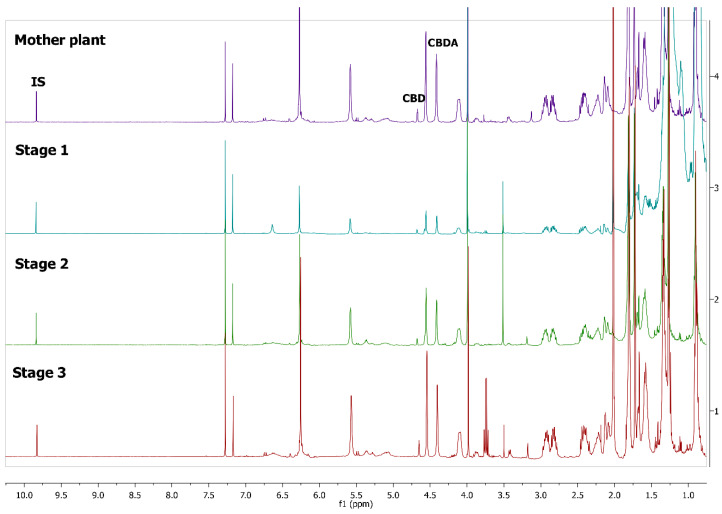
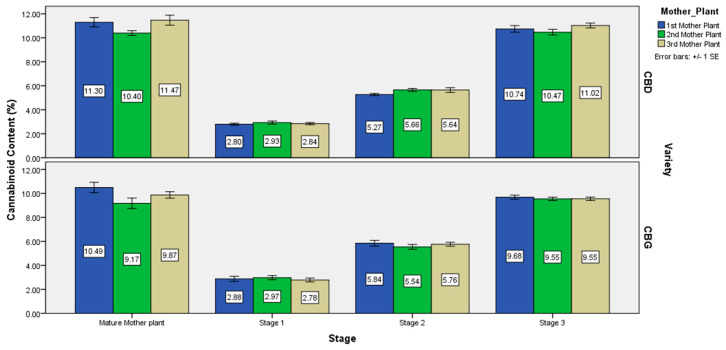
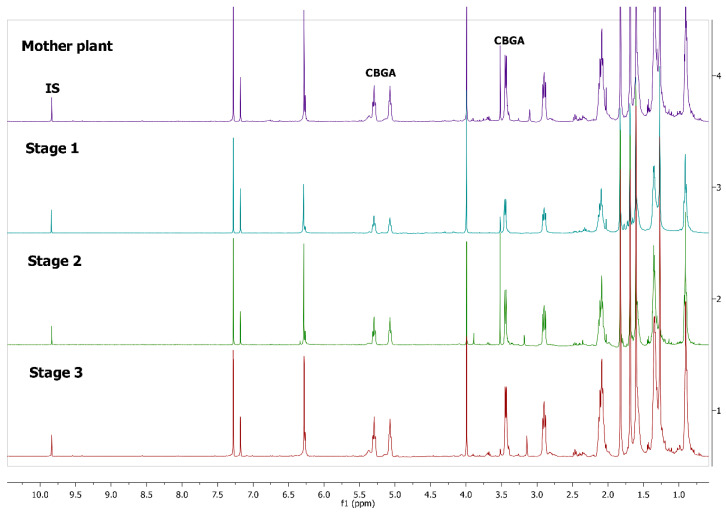
High cannabidiol (CBD) and cannabigerol (CBG) varieties of L., a species with medicinal properties, were regenerated in vitro. Explants of nodal segments including healthy axillary bud, after sterilization, were placed in Murashige-Skoog (MS) culture medium. The shoots formed after 30 days were subcultured in full- or half-strength MS medium supplemented with several concentrations of 6-benzyl-amino-purine (BA) or thidiazuron (TDZ). The highest average number and length of shoots was achieved when both full and half-strength MS media were supplemented with 4.0 μM BA. The presence of 4.0 μM TDZ showed also comparable results. BA and TDZ at concentrations of 4.0, 8.0 μM and 2.0, 4.0 μM respectively, displayed the maximum shooting frequency. The new shoots were transferred on the same media and were either self-rooted or after being enhanced with different concentrations of indole-3-butyric acid (IBA) or α-naphthalene acetic acid (NAA). Presence of 2.0 or 4.0 μM IBA or 4.0 μM NAA resulted to the optimum rooting rates. The maximum average number and length of roots per shoot was observed when the culture media was supplemented with 4.0 μM IBA or NAA. Approximately 92% of the plantlets were successfully established and acclimatized in field. The consistency of the chemical profile of the acclimatized in vitro propagated clones was assessed using quantitative H-NMR high throughput screening. In each variety, analysis of the micropropagated plant in comparison with the mother plant showed no statistically significant differences ( ≤ 0.05) in CBD+ cannabidiolic acid (CBDA) and CBG+ cannabigerolic acid (CBGA) content respectively, thus indicating stability of their chemical profile.
从具有药用特性的 L. 中提取高含量的大麻二酚(CBD)和大麻萜酚(CBG),并在体外进行再生。经过消毒的节间外植体,包括健康的腋芽,被放置在 Murashige-Skoog(MS)培养基中。30 天后,形成的芽在全或半强度 MS 培养基中进行继代培养,培养基中添加几种浓度的 6-苄基氨基嘌呤(BA)或噻二唑(TDZ)。当全和半强度 MS 培养基均补充 4.0 μM BA 时,获得的芽的平均数量和长度最高。4.0 μM TDZ 的存在也显示出可比的结果。BA 和 TDZ 的浓度分别为 4.0、8.0 μM 和 2.0、4.0 μM 时,显示出最高的出芽频率。新的芽被转移到相同的培养基上,要么自行生根,要么在经过不同浓度的吲哚-3-丁酸(IBA)或α-萘乙酸(NAA)增强后生根。2.0 或 4.0 μM IBA 或 4.0 μM NAA 的存在导致最佳生根率。当培养基中补充 4.0 μM IBA 或 NAA 时,每个芽的平均生根数量和长度最高。大约 92%的植物在田间成功建立并适应。使用定量 H-NMR 高通量筛选评估了适应体外繁殖克隆的化学特征的一致性。在每种品种中,与母株相比,对微繁殖植物的分析显示 CBD+大麻二酚酸(CBDA)和 CBG+大麻萜酚酸(CBGA)含量没有统计学上的显著差异(≤0.05),因此表明其化学特征的稳定性。