Microfluidics Research & Innovation Laboratory, School of Sport Science, Beijing Sport University, Beijing 100084, China.
Biomedical Engineering Department, College of Engineering, Pennsylvania State University, University Park, PA 16802, USA.
Biosensors (Basel). 2020 Dec 15;10(12):205. doi: 10.3390/bios10120205.
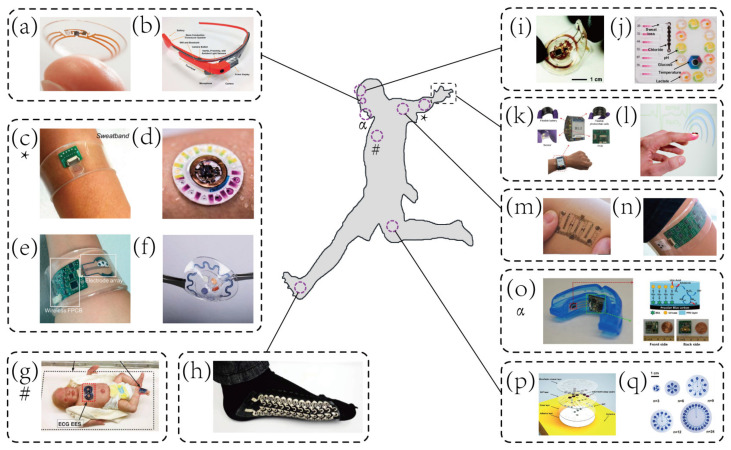
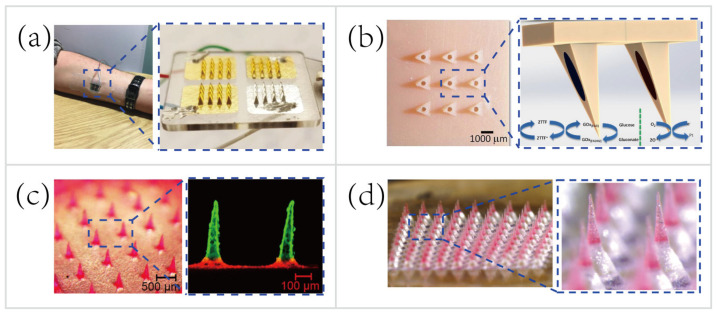
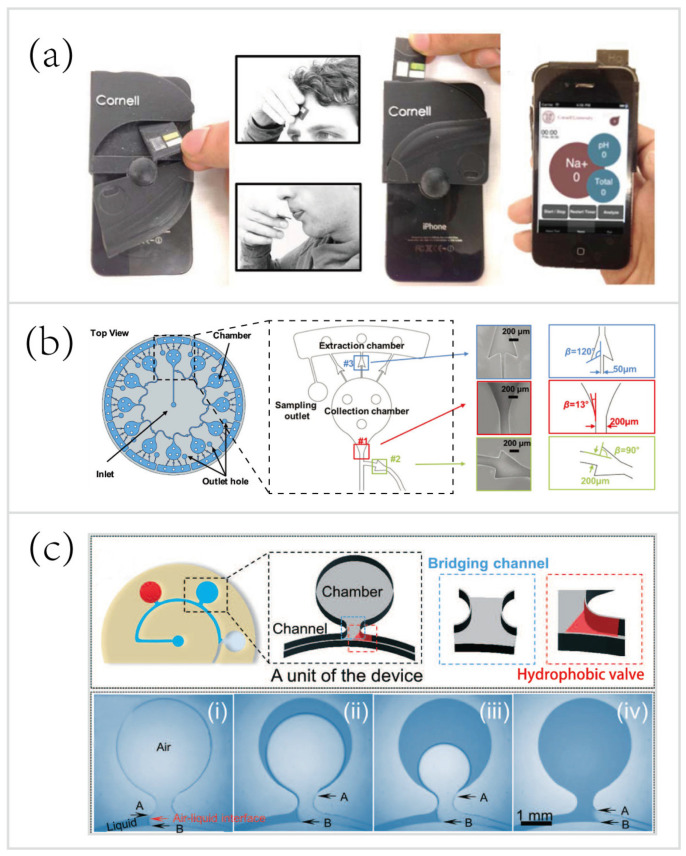
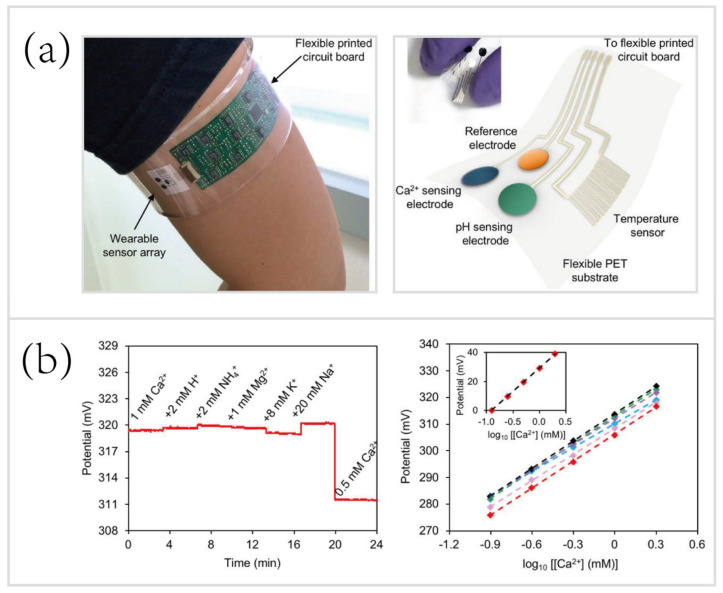
Recent advances in lab-on-a-chip technology establish solid foundations for wearable biosensors. These newly emerging wearable biosensors are capable of non-invasive, continuous monitoring by miniaturization of electronics and integration with microfluidics. The advent of flexible electronics, biochemical sensors, soft microfluidics, and pain-free microneedles have created new generations of wearable biosensors that explore brand-new avenues to interface with the human epidermis for monitoring physiological status. However, these devices are relatively underexplored for sports monitoring and analytics, which may be largely facilitated by the recent emergence of wearable biosensors characterized by real-time, non-invasive, and non-irritating sensing capacities. Here, we present a systematic review of wearable biosensing technologies with a focus on materials and fabrication strategies, sampling modalities, sensing modalities, as well as key analytes and wearable biosensing platforms for healthcare and sports monitoring with an emphasis on sweat and interstitial fluid biosensing. This review concludes with a summary of unresolved challenges and opportunities for future researchers interested in these technologies. With an in-depth understanding of the state-of-the-art wearable biosensing technologies, wearable biosensors for sports analytics would have a significant impact on the rapidly growing field-microfluidics for biosensing.
近年来,芯片实验室技术的进步为可穿戴生物传感器奠定了坚实的基础。这些新兴的可穿戴生物传感器通过电子设备的小型化和与微流控技术的集成,实现了非侵入性、连续监测。柔性电子、生物化学传感器、软微流控和无刺痛微针的出现,为可穿戴生物传感器开辟了新的途径,用于与人体表皮进行监测生理状态的接口。然而,这些设备在运动监测和分析方面的应用相对较少,这可能主要得益于最近出现的可穿戴生物传感器,其具有实时、非侵入性和非刺激性的传感能力。在这里,我们对可穿戴生物传感技术进行了系统的综述,重点介绍了材料和制造策略、采样方式、传感方式以及用于医疗保健和运动监测的关键分析物和可穿戴生物传感平台,重点是汗液和间质液生物传感。本综述最后总结了对这些技术感兴趣的未来研究人员尚未解决的挑战和机遇。通过深入了解最先进的可穿戴生物传感技术,用于运动分析的可穿戴生物传感器将对快速发展的生物传感微流控领域产生重大影响。