• 文献检索
  • 文档翻译
  • 深度研究
  • 学术资讯
  • Suppr Zotero 插件Zotero 插件
  • 邀请有礼
  • 套餐&价格
  • 历史记录
应用&插件
Suppr Zotero 插件Zotero 插件浏览器插件Mac 客户端Windows 客户端微信小程序
定价
高级版会员购买积分包购买API积分包
服务
文献检索文档翻译深度研究API 文档MCP 服务
关于我们
关于 Suppr公司介绍联系我们用户协议隐私条款
关注我们

Suppr 超能文献

核心技术专利:CN118964589B侵权必究
粤ICP备2023148730 号-1Suppr @ 2026

文献检索

告别复杂PubMed语法,用中文像聊天一样搜索,搜遍4000万医学文献。AI智能推荐,让科研检索更轻松。

立即免费搜索

文件翻译

保留排版,准确专业,支持PDF/Word/PPT等文件格式,支持 12+语言互译。

免费翻译文档

深度研究

AI帮你快速写综述,25分钟生成高质量综述,智能提取关键信息,辅助科研写作。

立即免费体验

疟原虫激酶抑制剂:最新进展。

Plasmodial Kinase Inhibitors Targeting Malaria: Recent Developments.

机构信息

Aix Marseille Univ, CNRS, ICR UMR 7273, Equipe Pharmaco-Chimie Radicalaire, Faculté de Pharmacie, 13385 Marseille CEDEX 05, France.

出版信息

Molecules. 2020 Dec 15;25(24):5949. doi: 10.3390/molecules25245949.

DOI:10.3390/molecules25245949
PMID:33334080
原文链接:https://pmc.ncbi.nlm.nih.gov/articles/PMC7765515/
Abstract

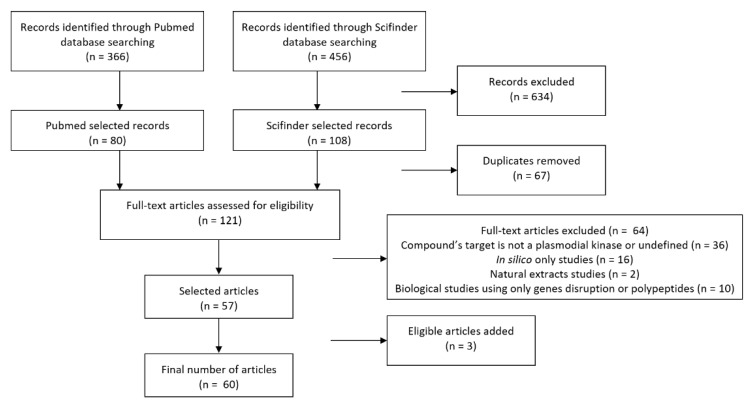
Recent progress in reducing malaria cases and ensuing deaths is threatened by factors like mutations that induce resistance to artemisinin derivatives. Multiple drugs are currently in clinical trials for malaria treatment, including some with novel mechanisms of action. One of these, MMV390048, is a plasmodial kinase inhibitor. This review lists the recently developed molecules which target plasmodial kinases. A systematic review of the literature was performed using CAPLUS and MEDLINE databases from 2005 to 2020. It covers a total of 60 articles and describes about one hundred compounds targeting 22 plasmodial kinases. This work highlights the strong potential of compounds targeting plasmodial kinases for future drug therapies. However, the majority of the kinome remains to be explored.

摘要

近年来,疟疾病例和相关死亡人数有所减少,但抗青蒿素衍生物的突变等因素对这一进展构成了威胁。目前有多种药物正在进行临床试验以治疗疟疾,其中一些具有新颖的作用机制。其中一种是疟原虫蛋白激酶抑制剂 MMV390048。本文列出了最近开发的针对疟原虫蛋白激酶的分子。使用 CAPLUS 和 MEDLINE 数据库,对 2005 年至 2020 年的文献进行了系统综述。共涉及 60 篇文章,描述了约 100 种针对 22 种疟原虫蛋白激酶的化合物。这项工作强调了针对疟原虫蛋白激酶的化合物在未来药物治疗方面的巨大潜力。然而,激酶组的大部分仍有待探索。
https://cdn.ncbi.nlm.nih.gov/pmc/blobs/de29/7765515/a8a014195b80/molecules-25-05949-g031.jpg
https://cdn.ncbi.nlm.nih.gov/pmc/blobs/de29/7765515/ac76188d5094/molecules-25-05949-sch001.jpg
https://cdn.ncbi.nlm.nih.gov/pmc/blobs/de29/7765515/3006d72ea791/molecules-25-05949-g001.jpg
https://cdn.ncbi.nlm.nih.gov/pmc/blobs/de29/7765515/733ef06e56fa/molecules-25-05949-g002.jpg
https://cdn.ncbi.nlm.nih.gov/pmc/blobs/de29/7765515/ccdd573a0409/molecules-25-05949-g003.jpg
https://cdn.ncbi.nlm.nih.gov/pmc/blobs/de29/7765515/ea87d0413dbc/molecules-25-05949-g004.jpg
https://cdn.ncbi.nlm.nih.gov/pmc/blobs/de29/7765515/86a65e068a9a/molecules-25-05949-g005.jpg
https://cdn.ncbi.nlm.nih.gov/pmc/blobs/de29/7765515/227967b84c7e/molecules-25-05949-g006.jpg
https://cdn.ncbi.nlm.nih.gov/pmc/blobs/de29/7765515/35f9b420f80e/molecules-25-05949-g007.jpg
https://cdn.ncbi.nlm.nih.gov/pmc/blobs/de29/7765515/87b8037c6c4f/molecules-25-05949-g008.jpg
https://cdn.ncbi.nlm.nih.gov/pmc/blobs/de29/7765515/58bfb49878ea/molecules-25-05949-g009.jpg
https://cdn.ncbi.nlm.nih.gov/pmc/blobs/de29/7765515/23992d58625e/molecules-25-05949-g010.jpg
https://cdn.ncbi.nlm.nih.gov/pmc/blobs/de29/7765515/601b4341841e/molecules-25-05949-g011.jpg
https://cdn.ncbi.nlm.nih.gov/pmc/blobs/de29/7765515/c8d73d098bff/molecules-25-05949-g012.jpg
https://cdn.ncbi.nlm.nih.gov/pmc/blobs/de29/7765515/c64592a81d05/molecules-25-05949-g013.jpg
https://cdn.ncbi.nlm.nih.gov/pmc/blobs/de29/7765515/4fb29f28a36e/molecules-25-05949-g014.jpg
https://cdn.ncbi.nlm.nih.gov/pmc/blobs/de29/7765515/807f46cf1145/molecules-25-05949-g015.jpg
https://cdn.ncbi.nlm.nih.gov/pmc/blobs/de29/7765515/3aa21f5c2c56/molecules-25-05949-g016.jpg
https://cdn.ncbi.nlm.nih.gov/pmc/blobs/de29/7765515/3681fbc3ca3e/molecules-25-05949-g017.jpg
https://cdn.ncbi.nlm.nih.gov/pmc/blobs/de29/7765515/5455e15b7f46/molecules-25-05949-g018.jpg
https://cdn.ncbi.nlm.nih.gov/pmc/blobs/de29/7765515/8f35c51dca47/molecules-25-05949-g019.jpg
https://cdn.ncbi.nlm.nih.gov/pmc/blobs/de29/7765515/639a5eef1a1c/molecules-25-05949-g020.jpg
https://cdn.ncbi.nlm.nih.gov/pmc/blobs/de29/7765515/a9eeb45aef92/molecules-25-05949-g021.jpg
https://cdn.ncbi.nlm.nih.gov/pmc/blobs/de29/7765515/ea57794d404d/molecules-25-05949-g022.jpg
https://cdn.ncbi.nlm.nih.gov/pmc/blobs/de29/7765515/2665cdad1f3b/molecules-25-05949-g023.jpg
https://cdn.ncbi.nlm.nih.gov/pmc/blobs/de29/7765515/e4bf58e385e5/molecules-25-05949-g024.jpg
https://cdn.ncbi.nlm.nih.gov/pmc/blobs/de29/7765515/d89805eeec04/molecules-25-05949-g025.jpg
https://cdn.ncbi.nlm.nih.gov/pmc/blobs/de29/7765515/cadc40474289/molecules-25-05949-g026.jpg
https://cdn.ncbi.nlm.nih.gov/pmc/blobs/de29/7765515/cca9f8867d98/molecules-25-05949-g027.jpg
https://cdn.ncbi.nlm.nih.gov/pmc/blobs/de29/7765515/7eb656c1ebeb/molecules-25-05949-g028.jpg
https://cdn.ncbi.nlm.nih.gov/pmc/blobs/de29/7765515/adcab2e2431e/molecules-25-05949-g029.jpg
https://cdn.ncbi.nlm.nih.gov/pmc/blobs/de29/7765515/87d7d85b57ed/molecules-25-05949-g030.jpg
https://cdn.ncbi.nlm.nih.gov/pmc/blobs/de29/7765515/a8a014195b80/molecules-25-05949-g031.jpg
https://cdn.ncbi.nlm.nih.gov/pmc/blobs/de29/7765515/ac76188d5094/molecules-25-05949-sch001.jpg
https://cdn.ncbi.nlm.nih.gov/pmc/blobs/de29/7765515/3006d72ea791/molecules-25-05949-g001.jpg
https://cdn.ncbi.nlm.nih.gov/pmc/blobs/de29/7765515/733ef06e56fa/molecules-25-05949-g002.jpg
https://cdn.ncbi.nlm.nih.gov/pmc/blobs/de29/7765515/ccdd573a0409/molecules-25-05949-g003.jpg
https://cdn.ncbi.nlm.nih.gov/pmc/blobs/de29/7765515/ea87d0413dbc/molecules-25-05949-g004.jpg
https://cdn.ncbi.nlm.nih.gov/pmc/blobs/de29/7765515/86a65e068a9a/molecules-25-05949-g005.jpg
https://cdn.ncbi.nlm.nih.gov/pmc/blobs/de29/7765515/227967b84c7e/molecules-25-05949-g006.jpg
https://cdn.ncbi.nlm.nih.gov/pmc/blobs/de29/7765515/35f9b420f80e/molecules-25-05949-g007.jpg
https://cdn.ncbi.nlm.nih.gov/pmc/blobs/de29/7765515/87b8037c6c4f/molecules-25-05949-g008.jpg
https://cdn.ncbi.nlm.nih.gov/pmc/blobs/de29/7765515/58bfb49878ea/molecules-25-05949-g009.jpg
https://cdn.ncbi.nlm.nih.gov/pmc/blobs/de29/7765515/23992d58625e/molecules-25-05949-g010.jpg
https://cdn.ncbi.nlm.nih.gov/pmc/blobs/de29/7765515/601b4341841e/molecules-25-05949-g011.jpg
https://cdn.ncbi.nlm.nih.gov/pmc/blobs/de29/7765515/c8d73d098bff/molecules-25-05949-g012.jpg
https://cdn.ncbi.nlm.nih.gov/pmc/blobs/de29/7765515/c64592a81d05/molecules-25-05949-g013.jpg
https://cdn.ncbi.nlm.nih.gov/pmc/blobs/de29/7765515/4fb29f28a36e/molecules-25-05949-g014.jpg
https://cdn.ncbi.nlm.nih.gov/pmc/blobs/de29/7765515/807f46cf1145/molecules-25-05949-g015.jpg
https://cdn.ncbi.nlm.nih.gov/pmc/blobs/de29/7765515/3aa21f5c2c56/molecules-25-05949-g016.jpg
https://cdn.ncbi.nlm.nih.gov/pmc/blobs/de29/7765515/3681fbc3ca3e/molecules-25-05949-g017.jpg
https://cdn.ncbi.nlm.nih.gov/pmc/blobs/de29/7765515/5455e15b7f46/molecules-25-05949-g018.jpg
https://cdn.ncbi.nlm.nih.gov/pmc/blobs/de29/7765515/8f35c51dca47/molecules-25-05949-g019.jpg
https://cdn.ncbi.nlm.nih.gov/pmc/blobs/de29/7765515/639a5eef1a1c/molecules-25-05949-g020.jpg
https://cdn.ncbi.nlm.nih.gov/pmc/blobs/de29/7765515/a9eeb45aef92/molecules-25-05949-g021.jpg
https://cdn.ncbi.nlm.nih.gov/pmc/blobs/de29/7765515/ea57794d404d/molecules-25-05949-g022.jpg
https://cdn.ncbi.nlm.nih.gov/pmc/blobs/de29/7765515/2665cdad1f3b/molecules-25-05949-g023.jpg
https://cdn.ncbi.nlm.nih.gov/pmc/blobs/de29/7765515/e4bf58e385e5/molecules-25-05949-g024.jpg
https://cdn.ncbi.nlm.nih.gov/pmc/blobs/de29/7765515/d89805eeec04/molecules-25-05949-g025.jpg
https://cdn.ncbi.nlm.nih.gov/pmc/blobs/de29/7765515/cadc40474289/molecules-25-05949-g026.jpg
https://cdn.ncbi.nlm.nih.gov/pmc/blobs/de29/7765515/cca9f8867d98/molecules-25-05949-g027.jpg
https://cdn.ncbi.nlm.nih.gov/pmc/blobs/de29/7765515/7eb656c1ebeb/molecules-25-05949-g028.jpg
https://cdn.ncbi.nlm.nih.gov/pmc/blobs/de29/7765515/adcab2e2431e/molecules-25-05949-g029.jpg
https://cdn.ncbi.nlm.nih.gov/pmc/blobs/de29/7765515/87d7d85b57ed/molecules-25-05949-g030.jpg
https://cdn.ncbi.nlm.nih.gov/pmc/blobs/de29/7765515/a8a014195b80/molecules-25-05949-g031.jpg

相似文献

1
Plasmodial Kinase Inhibitors Targeting Malaria: Recent Developments.疟原虫激酶抑制剂:最新进展。
Molecules. 2020 Dec 15;25(24):5949. doi: 10.3390/molecules25245949.
2
Targeting malaria protein kinases.靶向疟原虫蛋白激酶。
Adv Protein Chem Struct Biol. 2021;124:225-274. doi: 10.1016/bs.apcsb.2020.10.004. Epub 2020 Nov 1.
3
An Update on Development of Small-Molecule Plasmodial Kinase Inhibitors.小分子疟原虫激酶抑制剂的研究进展。
Molecules. 2020 Nov 7;25(21):5182. doi: 10.3390/molecules25215182.
4
Targeting the vitamin biosynthesis pathways for the treatment of malaria.针对维生素生物合成途径治疗疟疾。
Future Med Chem. 2013 May;5(7):769-79. doi: 10.4155/fmc.13.43.
5
Plasmodial Kinase Inhibitors: License to Cure?疟原虫激酶抑制剂:治愈的许可?
J Med Chem. 2018 Sep 27;61(18):8061-8077. doi: 10.1021/acs.jmedchem.8b00329. Epub 2018 Jun 4.
6
Substituted imidazopyridazines are potent and selective inhibitors of Plasmodium falciparum calcium-dependent protein kinase 1 (PfCDPK1).取代的咪唑并吡啶类化合物是恶性疟原虫钙依赖蛋白激酶 1(PfCDPK1)的有效和选择性抑制剂。
Bioorg Med Chem Lett. 2013 May 15;23(10):3064-9. doi: 10.1016/j.bmcl.2013.03.017. Epub 2013 Mar 21.
7
Exploring novel targets for antimalarial drug discovery: plasmodial protein kinases.探索抗疟药物研发的新靶点:疟原虫蛋白激酶。
Infect Disord Drug Targets. 2010 Jun;10(3):134-46. doi: 10.2174/187152610791163381.
8
An insight into the recent development of the clinical candidates for the treatment of malaria and their target proteins.深入了解治疗疟疾的临床候选药物及其靶蛋白的最新进展。
Eur J Med Chem. 2021 Jan 15;210:112955. doi: 10.1016/j.ejmech.2020.112955. Epub 2020 Oct 22.
9
Cyclin-dependent protein kinases as therapeutic drug targets for antimalarial drug development.细胞周期蛋白依赖性蛋白激酶作为抗疟药物开发的治疗性药物靶点。
Expert Opin Ther Targets. 2003 Feb;7(1):7-17. doi: 10.1517/14728222.7.1.7.
10
Targeting protein kinases in the malaria parasite: update of an antimalarial drug target.靶向疟原虫中的蛋白激酶:抗疟药物靶点的更新。
Curr Top Med Chem. 2012;12(5):456-72. doi: 10.2174/156802612799362922.

引用本文的文献

1
Computationally guided optimization of the antimalarial activity and physicochemical properties of 2,4-diaminopyrimidines.2,4-二氨基嘧啶抗疟活性和理化性质的计算引导优化
RSC Med Chem. 2025 Aug 20. doi: 10.1039/d5md00353a.
2
Development and experimental validation of a machine learning model for the prediction of new antimalarials.用于预测新型抗疟药物的机器学习模型的开发与实验验证
BMC Chem. 2025 Jan 30;19(1):28. doi: 10.1186/s13065-025-01395-4.
3
Employing Hexahydroquinolines as CDPK4 Inhibitors to Combat Malaria Transmission: An Advanced Computational Approach.

本文引用的文献

1
Discovery of isoxazolyl-based inhibitors of cGMP-dependent protein kinase.基于异恶唑基的环磷酸鸟苷依赖性蛋白激酶抑制剂的发现。
RSC Med Chem. 2019 Dec 16;11(1):98-101. doi: 10.1039/c9md00511k. eCollection 2020 Jan 1.
2
A new malaria vector in Africa: Predicting the expansion range of and identifying the urban populations at risk.非洲的一种新疟疾传播媒介:预测 的扩展范围和确定面临风险的城市人群。
Proc Natl Acad Sci U S A. 2020 Oct 6;117(40):24900-24908. doi: 10.1073/pnas.2003976117. Epub 2020 Sep 14.
3
Development of Potent CLK3 Inhibitors Based on TCMDC-135051 as a New Class of Antimalarials.
利用六氢喹啉作为CDPK4抑制剂来对抗疟疾传播:一种先进的计算方法。
Adv Appl Bioinform Chem. 2024 Sep 23;17:83-105. doi: 10.2147/AABC.S476404. eCollection 2024.
4
Post-Translational Modifications of Proteins of Malaria Parasites during the Life Cycle.疟原虫生命周期中蛋白质的翻译后修饰
Int J Mol Sci. 2024 Jun 2;25(11):6145. doi: 10.3390/ijms25116145.
5
Exploring the untapped pharmacological potential of imidazopyridazines.探索咪唑并哒嗪类药物尚未开发的药理潜力。
RSC Adv. 2024 Jan 29;14(6):3972-3984. doi: 10.1039/d3ra07280k. eCollection 2024 Jan 23.
6
Understanding the Contribution of Lactate Metabolism in Cancer Progress: A Perspective from Isomers.从异构体角度理解乳酸代谢在癌症进展中的作用
Cancers (Basel). 2022 Dec 23;15(1):87. doi: 10.3390/cancers15010087.
7
Preparation, biological evaluation and QSAR analysis of urea substituted 2,4-diamino-pyrimidine anti-malarials.尿素取代的2,4-二氨基嘧啶抗疟药的制备、生物学评价及定量构效关系分析
RSC Med Chem. 2022 Oct 20;13(12):1587-1604. doi: 10.1039/d2md00218c. eCollection 2022 Dec 14.
8
Efficacy, Safety, Tolerability, and Pharmacokinetics of MMV390048 in Acute Uncomplicated Malaria.MMV390048 治疗急性无并发症疟疾的疗效、安全性、耐受性和药代动力学。
Am J Trop Med Hyg. 2022 Dec 5;108(1):81-84. doi: 10.4269/ajtmh.22-0567. Print 2023 Jan 11.
9
New targets for antimalarial drug discovery.抗疟药物发现的新靶标。
Curr Opin Microbiol. 2022 Dec;70:102220. doi: 10.1016/j.mib.2022.102220. Epub 2022 Oct 11.
10
Targeting the proteome and organelles for potential antimalarial drug candidates.针对蛋白质组和细胞器寻找潜在的抗疟药物候选物。
Heliyon. 2022 Aug;8(8):e10390. doi: 10.1016/j.heliyon.2022.e10390. Epub 2022 Aug 24.
基于 TCMDC-135051 的高效 CLK3 抑制剂的开发:作为一类新型抗疟药物。
J Med Chem. 2020 Sep 10;63(17):9300-9315. doi: 10.1021/acs.jmedchem.0c00451. Epub 2020 Aug 11.
4
Emergence and clonal expansion of in vitro artemisinin-resistant Plasmodium falciparum kelch13 R561H mutant parasites in Rwanda.卢旺达青蒿素耐药恶性疟原虫kelch13 R561H 突变体寄生虫的体外出现和克隆扩增。
Nat Med. 2020 Oct;26(10):1602-1608. doi: 10.1038/s41591-020-1005-2. Epub 2020 Aug 3.
5
PfMAP-2 is essential for male gametogenesis in the malaria parasite Plasmodium falciparum.PfMAP-2 对疟原虫恶性疟原虫的雄性配子体发生是必需的。
Sci Rep. 2020 Jul 17;10(1):11930. doi: 10.1038/s41598-020-68717-5.
6
Inhibition of Resistance-Refractory P. falciparum Kinase PKG Delivers Prophylactic, Blood Stage, and Transmission-Blocking Antiplasmodial Activity.抑制抗药难治性恶性疟原虫激酶PKG可提供预防性、血期及传播阻断抗疟原虫活性。
Cell Chem Biol. 2020 Jul 16;27(7):806-816.e8. doi: 10.1016/j.chembiol.2020.04.001. Epub 2020 Apr 30.
7
Discovery of 6'-chloro-N-methyl-5'-(phenylsulfonamido)-[3,3'-bipyridine]-5-carboxamide (CHMFL-PI4K-127) as a novel Plasmodium falciparum PI(4)K inhibitor with potent antimalarial activity against both blood and liver stages of Plasmodium.发现 6'-氯-N-甲基-5'-(苯磺酰胺基)-[3,3'-联吡啶]-5-甲酰胺(CHMFL-PI4K-127)是一种新型疟原虫 PI(4)K 抑制剂,对疟原虫的血液和肝脏阶段均具有强大的抗疟活性。
Eur J Med Chem. 2020 Feb 15;188:112012. doi: 10.1016/j.ejmech.2019.112012. Epub 2019 Dec 27.
8
A Kelch13-defined endocytosis pathway mediates artemisinin resistance in malaria parasites.Kelch13 定义的内吞途径介导疟原虫对青蒿素的耐药性。
Science. 2020 Jan 3;367(6473):51-59. doi: 10.1126/science.aax4735.
9
Development of Chemical Entities Endowed with Potent Fast-Killing Properties against Malaria Parasites.开发具有强效快速杀灭疟原虫特性的化学实体。
J Med Chem. 2019 Oct 24;62(20):9217-9235. doi: 10.1021/acs.jmedchem.9b01099. Epub 2019 Oct 14.
10
Potent bicyclic inhibitors of malarial cGMP-dependent protein kinase: approaches to combining improvements in cell potency, selectivity and structural novelty.强效双环疟疾cGMP依赖性蛋白激酶抑制剂:结合提高细胞效力、选择性和结构新颖性的方法
Bioorg Med Chem Lett. 2019 Oct 1;29(19):126610. doi: 10.1016/j.bmcl.2019.08.014. Epub 2019 Aug 9.