Department of Pathology and Cell Biology, Columbia University Irving Medical Center, New York, NY, 10032, USA.
Commun Biol. 2020 Dec 17;3(1):781. doi: 10.1038/s42003-020-01515-x.
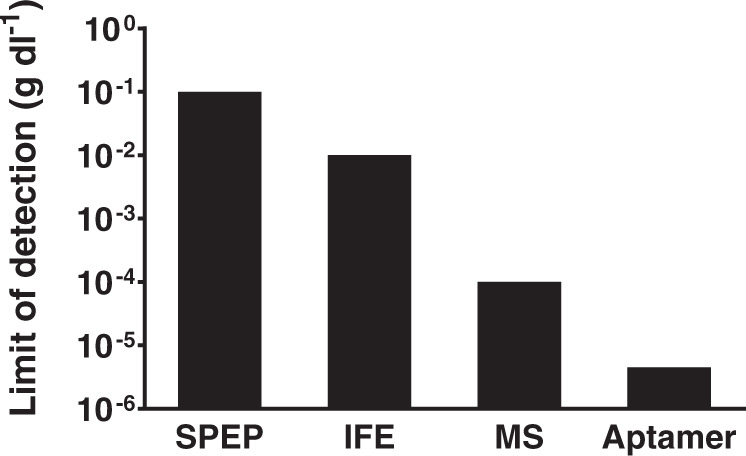
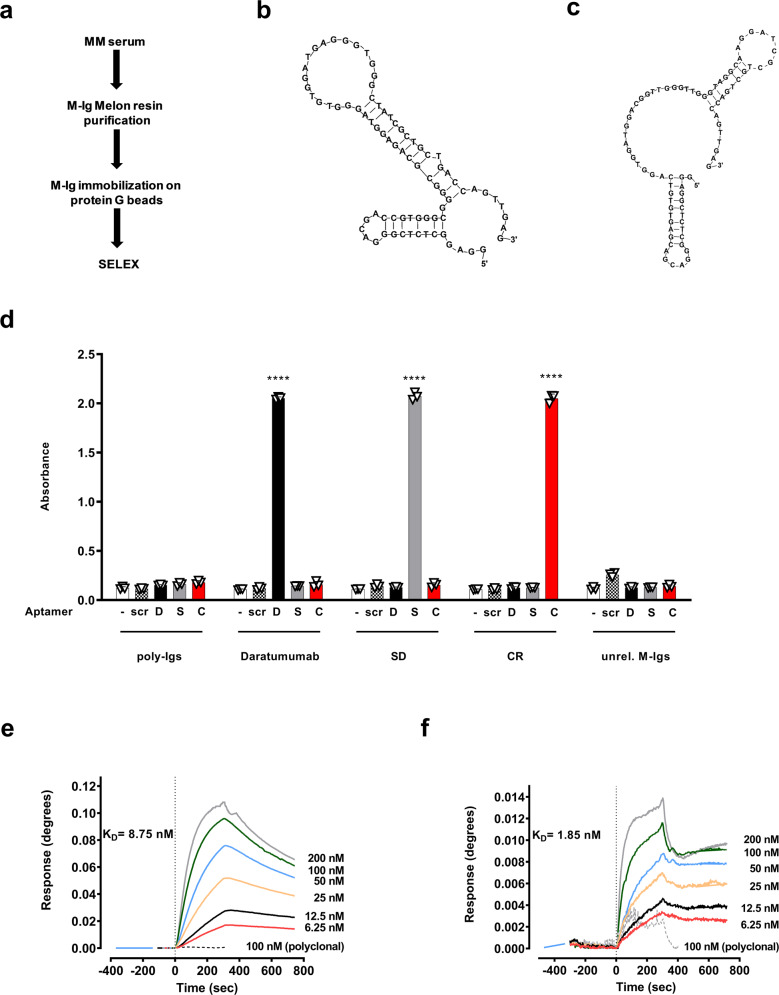
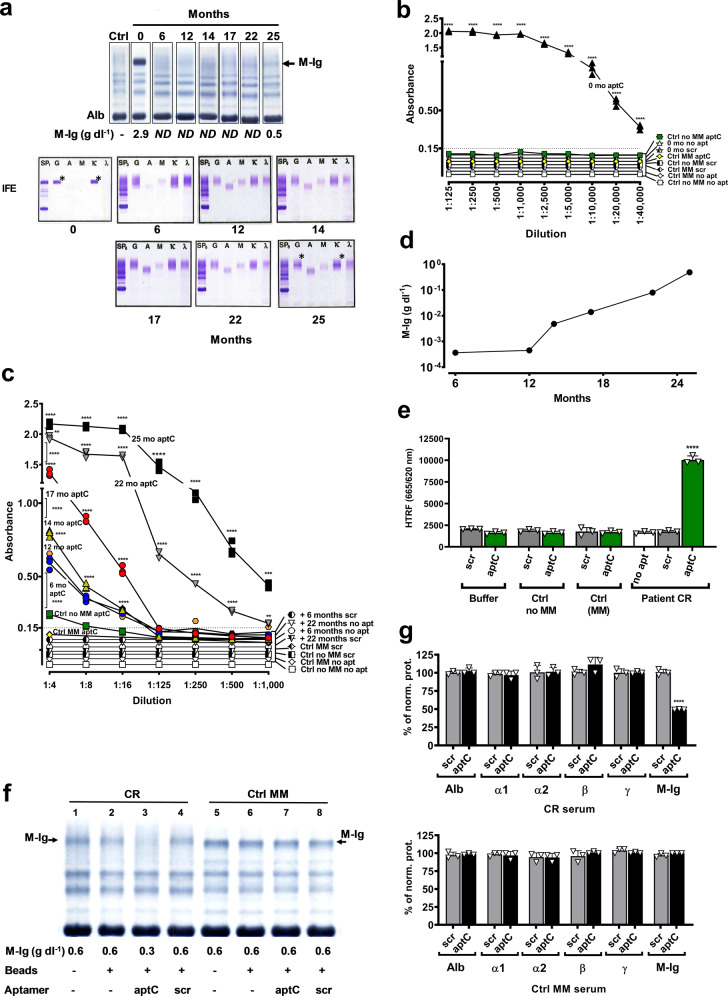
Multiple myeloma (MM) is a neoplasm of plasma cells that secrete patient specific monoclonal immunoglobulins. A recognized problem in MM treatment is the early recognition of minimal residual disease (MRD), the major cause of relapse. Current MRD detection methods (multiparameter flow cytometry and next generation sequencing) are based on the analysis of bone marrow plasma cells. Both methods cannot detect extramedullary disease and are unsuitable for serial measurements. We describe the methodology to generate high affinity DNA aptamers that are specific to a patient's monoclonal Fab region. Such aptamers are 2000-fold more sensitive than immunofixation electrophoresis and enabled detection and quantification of MRD in serum when conventional MRD methods assessed complete remission. The aptamer isolation process that requires small volumes of serum is automatable, and Fab specific aptamers are adaptable to multiple diagnostic formats including point-of-care devices.
多发性骨髓瘤(MM)是一种浆细胞瘤,会分泌患者特异性单克隆免疫球蛋白。MM 治疗中公认的问题是早期识别微小残留病(MRD),这是复发的主要原因。目前的 MRD 检测方法(多参数流式细胞术和下一代测序)基于骨髓浆细胞的分析。这两种方法都不能检测髓外疾病,也不适合进行连续测量。我们描述了一种生成针对患者单克隆 Fab 区域的高亲和力 DNA 适体的方法。与免疫固定电泳相比,这些适体的灵敏度高 2000 倍,当常规 MRD 方法评估完全缓解时,可用于检测和定量血清中的 MRD。适体分离过程需要的血清量较少,可以实现自动化,并且 Fab 特异性适体可适应多种诊断格式,包括即时检测设备。