Ulamec Sabine M, Brockwell David J, Radford Sheena E
Astbury Centre for Structural Molecular Biology, School of Molecular and Cellular Biology, Faculty of Biological Sciences, University of Leeds, Leeds, United Kingdom.
Front Neurosci. 2020 Dec 1;14:611285. doi: 10.3389/fnins.2020.611285. eCollection 2020.
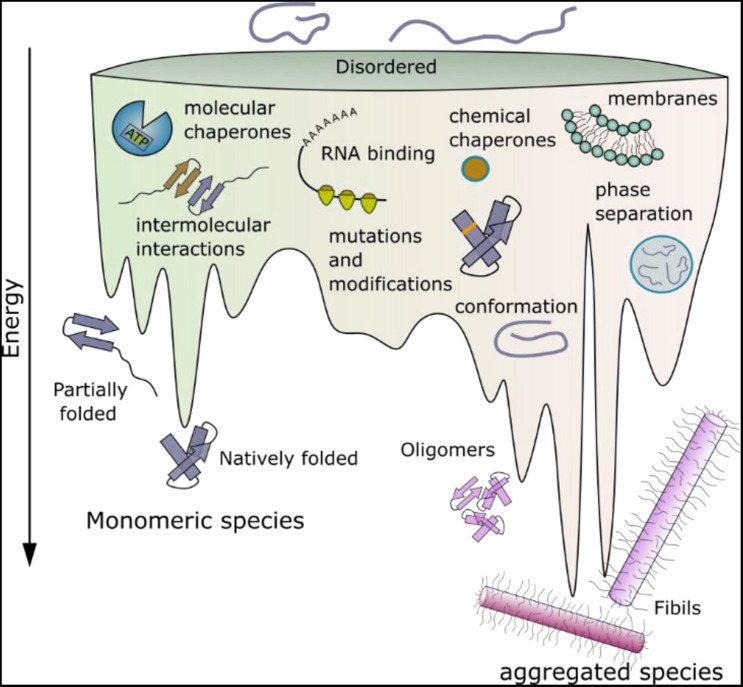
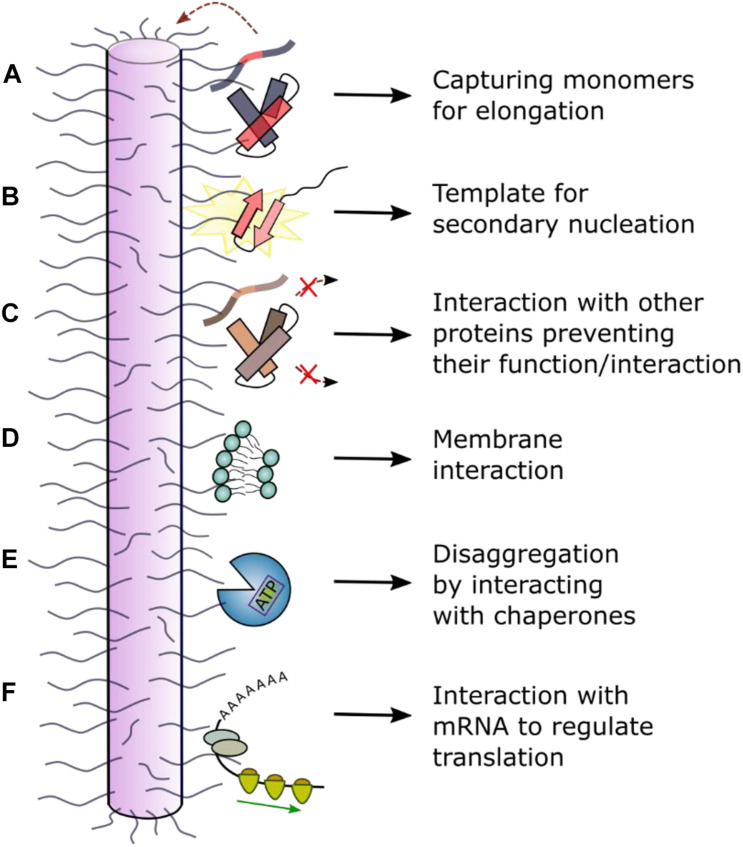
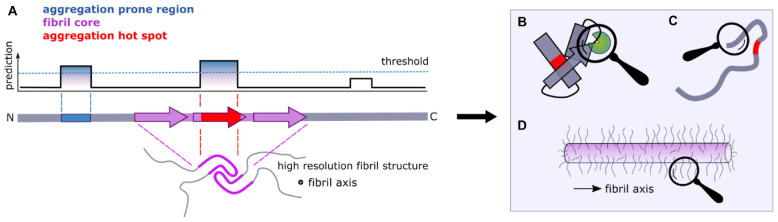
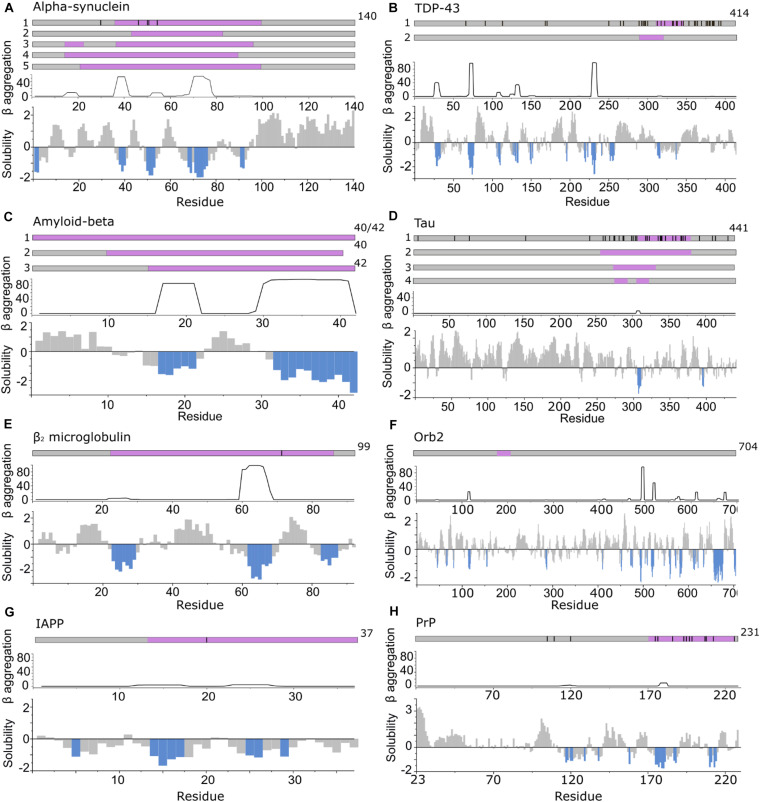
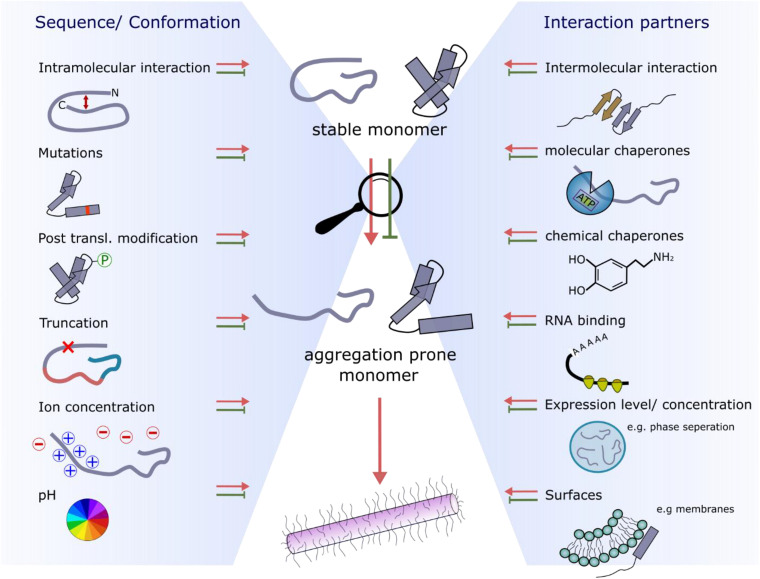
Amyloid proteins are involved in many neurodegenerative disorders such as Alzheimer's disease [Tau, Amyloid β (Aβ)], Parkinson's disease [alpha-synuclein (αSyn)], and amyotrophic lateral sclerosis (TDP-43). Driven by the early observation of the presence of ordered structure within amyloid fibrils and the potential to develop inhibitors of their formation, a major goal of the amyloid field has been to elucidate the structure of the amyloid fold at atomic resolution. This has now been achieved for a wide variety of sequences using solid-state NMR, microcrystallography, X-ray fiber diffraction and cryo-electron microscopy. These studies, together with methods able to predict aggregation-prone regions (APRs) in protein sequences, have provided a wealth of information about the ordered fibril cores that comprise the amyloid fold. Structural and kinetic analyses have also shown that amyloidogenic proteins often contain less well-ordered sequences outside of the amyloid core (termed here as flanking regions) that modulate function, toxicity and/or aggregation rates. These flanking regions, which often form a dynamically disordered "fuzzy coat" around the fibril core, have been shown to play key parts in the physiological roles of functional amyloids, including the binding of RNA and in phase separation. They are also the mediators of chaperone binding and membrane binding/disruption in toxic amyloid assemblies. Here, we review the role of flanking regions in different proteins spanning both functional amyloid and amyloid in disease, in the context of their role in aggregation, toxicity and cellular (dys)function. Understanding the properties of these regions could provide new opportunities to target disease-related aggregation without disturbing critical biological functions.
淀粉样蛋白与许多神经退行性疾病有关,如阿尔茨海默病(Tau蛋白、淀粉样β蛋白(Aβ))、帕金森病(α-突触核蛋白(αSyn))和肌萎缩侧索硬化症(TDP-43)。由于早期观察到淀粉样纤维中存在有序结构以及开发其形成抑制剂的潜力,淀粉样蛋白领域的一个主要目标是在原子分辨率下阐明淀粉样折叠的结构。现在,通过固态核磁共振、微晶学、X射线纤维衍射和冷冻电子显微镜等技术,已经实现了对多种序列的这一目标。这些研究,以及能够预测蛋白质序列中易聚集区域(APR)的方法,提供了大量关于构成淀粉样折叠的有序纤维核心的信息。结构和动力学分析还表明,淀粉样蛋白原性蛋白质在淀粉样核心之外(此处称为侧翼区域)通常含有有序性较差的序列,这些序列调节功能、毒性和/或聚集速率。这些侧翼区域通常在纤维核心周围形成动态无序的“模糊外衣”,已被证明在功能性淀粉样蛋白的生理作用中起关键作用,包括RNA的结合和相分离。它们也是有毒淀粉样聚集体中伴侣蛋白结合和膜结合/破坏的介质。在这里,我们综述了侧翼区域在跨越功能性淀粉样蛋白和疾病相关淀粉样蛋白的不同蛋白质中的作用,以及它们在聚集、毒性和细胞(功能)异常中的作用。了解这些区域的特性可以提供新的机会来靶向与疾病相关的聚集,而不干扰关键的生物学功能。