Zhan Chaohong, Xiao Gelei, Zhang Xiangyang, Chen Xiaoyu, Zhang Zhiping, Liu Jingping
Department of Neurosurgery, Xiangya Hospital, Central South University, Changsha, Hunan 410008, P. R. China.
Diagnosis and Treatment Center for Hydrocephalus, Xiangya Hospital, Central South University, Changsha, Hunan 410008, P. R. China.
Transl Neurosci. 2020 May 26;11(1):60-74. doi: 10.1515/tnsci-2020-0010. eCollection 2020.
Fibrosis in the ventricular system is closely associated with post-hemorrhagic hydrocephalus (PHH). It is characterized by an expansion of the cerebral ventricles due to CSF accumulation following intraventricular hemorrhage (IVH). The activation of transforming growth factor-β1 (TGF-β1) may be involved in thrombin-induced arachnoid fibrosis.
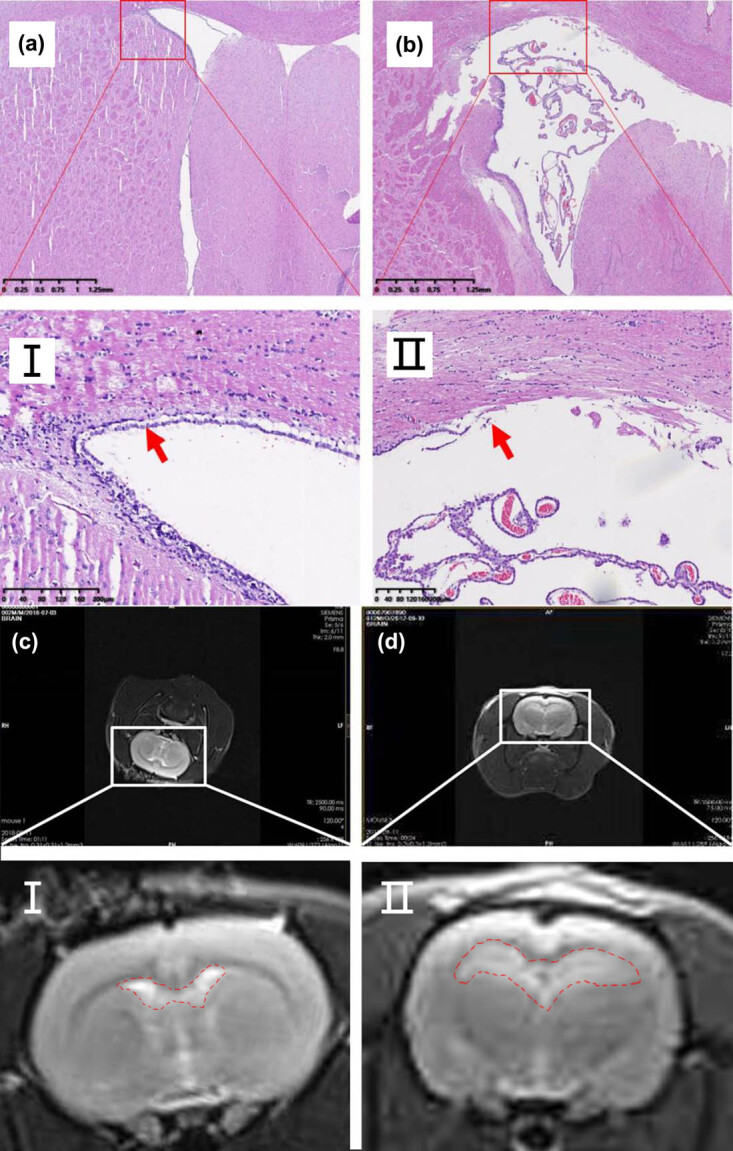
A rat model of PHH was established by injection of autologous non-anticoagulated blood from the right femoral artery into the lateral ventricles. Differential expression of miR-30a was detected in rat arachnoid cells by RNA sequencing. AP-1, c-Fos, and TRAF3IP2 were knocked down in primary arachnoid cells, and the degree of arachnoid fibrosis was assessed.
Decreased expression of miR-30a and increased expression of TRAF3IP2, TGF-β1, and α-SMA were detected in the arachnoid cells of PHH rat. Besides, overexpression of miR-30a targets TRAF3IP2 mRNA 3'UTR and inhibits the expression of TRAF3IP2, TGF-β1, and α-SMA in the primary arachnoid cells. Furthermore, TRAF3IP2 activates AP-1 to promote arachnoid fibrosis. The content of type I collagen in the primary arachnoid cells was reduced after the silencing of AP-1 and TRAF3IP2.
This study identified a miR-30a-regulated mechanism of arachnoid fibrosis, suggesting a previously unrecognized contribution of miR-30a to the pathogenesis of fibrosis in the ventricular system. These results might provide a new target for the clinical diagnosis and treatment of PHH.
脑室系统中的纤维化与出血后脑积水(PHH)密切相关。其特征是脑室内出血(IVH)后由于脑脊液积聚导致脑室扩大。转化生长因子-β1(TGF-β1)的激活可能参与凝血酶诱导的蛛网膜纤维化。
通过将来自右股动脉的自体非抗凝血液注入侧脑室建立PHH大鼠模型。通过RNA测序检测大鼠蛛网膜细胞中miR-30a的差异表达。在原代蛛网膜细胞中敲低AP-1、c-Fos和TRAF3IP2,并评估蛛网膜纤维化程度。
在PHH大鼠的蛛网膜细胞中检测到miR-30a表达降低以及TRAF3IP2、TGF-β1和α-SMA表达增加。此外,miR-30a的过表达靶向TRAF3IP2 mRNA的3'UTR并抑制原代蛛网膜细胞中TRAF3IP2、TGF-β1和α-SMA的表达。此外,TRAF3IP2激活AP-1以促进蛛网膜纤维化。AP-1和TRAF3IP2沉默后,原代蛛网膜细胞中I型胶原含量降低。
本研究确定了一种miR-30a调节的蛛网膜纤维化机制,提示miR-30a对脑室系统纤维化发病机制有此前未被认识的作用。这些结果可能为PHH的临床诊断和治疗提供新靶点。