Wang Zhouguang, Huang Yan, He Yan, Khor Sinan, Zhong Xingxing, Xiao Jian, Ye Qingsong, Li Xiaokun
School of Pharmacy, Key Laboratory of Biotechnology and Pharmaceutical Engineering, Wenzhou Medical University, Wenzhou, 325035, China.
Engineering Laboratory of Zhejiang Province for Pharmaceutical Development of Growth Factors, Biomedical Collaborative Innovation Center of Wenzhou, Wenzhou, Zhejiang, 325035, China.
Bioact Mater. 2020 Dec 10;6(7):1867-1877. doi: 10.1016/j.bioactmat.2020.12.002. eCollection 2021 Jul.
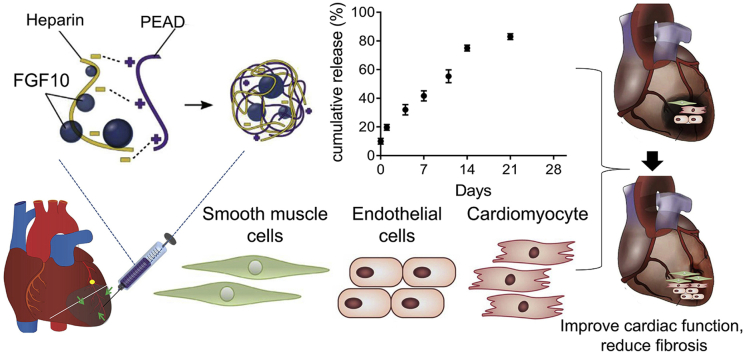
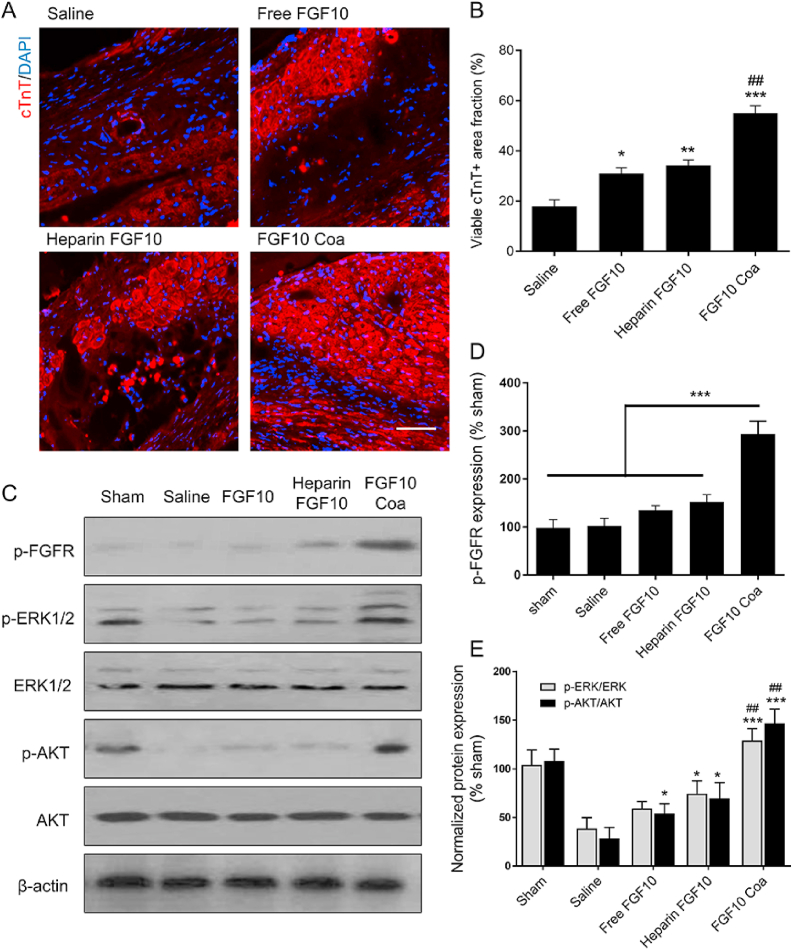
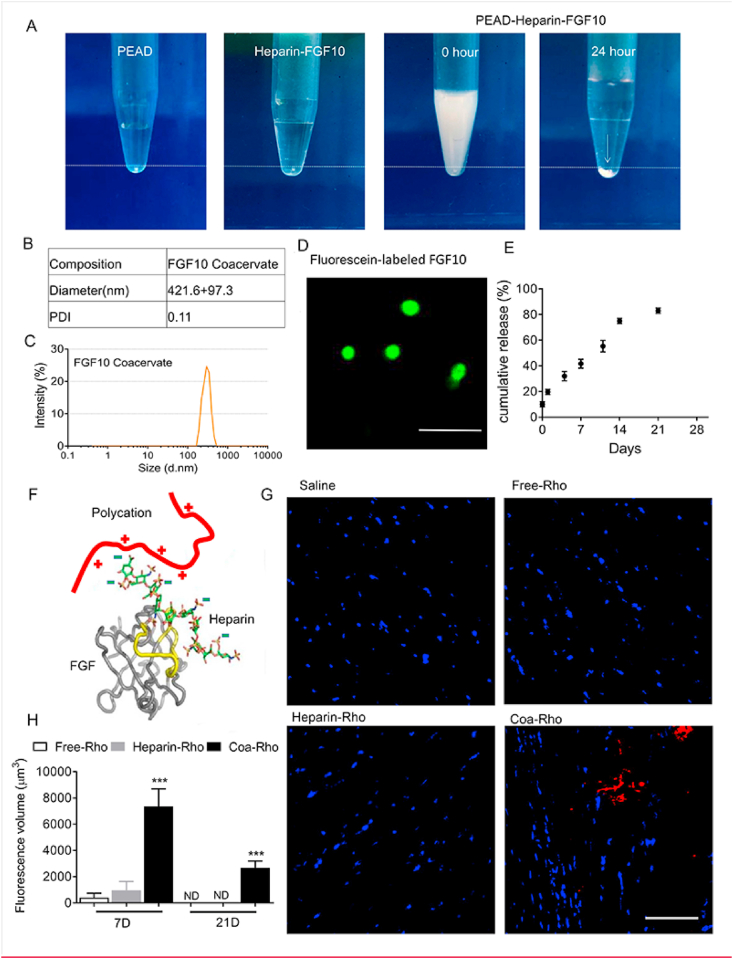
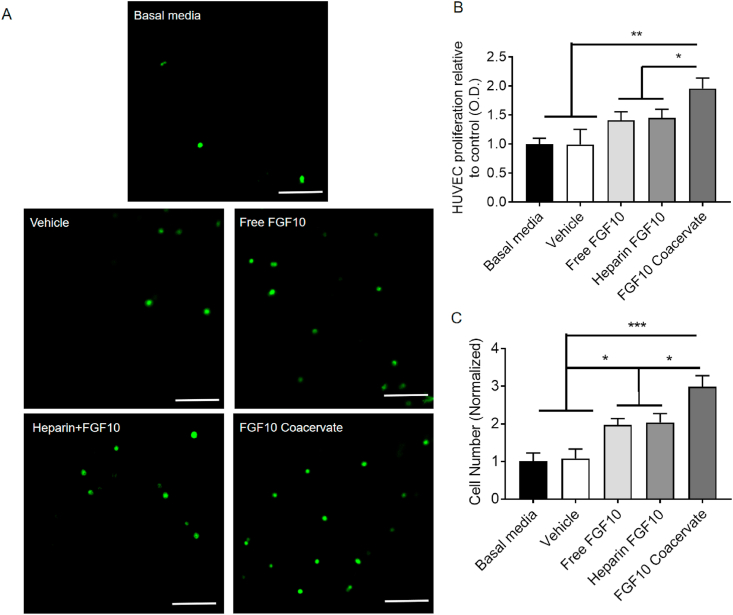
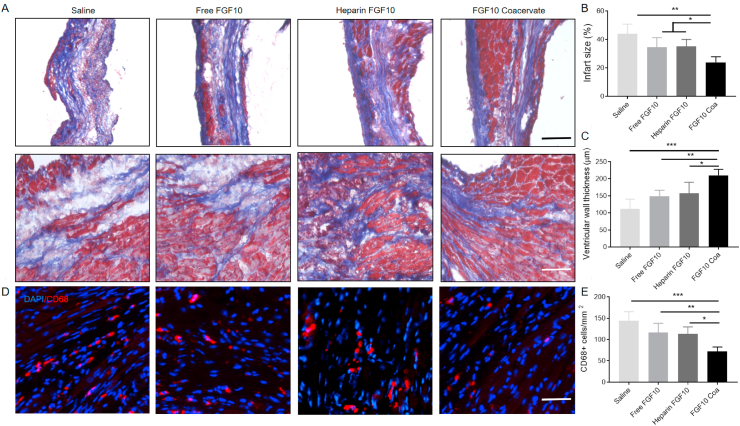
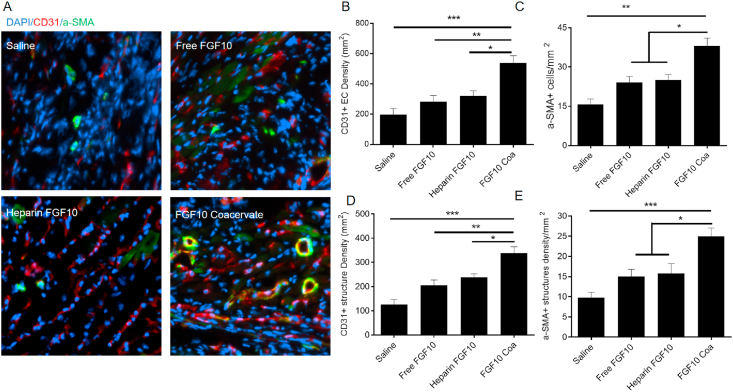
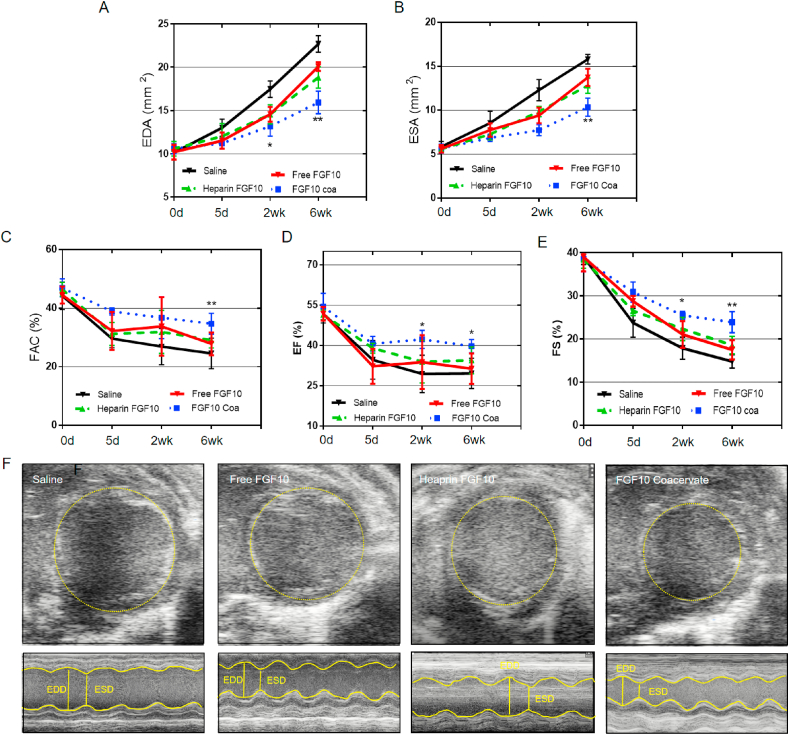
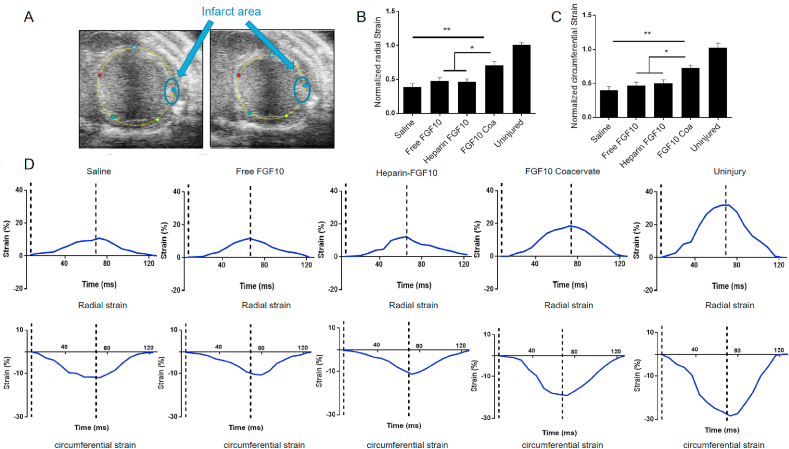
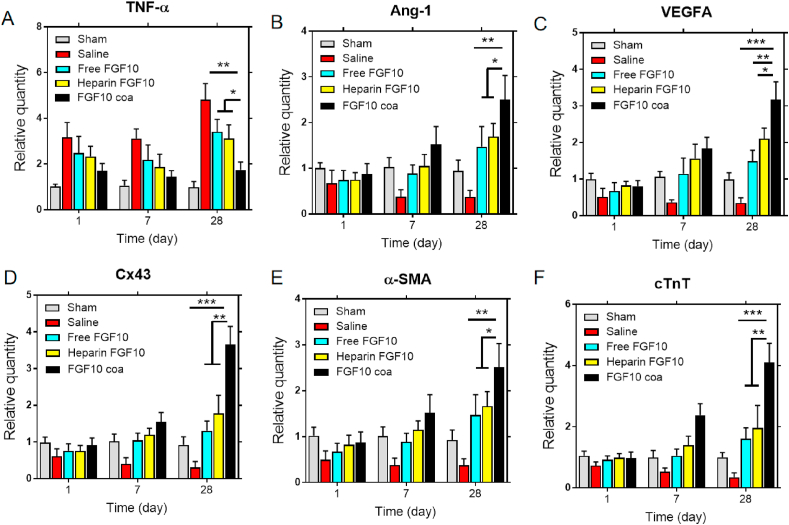
Heart disease is still the leading killer all around the world, and its incidence is expected to increase over the next decade. Previous reports have already shown the role of fibroblast growth factor10 (FGF10) in alleviating heart diseases. However, FGF10 has not been used to treat heart diseases because the free protein has short half-life and low bioactivity. Here, an injectable coacervate was designed to protect growth factor from degradation during delivery and the effects of the FGF10 coacervate were studied using a mice acute myocardial infarction (MI) model. As shown in our echocardiographic results, a single injection of FGF10 coacervate effectively inhibited preserved cardiac contractibility and ventricular dilation when compared with free FGF10 and the saline treatment 6 weeks after MI. It is revealed in histological results that the MI induced myocardial inflammation and fibrosis was reduced after FGF10 coacervate treatment. Furthermore, FGF10 coacervate treatment could improve arterioles and capillaries stabilization through increasing the proliferation of endothelial and mural cells. However, with the same dosage, no statistically significant difference was shown between free FGF10, heparin+FGF10 and saline treatment, especially in long term. On another hand, FGF10 coacervate also increased the expression of cardiac-associated the mRNA (cTnT, Cx43 and α-SMA), angiogenic factors (Ang-1 and VEGFA) and decreased the level of inflammatory factor (tumor necrosis factor-α). The downstream signaling of the FGF10 was also investigated, with the western blot results showing that FGF10 coacervate activated the -FGFR, PI3K/Akt and ERK1/2 pathways to a more proper level than free FGF10 or heparin+FGF10. In general, it is revealed in this research that one-time injection of FGF10 coacervate sufficiently attenuated MI induced injury when compared with an equal dose of free FGF10 or heparin+FGF10 injection.
心脏病仍然是全球主要的杀手,预计其发病率在未来十年还会上升。此前的报告已经表明成纤维细胞生长因子10(FGF10)在缓解心脏病方面的作用。然而,FGF10尚未用于治疗心脏病,因为游离蛋白半衰期短且生物活性低。在此,设计了一种可注射的凝聚层来在递送过程中保护生长因子不被降解,并使用小鼠急性心肌梗死(MI)模型研究了FGF10凝聚层的效果。正如我们的超声心动图结果所示,与游离FGF10和心肌梗死后6周的生理盐水治疗相比,单次注射FGF10凝聚层有效抑制了心脏收缩性的保留和心室扩张。组织学结果显示,FGF10凝聚层治疗后,心肌梗死诱导的心肌炎症和纤维化有所减轻。此外,FGF10凝聚层治疗可通过增加内皮细胞和平滑肌细胞的增殖来改善小动脉和毛细血管的稳定性。然而,在相同剂量下,游离FGF10、肝素+FGF10和生理盐水治疗之间未显示出统计学上的显著差异,尤其是在长期治疗中。另一方面,FGF10凝聚层还增加了心脏相关mRNA(肌钙蛋白T、连接蛋白43和α-平滑肌肌动蛋白)、血管生成因子(血管生成素-1和血管内皮生长因子A)的表达,并降低了炎症因子(肿瘤坏死因子-α)的水平。还研究了FGF10的下游信号传导,蛋白质印迹结果表明,FGF10凝聚层比游离FGF10或肝素+FGF10更适度地激活了FGFR、PI3K/Akt和ERK1/2信号通路。总体而言,本研究表明,与同等剂量的游离FGF10或肝素+FGF10注射相比,一次性注射FGF10凝聚层能充分减轻心肌梗死诱导的损伤。