Fouogue Jovanny Tsuala, Noubom Michel, Kenfack Bruno, Dongmo Norbert Tanke, Tabeu Maxime, Megozeu Linda, Alima Jean Marie, Fogang Yannick Fogoum, Nyam Landry Charles Rim A, Fouelifack Florent Ymele, Fouedjio Jeanne Hortence, Manebou Pamela Leonie Fouogue Nzogning, Bibou Ze Clotaire Damien, Kouam Brice Foubi, Fomete Lauriane Nomene, Tebeu Pierre Marie, Kemfang Jean Dupont Ngowa, Foumane Pascal, Sando Zacharie, Orock George Enownchong Enow
Faculty of Medicine and Pharmaceutical Sciences, University of Dschang, Dschang, West Region, Cameroon.
Bafoussam Regional Hospital, Bafoussam, West Region, Cameroon.
Pan Afr Med J. 2020 Oct 1;37(Suppl 1):19. doi: 10.11604/pamj.supp.2020.37.19.25688. eCollection 2020.
WHO warned against a dramatic impact of COVID-19 in Africa unless adequate response strategies are implemented. Whatever the strategy, the role of health staff is pivotal. Objective: Assess knowledge and perception of the response to COVID-19 among health staff.
we used a convenience non probabilistic sample to conduct a survey with a self-administered questionnaire from April 14 - 29, 2020 at the Bafoussam Regional Hospital (BRH). All the staff was invited to participate. Analyses were done with Microsoft Excel 2010 and Epi-Info version 7.1.5.2.
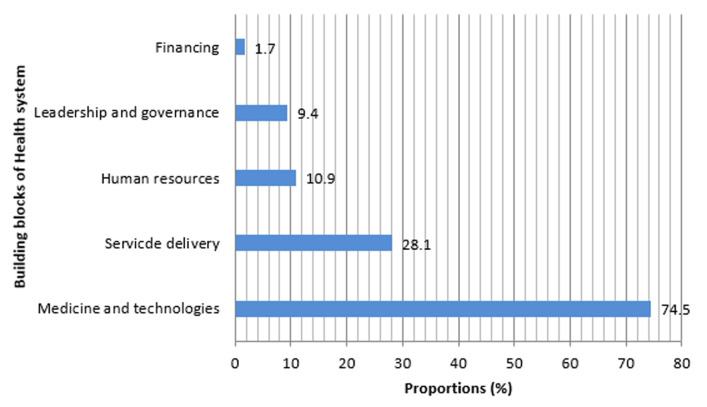
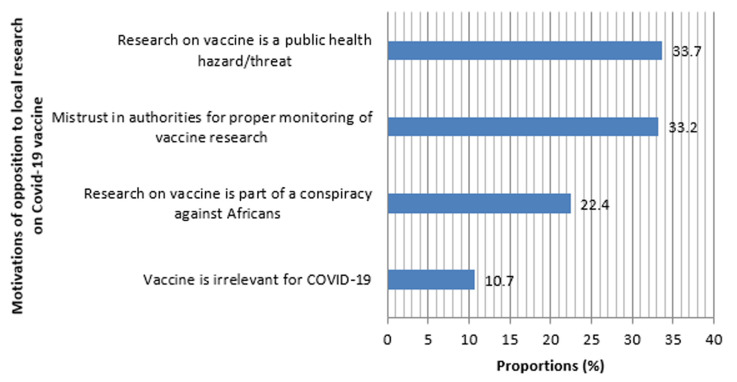
response rate was 76.1% (464/610). Mean age (SD) was 35.0 (8.9) years. Sex ratio (M/F) was 101/356. Nursing/midwifery staff (56.8%) and in-patients units (49.94%) were predominant. Origin and transmission of SARS-CoV-2 were poorly known while knowledge of clinical signs and the role of laboratory tests were good. For 53.2% of respondents all therapeutic regimens are supportive and only 31.6% trusted state-recommended drugs. For 169 of respondents (36.9%), herbal remedies prevent/cure COVID-19. Seventy percent (70%) felt they were not knowledgeable enough to handle COVID-19 cases. Eighty-five point six percent (85.6%) thought the BRH had insufficient resources to fight COVID-19 and 55.6% were dissatisfied with its response (weaknesses: medicines/technologies (74.5%), service delivery (28.1%), staff (10.9%)). Sixty-eight percent (68%) reported insufficient protection on duty. Seventy-six point five percent (76.5%) reported a drop in non-COVID-19 services. Eighty-five point five (85.5%) percent said they complied with community preventive measures. For 44% of respondents, regulations on COVID-19 corpses should be made more culture-sensitive. Fifty one point two percent (51.2%) of respondents were against vaccine trial in their community.
knowledge was poor and perception of the response to COVID-19 was unfavourable.
世界卫生组织警告称,除非实施充分的应对策略,否则新冠病毒肺炎(COVID-19)将对非洲产生巨大影响。无论采取何种策略,卫生工作人员的作用都至关重要。目的:评估卫生工作人员对COVID-19应对措施的知识和认知。
我们采用便利非概率抽样方法,于2020年4月14日至29日在巴富萨姆地区医院(BRH)使用自填式问卷进行了一项调查。邀请了所有工作人员参与。分析使用Microsoft Excel 2010和Epi-Info 7.1.5.2版本进行。
应答率为76.1%(464/610)。平均年龄(标准差)为35.0(8.9)岁。性别比(男/女)为101/356。护理/助产人员(56.8%)和住院科室(49.94%)占主导。对严重急性呼吸综合征冠状病毒2(SARS-CoV-2)的起源和传播了解甚少,而对临床症状和实验室检查的作用了解较好。对于53.2%的受访者来说,所有治疗方案都是支持性的,只有31.6%的人信任国家推荐的药物。对于169名受访者(36.9%)来说,草药可以预防/治愈COVID-19。70%的人认为他们没有足够的知识来处理COVID-19病例。85.6%的人认为BRH抗击COVID-19的资源不足,55.6%的人对其应对措施不满意(弱点:药品/技术(74.5%)、服务提供(28.1%)、工作人员(10.9%))。68%的人报告说值班时防护不足。76.